

The first thing my podiatrist said to me a few years back was not what I expected. He didn't start with my blood sugar or my morning walk. He said, "Carol, you need to look at your feet every single night, because you can't feel what's happening to them." He was right. Eight years into peripheral neuropathy, I can stand on a pebble and not know it's there. So when my feet started turning dry and rough last fall, the cracks were doing their damage before I ever felt a thing. That's why I started testing Gold Bond Diabetics' Foot Cream, and that's why I kept notes for six weeks. This is what actually happened.
I'm Carol Brennan. I'm 63, I live in Tulsa, and I've had type 2 diabetes for fifteen years. The neuropathy in my feet started about eight years ago, mostly numbness in my toes and the balls of my feet, with burning and tingling at night. My husband Dale is 66 and has early neuropathy too, so I put him to work on this test as well. He used the same cream for the last two weeks of my trial. I checked my feet every evening with a hand mirror, I kept a little notebook on the bathroom counter, and I wrote down what I saw. Here's the honest version of what happened, the good and the not so good.
The Quick Verdict
A thick, no-nonsense cream that softened my dry, cracked heels and the rough patches on the balls of my feet within about three weeks. It did nothing for the numbness or the nighttime burning, and it can't replace a daily foot check, but for everyday dryness it earned a permanent spot on my bathroom counter.
Amazon Check Today's Price →Dry feet you can't feel are a problem you can't ignore.
Gold Bond Diabetics' Foot Cream is the one I reach for after my evening foot check. It's thick, it stays put, and a little goes a long way. See today's price on Amazon and decide if it's worth adding to your own routine.
Amazon Check Today's Price on Amazon →How I've Used It
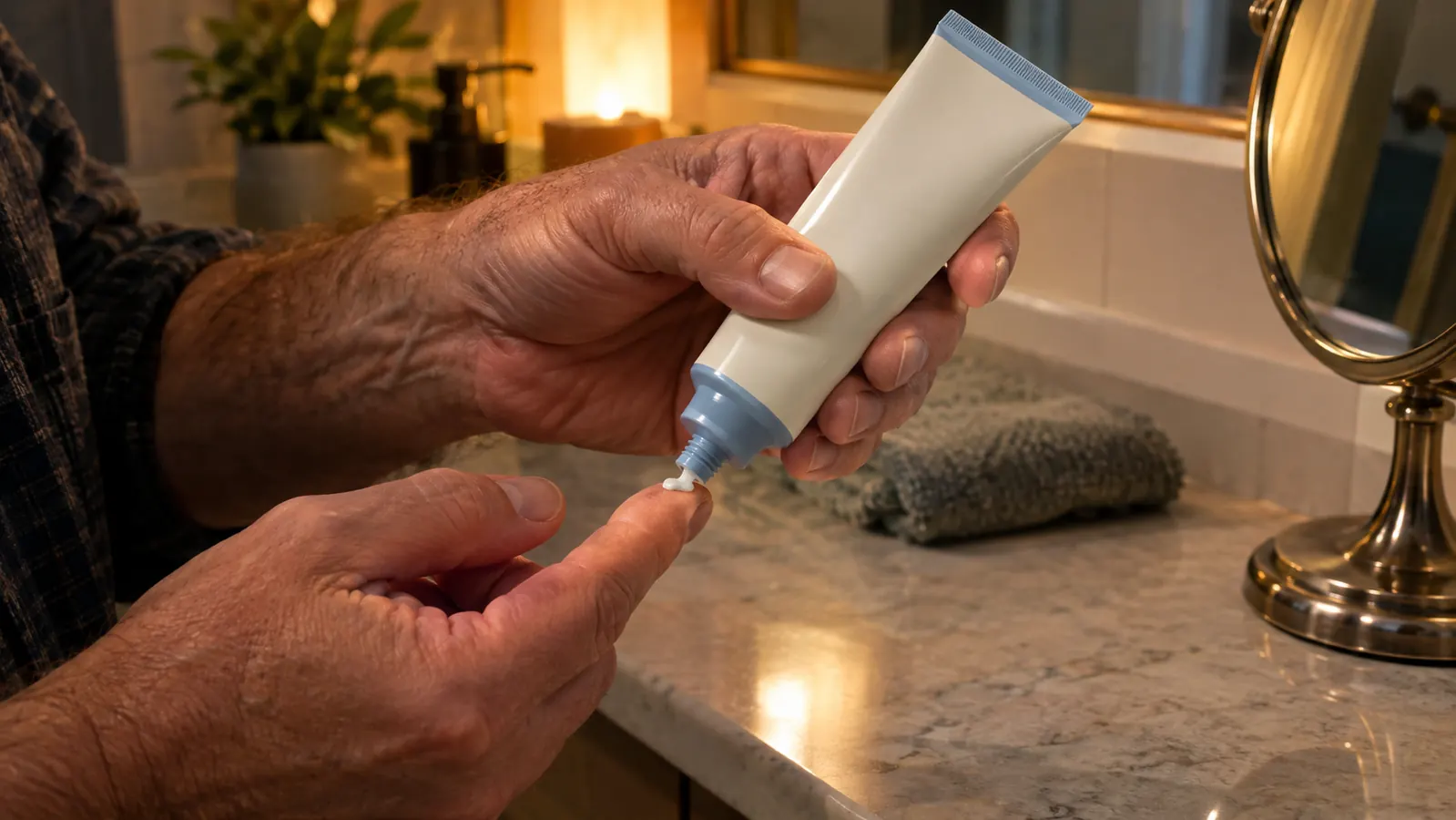
My routine did not change for this test. That was the point. I shower in the evening, I dry my feet well, especially between the toes, and then I sit on the edge of the tub with my hand mirror and look at every inch of both feet. After the check, I put a dab of the Gold Bond cream on each foot, about the size of a nickel, and I work it into my heels, my soles, and the tops of my feet. I do not rub it hard. Numb skin bruises easier than you would think, so I use light pressure and let the cream do the work.
The timing mattered more than I expected. When I applied the cream right after my shower, my skin was still slightly damp, and the cream seemed to soak in faster. When I applied it to dry skin before bed, it took longer to absorb, and I learned to use a little less. Most nights I put on a pair of loose cotton socks afterward, because the cream is thick and I did not want it all over the sheets. In the mornings, after my twenty-minute walk around the neighborhood, I would add a thin layer if my feet felt tight, especially on the days when the Tulsa wind had been up and the hardwood floors in our kitchen felt cold first thing.
Dale started using it in week five of my six-week test. He is a big guy with size 12 wide feet, and his heels have been rough for years. I handed him the second tube from the pack and told him to use it every night before bed. He grumbled about the routine at first, which is very Dale, but by the end of the second week he said his heels felt like normal skin again, not sandpaper. That phrase, sandpaper, is his, and it is the best description of what his feet were like before.
What's In It and Why That Matters
I am not a chemist, so I will not pretend to break down the whole label. But I did read it, and I did ask my pharmacist about the ingredients that mattered to me. The cream lists urea fairly high up, and urea is one of the ingredients podiatrists often recommend for dry, thickened skin, because it helps the skin hold on to water. It also has aloe and vitamin E, which are soothing ingredients I have used in other creams for years. The important part for me was that there was no strong perfume smell and nothing that stung when I put it on skin that was already cracked.
The thickness is the feature, not the flaw. Thin lotions vanish by the time I walk from the bathroom to the kitchen, and on numb feet, I cannot tell when the protection has rubbed off. This cream stays where I put it. It does not drip, it does not run, and it does not disappear into my socks. That matters when you cannot feel the skin underneath, because the cream is doing its job quietly, and the only way I know it is working is by looking, which is exactly why the evening mirror check and the cream go together.
Here is what it does not do, and I want to be plain about this. It does not treat neuropathy. It does not claim to, and no foot cream should. The numbness in my toes did not change. The burning at night did not change. What changed was the skin itself: the dryness, the flaking, the rough calluses, the shallow cracks. That is the whole job of a foot cream, and it is worth saying clearly so nobody buys this expecting something it cannot deliver.
The First Two Weeks
The first week, honestly, I did not see much. My feet felt a little softer in the morning, but the cracks on my heels looked the same, and the rough patch under my left little toe was still there. I almost stopped taking notes. I am glad I did not. Around day nine, I noticed the flaking on the balls of my feet had slowed down, and the skin there looked less dull and dusty. That is the only way I know to describe it. Diabetic dry skin gets a sort of dull, grayish look to it, and that was fading.
By the end of the second week, the shallow crack along the side of my right heel had closed up. It was not deep enough to bleed, but it was deep enough to worry me, because a crack like that on a numb foot can turn into an ulcer before you feel it. Watching it close over those two weeks was the moment I stopped being skeptical. I also started paying attention to the little things: my socks did not stick to my heels in the morning, and the skin on my feet did not feel like paper when I ran my hand over it.
I kept the rest of my routine exactly the same, so I could be fair about what was working. Same morning walk, same evening check, same cotton socks, same two pairs of walking shoes. The only thing that changed was the cream. That is why I feel confident saying the improvement came from the Gold Bond and not from some other habit I happened to change at the same time.
Five Weeks In: What Changed and What Didn't
By week five, the change was obvious. The callus on my right heel, the one I had been filing down carefully with a pumice stone for years, was noticeably thinner. The skin on the balls of my feet was smooth enough that I stopped thinking about it. The crack on my right heel stayed closed. When I skipped a night, which happened twice, my feet felt tight the next morning, and the skin on my heels looked whiter and drier by the evening. That told me the cream was doing the work, not just sitting on top of the skin.
Now the honest part. My toes are still numb. The tingling at night is still there. Some nights it is worse than others, and no amount of cream changes that. I did not expect it to, but I want to say it plainly because it is easy to read a review like this and hope for more. The Gold Bond cream softened my skin, and that is a real, measurable thing. It did not change my nerve pain, and I would not trust any product that claimed it could. That is a conversation for my doctor and my podiatrist, not for a tube of lotion.
The other honest note is that this cream is thick, and there is a learning curve. The first few nights I used too much, about the size of a quarter, and my feet felt slick for an hour. I had to sit in my reading chair longer than I wanted before I could put socks on. Once I cut back to a nickel-sized dab per foot, the problem went away. That is not a flaw in the product. It is a note about how to use it, and I wish the label had been more specific about how little you actually need.
Dale's two weeks were shorter than mine, but his results were faster, which surprised me. He said his heels went from sandpaper to normal in about ten days. He also said the cream did not feel greasy to him, and he could pull his socks on right after applying it. His feet are bigger than mine, so he used a slightly bigger dab, but he still had plenty left in his tube at the end of the test. For two people using one tube each for two weeks, the pack of two lasted comfortably.
How It Fits Into a Daily Foot Check
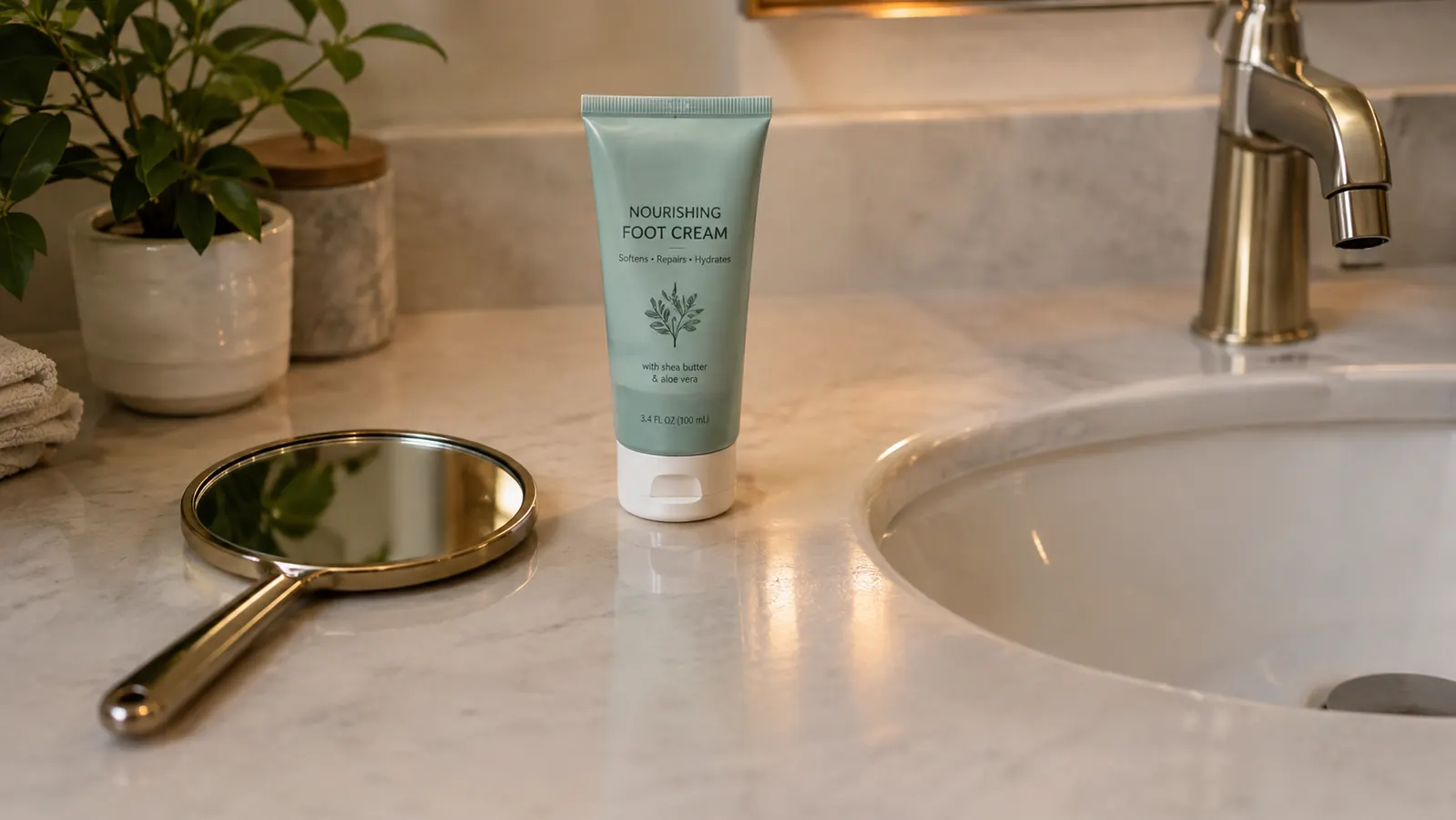
Here is the order that works for me, and I will pass it along because it took me years to settle into it. Shower in the evening. Dry your feet completely, and I mean completely, especially between the toes, because moisture between the toes is how fungus starts. Sit down with your hand mirror and look at the tops, the soles, the heels, and between every toe. Look for cracks, redness, blisters, or anything that was not there yesterday. Then apply the cream. Then put on loose cotton socks.
The cream is the last step, never the first, and never the only step. I check my feet every single night because I cannot feel a developing sore. A blister that would send most people to the doctor in a day can sit on my foot for a week before I notice it. The mirror is not optional for me, and I would say the same to anyone with neuropathy. If you see an open sore, a blister, redness that is spreading, or any change in how your foot feels, call your doctor or podiatrist. That advice is worth more than any cream I have ever tested.
What I Liked
- Thick and stays put, so it keeps working after I walk from the bathroom to the bedroom
- Softened my rough heels and closed a shallow heel crack in about two weeks
- No stinging on cracked skin and no strong perfume smell
- Soaks in fast enough that I can put socks on within a few minutes
- Comes as a pack of two, so one tube stays in the bathroom and one by the bed
Where It Falls Short
- It is thick, and using too much leaves a slick film for an hour
- The 3.4 ounce tube is small for two people using it daily
- Does nothing for numbness, tingling, or nighttime burning
- Still requires the nightly mirror check, because no cream replaces looking at your own feet
The burning at night did not change. What changed was the skin: my heels went from cracked and rough to smooth in about three weeks, and that is a real difference I could see.
Who This Is For
Gold Bond Diabetics' Foot Cream is for anyone with dry, rough, or cracked skin who wants a comfort step that actually works. It is especially useful if you have diabetes or neuropathy, because you cannot rely on feeling to tell you when your skin is in trouble. If you are already doing a nightly foot check, or if you are ready to start one, this cream is a good companion to that habit. It is also a good choice if you have tried thin lotions and found they disappear before they do anything.
It is for people who want realistic results. It will soften your skin, it will help shallow cracks close, and it will make your feet feel better in the morning. It will not fix nerve pain, and it will not replace your doctor. If that sounds like the right trade to you, this is a solid pick. My tube has a permanent home on my bathroom counter now, right next to the hand mirror.
Who Should Skip It
Do not buy this cream if you have an open sore, a blister, or an infected crack on your foot. See a doctor first. A cream is not a treatment for a wound, and on a numb foot, a small sore can become a serious problem fast. If you have any redness, warmth, or drainage, that is a phone call to your podiatrist, not a trip to the drugstore.
Also skip it if you are hoping for something that will stop the burning or tingling of neuropathy. This cream will not do that, and I would be doing you a disservice to suggest otherwise. And if you simply cannot stand thick creams, if you want something that vanishes the second you rub it in, this is not that product. It is a heavy-duty cream for heavy-duty dryness, and that is exactly why it works for me.
Start with the check, then the cream.
Gold Bond Diabetics' Foot Cream is the comfort step I added after my evening mirror check. It softened my heels in about three weeks, and it is still on my bathroom counter today. Check today's price on Amazon and see if it earns a spot on yours.
Amazon Check Today's Price on Amazon →