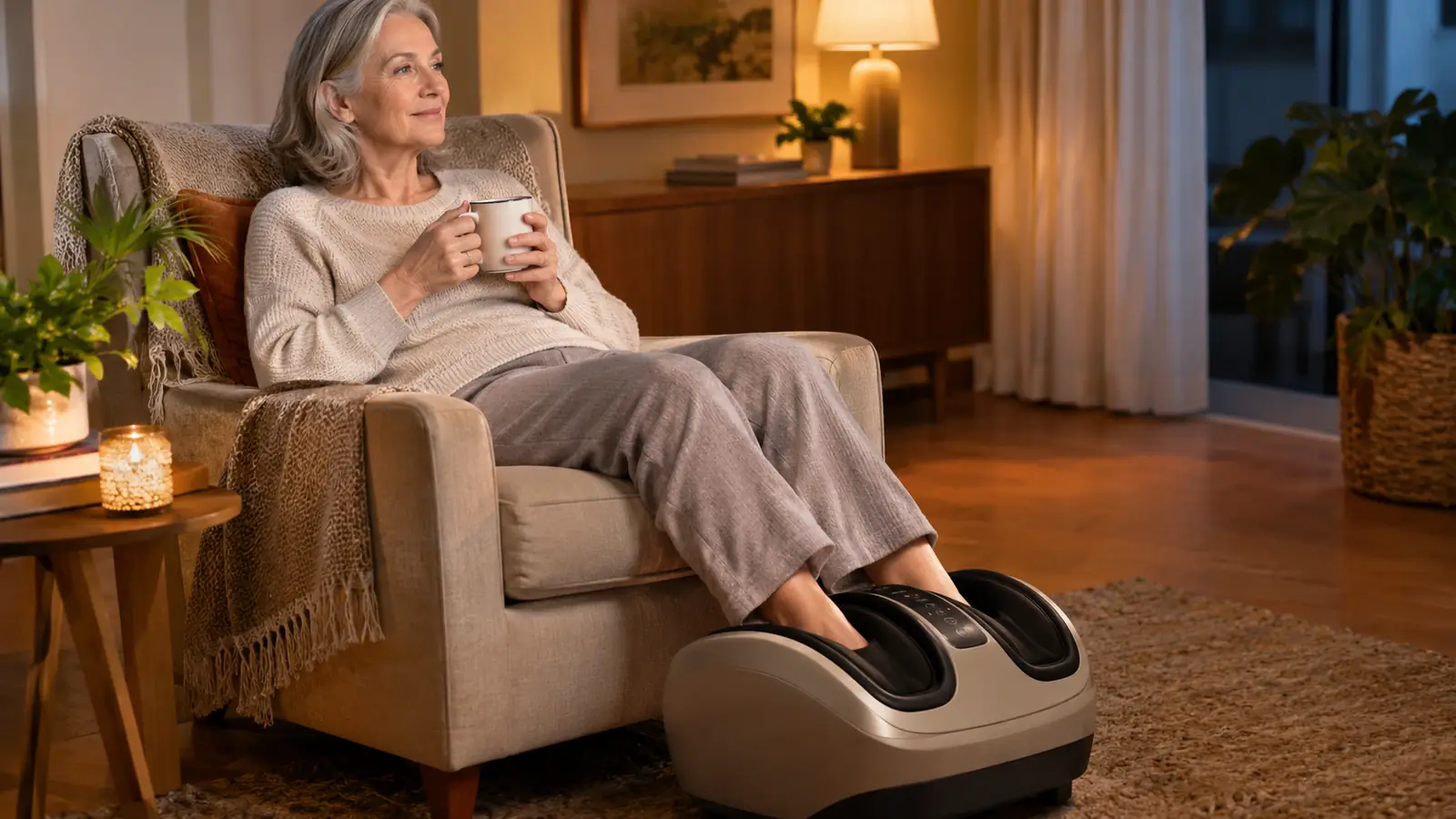
I have had peripheral neuropathy in both feet for about eight years now, and I remember exactly how nervous I was the first time someone suggested a foot massager. My feet are mostly numb in the toes and the balls, and at night I get burning and tingling that makes it hard to sleep. The idea of a machine pressing on feet I cannot fully feel sounded risky, and honestly a little foolish. But my podiatrist in Tulsa encouraged me to try one with a gentle setting, so I did. This guide is what I wish someone had handed me before I started: how to use a foot massager safely when your feet are sensitive, what settings to start with, and the specific routine I have settled into with the RENPHO foot massager.
A quick note before anything else. A foot massager is a comfort tool, not a treatment. It does not cure, reverse, or heal neuropathy, and no product should ever be sold to you as if it does. What it can do is help with the everyday discomfort, improve circulation a little, and give you a reason to sit still for fifteen minutes. If you have diabetes, neuropathy, or any condition that changes feeling in your feet, talk to your doctor or podiatrist before you buy one. And check your feet every single day, because if you cannot feel a sore or a blister, it can turn into something serious before you know it.
Start with a massager that has a gentle mode and a heat switch you can turn off
The RENPHO foot massager with heat is the one I use most evenings. It has adjustable intensity, a heat setting that I keep off on my numb feet, and a shape that fits my feet and my husband Dale's size 12 wides. Check today's price on Amazon before you decide.
Amazon Check Today's Price on Amazon →Step 1: Check your feet first, every single time
Before I plug anything in, I do my evening foot check. I sit on the edge of the tub with a hand mirror on the floor and look at the tops, the soles, between the toes, and around the heels. This is not a step you can skip when you have neuropathy. I have had two occasions in the last year where I found a small red spot on the ball of my foot that I never felt develop. If I had put that foot into a massager without looking first, I might have made it worse without knowing.
The check takes about two minutes. I look for cuts, blisters, redness, swelling, or any spot that looks different from yesterday. If I find anything, I do not use the massager that night. I clean the area, put on a clean pair of socks, and call my podiatrist's office in the morning. My rule is simple: if I would not put my bare foot in a shoe with that spot, I do not put it in a massager either.
I also check the massager itself. I wipe down the foot wells with a damp cloth and make sure there is nothing sharp or rough inside. The RENPHO has soft fabric padding over the rollers, but I still run my hand over the whole surface before I use it. It takes ten seconds and it has caught a small piece of dried kibble that my dog-free house somehow still managed to produce from a visitor's shoe. Better safe than sorry.
Step 2: Start with socks on and heat off
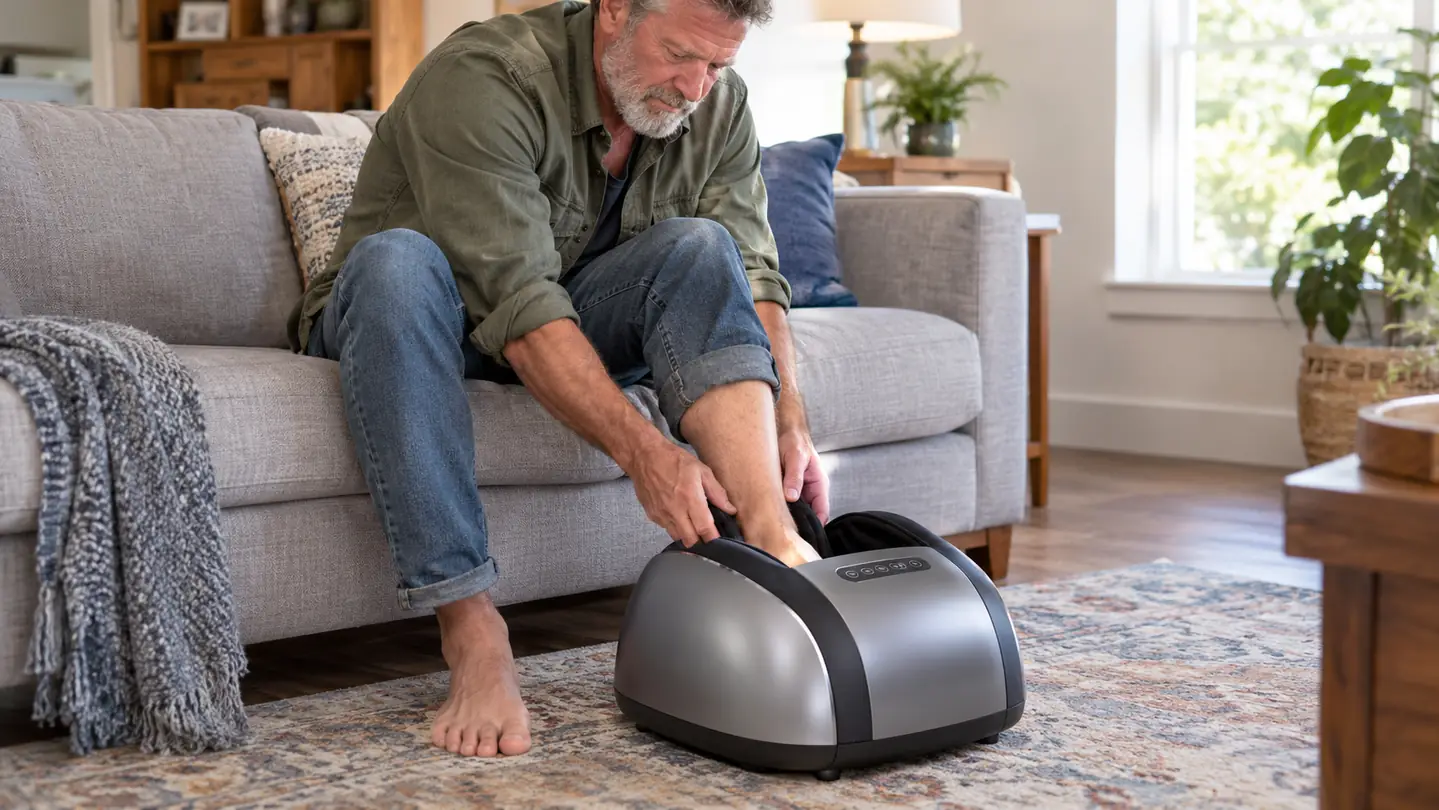
The first time I used the RENPHO, I tried it barefoot with the heat on. That was a mistake. My feet are numb enough that I cannot reliably tell when something is too warm, and the heat made the tingling worse that night. My podiatrist had warned me about exactly this: if you cannot feel a burn, you cannot stop it in time. So now I keep the heat off, always, and I wear a thin pair of cotton socks. The socks add a soft barrier between my skin and the rollers, and they make the whole thing feel gentler.
If you are wondering whether heat is safe for your feet, ask your doctor or podiatrist before you ever switch it on, and if you have any numbness at all, leave it off. For anyone with diabetes or neuropathy, I would keep it off unless your doctor says otherwise. Dale, my husband, has early neuropathy and he also keeps the heat off. We are both type 2 diabetic, and neither of us wants to learn that lesson the hard way.
The socks matter more than you would think. I use a thin athletic sock, not a thick fuzzy one. A thick sock changes how the rollers feel and can make the pressure uneven. A thin sock lets the massage come through while still protecting the skin. I have a dedicated pair that I only use for the massager, so I never have to hunt for a clean pair at the end of the day.
Step 3: Start at the lowest intensity for five minutes
The RENPHO has multiple intensity levels, and I started at the very lowest one. Not the second lowest. The lowest. I set a timer on my phone for five minutes and I kept my hands on the sides of the unit the whole time, ready to turn it off. The first session felt strange more than pleasant. The rollers pressed into the arches of my feet and I could feel the pressure even in places where I am usually numb. That was the moment I realized the massager was actually doing something.
Five minutes is the right starting point. It is long enough to tell you whether the sensation is okay, and short enough that you will not overdo it. After the first session, I checked my feet again. No redness, no new spots, no soreness. The next night I did seven minutes. The night after that, ten. I did not jump to a longer session until I had done a full week at the lowest setting without any problems.
Here is what I tell everyone who asks: the massager should feel like a firm but comfortable press, never like something is digging in. If you feel any sharp pain, any pinching, or any sensation that makes you want to pull your foot away, turn it off immediately. Pain is your body telling you something, and with neuropathy you have to listen extra carefully because the signals are already unreliable.
Step 4: Build up slowly and keep sessions under 15 minutes
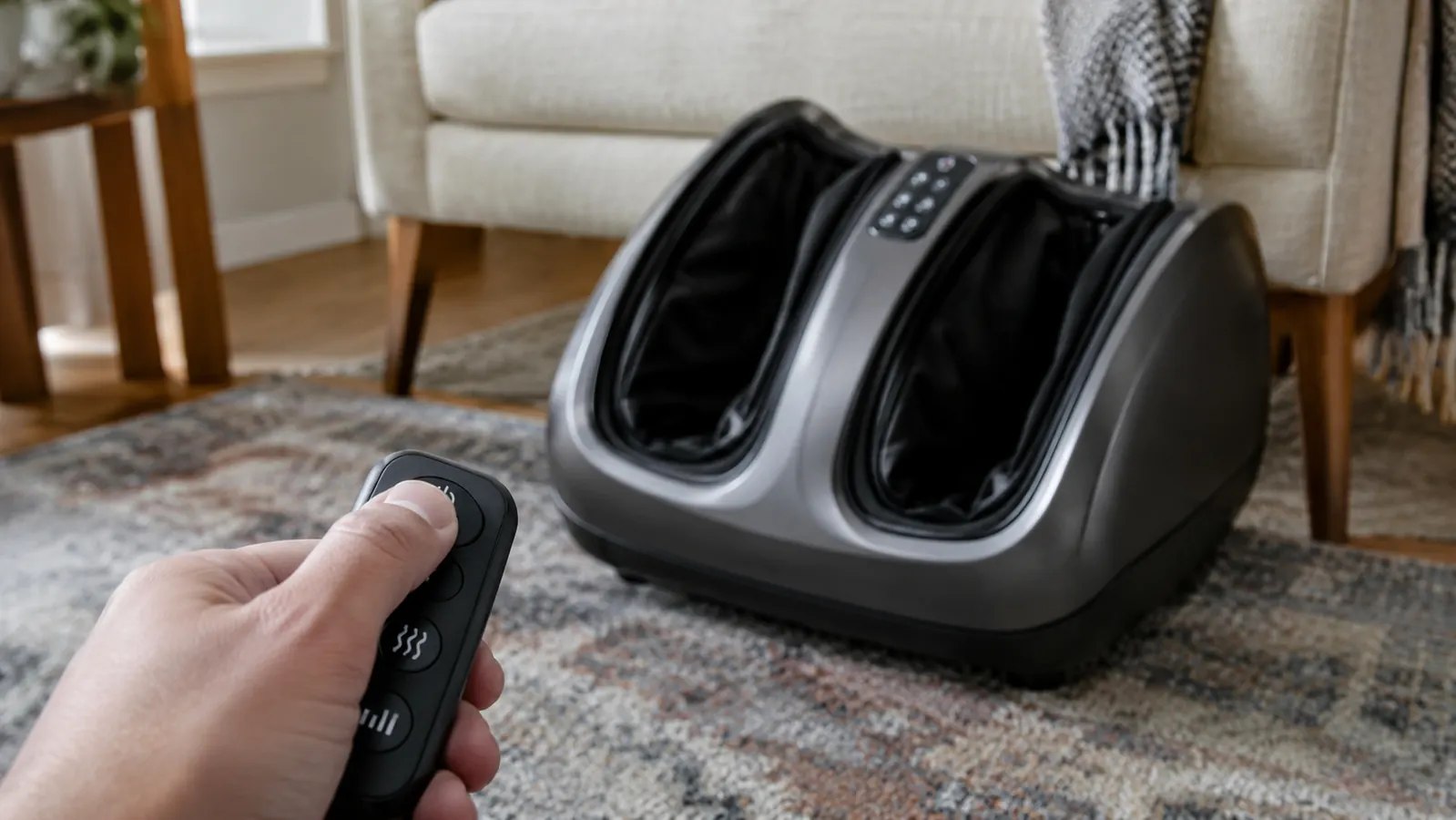
After about three weeks, I worked up to fifteen minutes at the second intensity level. That is my ceiling. I do not go longer and I do not go higher. Fifteen minutes is enough to relax the muscles in my feet and calves, and it is short enough that I have never had any soreness the next morning. The RENPHO has a built-in timer, which I use every single time. I set it for fifteen minutes and I do not restart it when it stops.
Dale uses it too, and he learned the same lesson I did. He is a big guy, size 12 wide, and he thought he needed the highest setting to feel anything. The first time he tried it on high, he said his feet felt bruised the next day. Now he uses the second level for ten minutes and he says that is plenty. Bigger feet do not need more pressure. They need the same gentle approach, just with a foot well that actually fits them. The RENPHO fits his feet fine, which surprised me, because a lot of massagers are too narrow for him.
A note on timing. I use the massager in the evening, usually around 8:30, after dinner and before I settle in to watch television. Using it right before bed helps with the nighttime burning and tingling, but I give myself about thirty minutes between the massage and lying down. That way I can check my feet one more time and make sure everything looks normal. If I use it during the day, I make sure I am sitting down for the whole session and I do not try to stand up right away afterward.
Step 5: Check your feet again afterward and keep a simple log
When the timer stops, I take my feet out and I do the same check I did before. I look at the soles, between the toes, and around the heels. I am looking for any redness, any new marks, or any spot that got irritated. In eight months of using the RENPHO, I have never found a problem after a session. But I check anyway, because the day I stop checking is the day something will happen.
I also keep a small notebook in the living room drawer. I write down the date, how long I used the massager, what setting I used, and whether I noticed anything unusual. It sounds like overkill, but it has been genuinely useful. When I saw my podiatrist in March, I was able to tell her exactly how often I was using it and at what intensity. She said that was the kind of detail she wishes more patients kept. And on the nights when the burning is worse, I can look back and see that it is not related to the massager, it is just how neuropathy goes sometimes.
One more thing I have learned: do not use the massager on a day when your feet are already irritated, swollen, or sore from a long walk. I walk about twenty minutes most mornings around my neighborhood, and on the days I push a little further, my feet let me know. On those days, I skip the massager and just do my foot check and a gentle stretch. The massager is a tool for good days, not a punishment for bad ones.
What Else Helps
The RENPHO massager is the centerpiece of my evening routine, but it is not the whole routine. I do a few other things that have made a real difference. I stretch my calves and the bottoms of my feet for a few minutes each evening before I use the massager. I keep my feet moisturized with a plain fragrance-free lotion, but never between the toes, because moisture there can cause problems. And I always wear socks around the house, even in the Oklahoma summer, because going barefoot on hardwood floors makes my feet more sensitive, not less.
I also keep my blood sugar in a reasonable range, because my neuropathy is tied to my diabetes and I have noticed that my feet feel worse on the days my numbers run high. That is not medical advice, it is just what fifteen years of living with type 2 diabetes has taught me. And I see my podiatrist every three months without fail. The massager is a comfort tool. The foot check and the doctor visits are the part that actually keeps me safe.
The day I stop checking my feet is the day something will happen. The massager is a comfort tool. The foot check is the part that keeps me safe.
A gentle foot massager can be part of a safe evening routine
The RENPHO foot massager with heat has been a steady part of my evenings for eight months. It has adjustable intensity, a heat setting I keep off, and enough room for my feet and Dale's size 12 wides. Check today's price on Amazon and talk to your doctor if you have any concerns about your own feet.
Amazon Check Today's Price on Amazon →