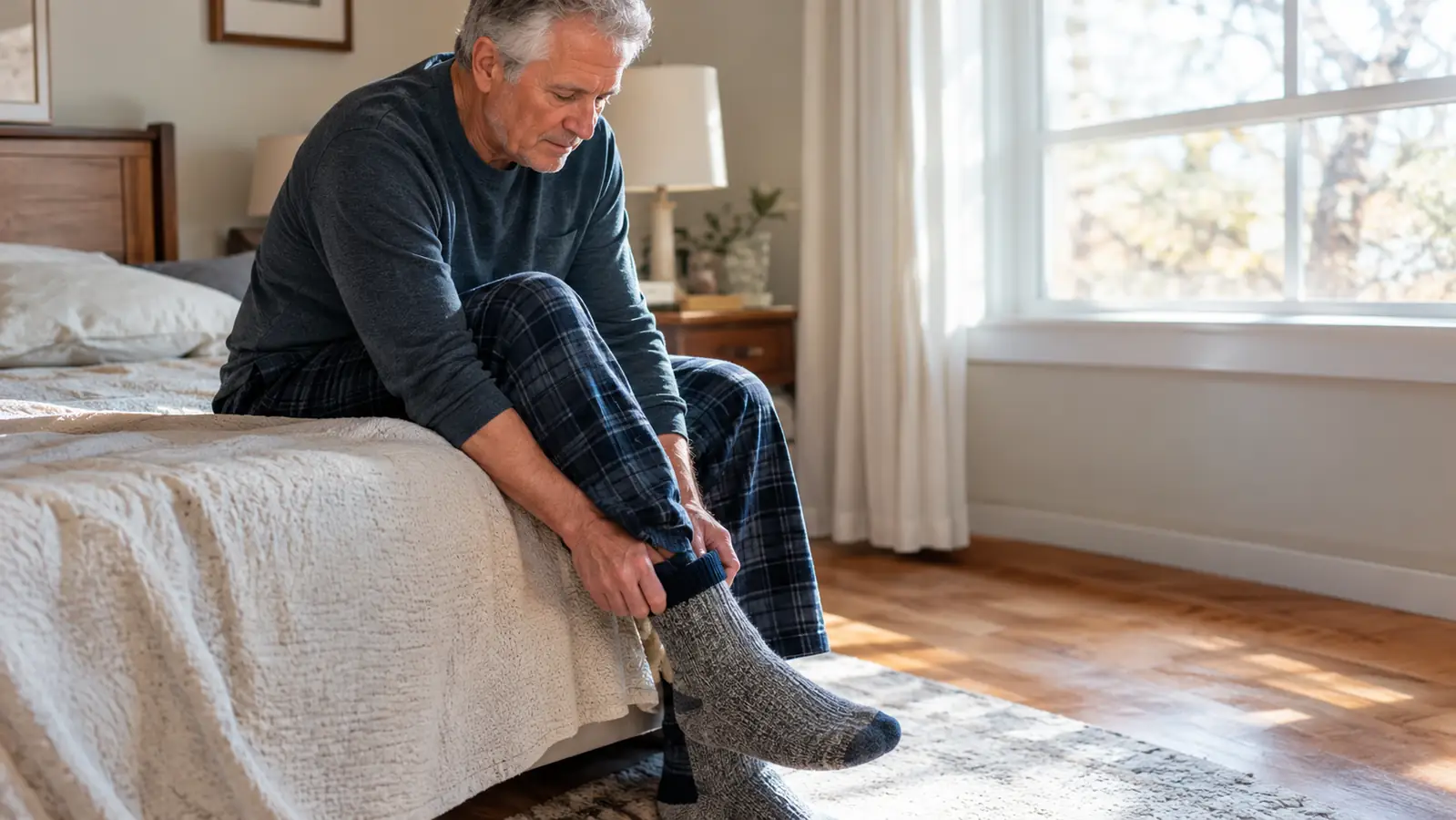
Dale came home from his last podiatrist visit with the same advice he always gets: wear socks that do not squeeze your feet. Easy to say, harder to shop for, because every diabetic sock on the shelf claims to be soft, loose, and kind to sensitive skin. So I did what I usually do when I cannot trust the labels. I bought two kinds and tested them side by side. The Dr. Scholl's Men's Diabetic and Circulatory Non-Binding Cushioned Socks went into his sock drawer, and a bamboo-blend diabetic sock from one of the top-rated listings online went in beside them. For six weeks, Dale wore both, washed both, and gave me a report every evening while I checked his feet.
Short answer: for Dale, the Dr. Scholl's pair wins on the things that matter most, which are cushioning under the ball of the foot and a top band that leaves no mark. The bamboo pair feels silkier against the skin and runs cooler in warm weather, but it does not pad the way his feet need. Dale is 66, wears a men's size 12 wide, and has early neuropathy that mostly shows up as numbness in his toes by mid-afternoon. Padding is not a luxury for him. It is the difference between a comfortable walk and a numb, aching evening.
| Dr. Scholl's Men's Diabetic Socks | Bamboo-Blend Diabetic Socks | |
|---|---|---|
| Cushioning | Thick, plush padding through the sole and heel. Feels like a padded slipper from the first wear. | Thin, lightweight knit. Soft, but no real padding under the ball of the foot. |
| Softness | Smooth cotton blend that is comfortable but not remarkable. | Bamboo viscose is noticeably silkier against sensitive skin. |
| Non-binding top | Wide, stretchy band that leaves no mark on the ankle after a full day. | Cuff depends on the brand. The pair we tried pressed in by evening. |
| Moisture and heat | Cotton blend breathes fine for everyday wear, but holds warmth. | Bamboo wicks moisture and stays cooler on hot days. |
| Durability | Holds shape and cushion after six weeks and more than twenty washes. | Pilled along the heel and thinned at the toe in the same time. |
| Wide-foot fit | Men's M, L, and XL sizes with stretch. Room for a 12 wide without pinching. | Sizing varies by brand; stretchy knit fits wide feet but some pairs run short. |
| Best for | Everyday all-day wear, walks, and long hours on your feet. | Hot weather, low-key days, or when skin sensitivity bothers you more than padding. |
Where Dr. Scholl's Wins
The biggest gap between the two was underfoot. The Dr. Scholl's socks have a thick, plush cushion through the sole and heel that feels like a padded slipper. Dale noticed it the first morning he put them on. He walked around the kitchen in them before his coffee was done, which for a man who does not get excited about socks is a strong review. By the end of the first week, he stopped reaching for the bamboo pair in the morning and went straight for the Dr. Scholl's.
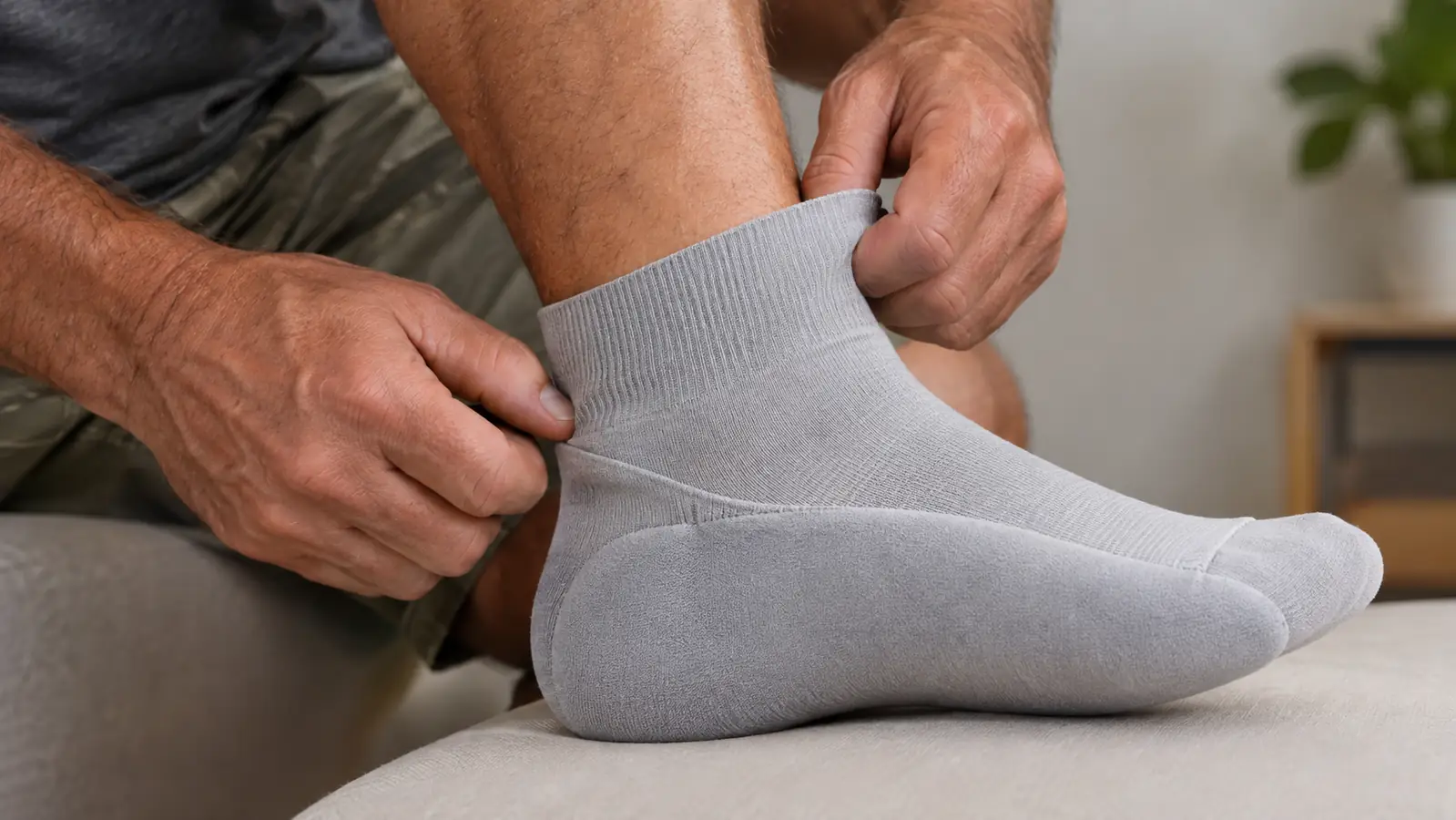
The other win is the non-binding top. The band is wide and stretchy, and after a full day it does not leave a red line on his ankle the way most crew socks do. The bamboo pair we tried had a tighter cuff, and by evening we could see where it had pressed in. That matters when your feet are numb, because a sock that squeezes can cut off circulation without you feeling it until you take it off. The Dr. Scholl's socks also held up better in the wash. After six weeks and more than twenty washes, the cushion is still thick and the shape is still true. The bamboo pair started to pill along the heel and thin out at the toe.
One more thing won me over, and it is the fit. Dale wears a men's 12 wide, and most socks squeeze his arches or slide down into his shoe. These stayed put all day without feeling tight. The cushion runs the full length of the foot, not just the heel, so the ball of the foot gets the same padding as the heel. For someone with numbness under the toes, that full-length cushion is the difference between walking for twenty minutes and limping home.
Where the Bamboo Socks Win
I want to be fair, because the bamboo socks won two things outright. The first is softness. Bamboo viscose is noticeably silkier than the cotton blend in the Dr. Scholl's pair. If your main complaint is that everything feels rough against your skin, the bamboo fabric is the gentler choice, and I understand why so many people love it. The second is heat. Bamboo breathes better, and on the warm afternoons we had in Tulsa this fall, Dale said the bamboo pair kept his feet cooler. For a man whose feet run hot, that is a real benefit and not a small one.
So when would I reach for bamboo? On a hot day, on a short errand, or when skin sensitivity bothers you more than padding does. If your feet are mostly numb and you want the lightest, softest thing against them, bamboo is lovely. The tradeoff is that softness does not come with support. There is no real cushion under the sole, and the fabric wears faster. For us, that made bamboo a fair-weather sock and the Dr. Scholl's pair the everyday one.
One caution if you go the bamboo route: quality varies widely between brands. The pair we tested was a bestseller with thousands of reviews, and it still lost its shape faster than I expected. Cheaper bamboo socks are often mostly cotton with a little bamboo in the blend, which changes the feel completely. If you want the real bamboo softness, read the fiber content before you buy, and expect to replace them sooner than a padded sock.
The pair Dale reaches for every morning
The Dr. Scholl's Men's Diabetic and Circulatory Non-Binding Cushioned Socks carry a 4.5-star average across more than 22,000 ratings. They are the pair that won six weeks of daily testing in our house. Check today's price on Amazon and see if they work as well for your feet as they do for his.
Amazon Check Today's Price on Amazon →Who Should Buy Which
Buy the Dr. Scholl's pair if you want padding under the ball of the foot, a top band that does not squeeze, and a sock that still looks and feels right after two months of washing. That covers most people with diabetic feet, especially if you spend a lot of time on your feet or walk every morning like Dale and I do. The cushion is the whole point, and it holds up. Dale wears a 12 wide and had no trouble with the fit, which is often the first thing that goes wrong with a sock.
Buy the bamboo socks if your biggest issue is skin sensitivity or heat and you do not need much underfoot. They are a good summer sock and a good backup pair. Just know that soft and cool come with a shorter lifespan, and check the cuff before you buy, because not every bamboo sock is truly non-binding. The ones we tried had a tighter top than we expected, and that is the one feature a diabetic sock cannot get wrong.
And if your feet are swollen, cracked, or showing any sore that is not healing, stop reading and call your doctor or podiatrist. No sock, bamboo or cushioned, replaces a medical check. What a good sock does is protect sensitive feet and make the day more comfortable, and that is the honest ceiling for any of these.
What to Look For in a Diabetic Sock
After years of testing foot-care products, I have a short list of what actually matters. First, the top band has to be non-binding, which means it stretches wide instead of digging in. Second, the sole needs some cushion if you walk much at all. Third, the fabric has to dry reasonably fast and survive the wash. Everything else is marketing. Seamless toes are nice, but Dale never once complained about a seam, and he would have if it bothered him.
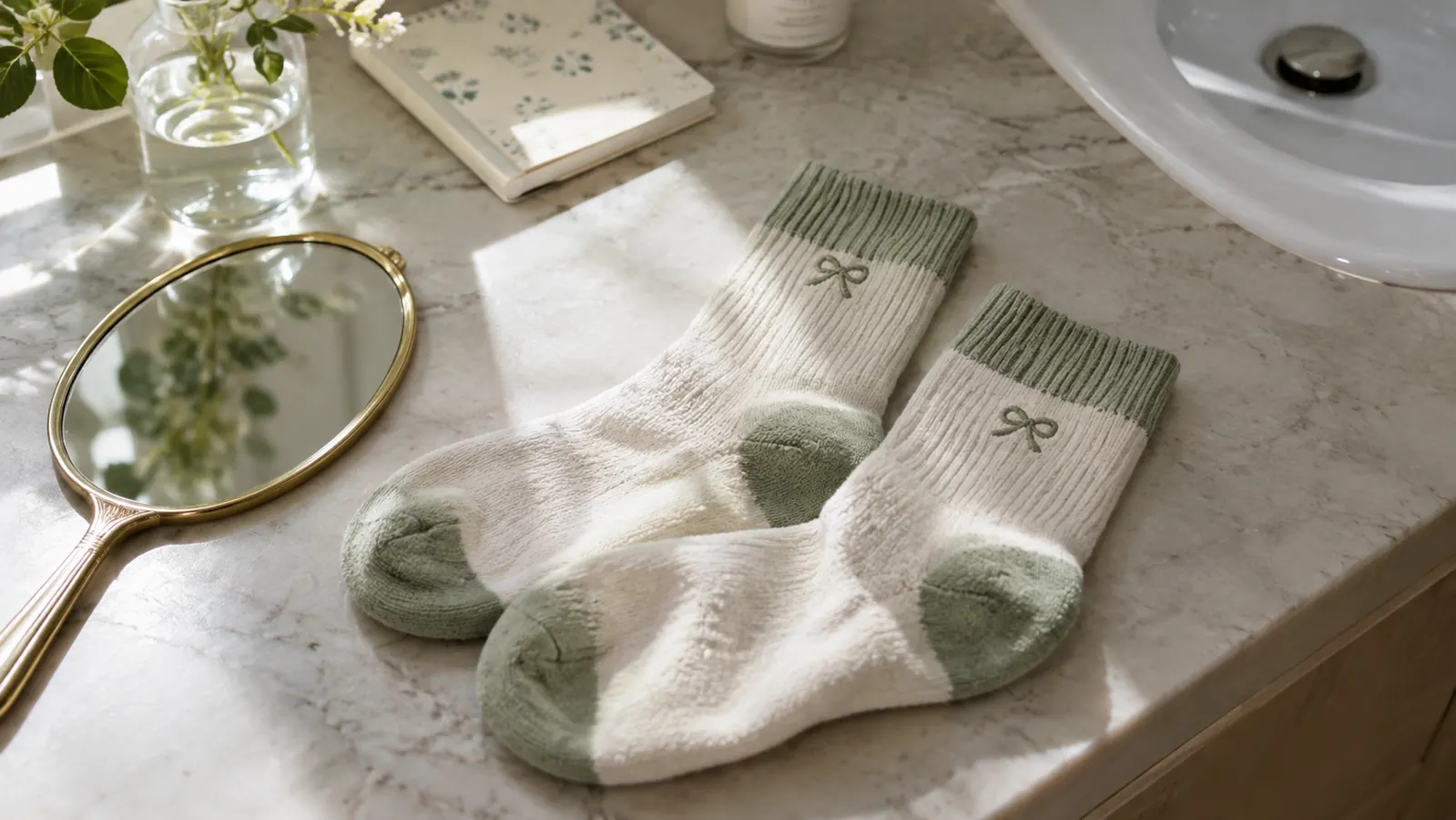
The other thing I look for is honest sizing. A diabetic sock that runs short will bunch under the toes, and bunched fabric against numb skin can cause a blister before you feel it. That is why the Dr. Scholl's sizing, with actual men's sizes instead of one-size-fits-all, mattered to us. It is also why I check Dale's feet every evening with a hand mirror, no matter which sock he wore that day. The mirror catches what the numbness hides.
How I Compared Them
Here is exactly how we tested. Both pairs went through the same six weeks: a twenty-minute walk most mornings, a full day of wear around the house and on errands, and a machine wash in cold water with the rest of our laundry, then air dried. I kept a small notebook in the bathroom and wrote down what Dale said at the end of each day, plus what I saw when he took the socks off.
I have type 2 diabetes myself, fifteen years now, with peripheral neuropathy for about eight. Mostly numbness in my toes and the balls of my feet, with burning and tingling at night. So I know the difference between a sock that just feels soft and a sock that actually protects a numb foot. Dale is earlier in this than I am, but his toes already go numb by afternoon. That is why the evening foot check matters. A sock cannot fix neuropathy, and no honest product claims it can. What a sock can do is protect your feet and make the day more comfortable, and that is the standard I tested against.
The three things I looked for were simple. Does the top leave a mark? Does the sole protect the ball of the foot? Does the sock hold its shape after washing? On all three, the Dr. Scholl's pair came out ahead. The bamboo pair won the softness test and the coolness test. That is the honest scorecard.
Dale and I have a simple routine. We walk about twenty minutes most mornings around our neighborhood, then I check both our feet in the evening with a hand mirror. That routine is non-negotiable, and it is also how I noticed the difference between these socks. The Dr. Scholl's pair kept his feet comfortable through the whole walk. The bamboo pair felt great at the start and thinner by the time we got home. After a few weeks, the pattern was consistent enough to write down.
The Other Options I Considered
Before I settled on these two, I looked at compression socks, seamless diabetic socks, and a couple of big-name athletic brands. Compression socks can help some people with circulation, but Dale's podiatrist told him to avoid tight compression on feet that are already numb, so we ruled those out. Seamless socks are comfortable, but most of the ones we tried had almost no cushion. And the athletic brands fit well but squeezed his arches by the end of the day. The two socks in this comparison were the ones that made it past the first week.
If you are comparing on your own, keep that same standard. The right sock for you is the one that leaves no mark, pads the ball of the foot, and still feels good at dinner time. Brand matters less than those three checks. The Dr. Scholl's pair passed all three for Dale, and the bamboo pair passed two.
After six weeks and more than twenty washes, the cushion is still thick and the shape is still true.
The Bottom Line
If you asked me which sock feels better straight out of the package, I would say the bamboo one. It is silkier, cooler, and lighter. But feel is not just the first touch. It is how your feet feel at five in the evening after a day of walking. On that measure, the Dr. Scholl's pair won by a wide margin, because cushioning is what tired, numb feet need most.
So here is my plain answer. For everyday wear, for walks, for long days on your feet, buy the Dr. Scholl's Men's Diabetic and Circulatory Non-Binding Cushioned Socks. Keep a bamboo pair on hand for hot weather if you like the feel. And no matter which you choose, do the evening foot check with a mirror, every day, and tell your doctor about any new sore or change in feeling. That routine does more for your feet than any sock ever will.
One last note on expectations. No sock will stop the burning or the tingling, and I would be wary of any product that promises it will. What a good sock can do is remove one more source of irritation so your feet have a chance to rest. For us, that is the Dr. Scholl's pair. For you, it might be something else entirely. Try them, walk in them, check your feet, and let your own evenings decide.
The pair I keep reordering for Dale
Six weeks in, the Dr. Scholl's Men's Diabetic and Circulatory Non-Binding Cushioned Socks are the ones he reaches for every morning. They are comfortable, they last, and they do not squeeze his feet. Check today's price on Amazon and see for yourself.
Amazon See Today's Price on Amazon →