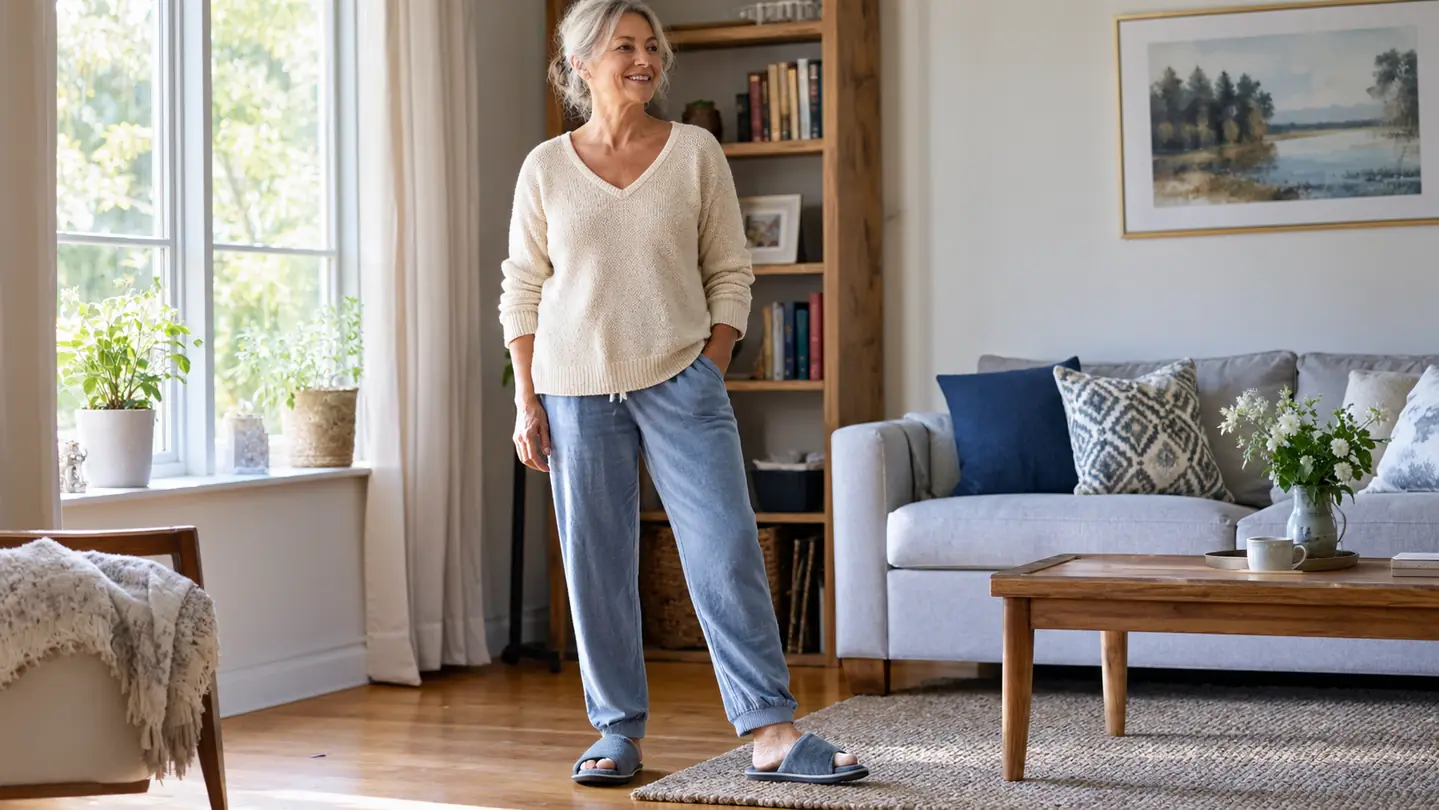
I have worn the same style of house slipper for years, the kind you buy at the drugstore and throw out when the sole splits. Then my feet changed. I have type 2 diabetes and about eight years of peripheral neuropathy, mostly numbness in my toes and the balls of my feet, with burning and tingling at night. The old slippers stopped working for me. They were too narrow, the soles were hard, and I could not tell when the seams were rubbing until I saw the red marks in my evening foot check. So this season I tried the LongBay adjustable slippers, the wide memory foam house shoes with the strap across the top, and I wore them every day for about three months.
This is not a medical claim and I am not a doctor. These slippers do not treat neuropathy, and nothing I say here should replace your own foot check or a visit to your podiatrist. What I can tell you is what three months of daily wear felt like on my feet, on my hardwood floors, and on my husband Dale's feet too, since he has early neuropathy and wears a men's size 12 wide. LongBay makes a women's version and a men's version, and we tested both.
The Quick Verdict
A wide, adjustable, memory foam slipper that stays on my foot, protects my numb toes on hardwood, and has held up through a full season of daily wear. Not a medical device, but a genuinely comfortable house shoe for sensitive feet.
Amazon Check Today's Price →A Wide, Adjustable House Shoe That Stays On My Foot
After a season of daily wear, the LongBay adjustable slippers are the pair I reach for first every morning. Check today's price on Amazon and see if they fit your routine.
Amazon Check Today's Price on Amazon →How I've Used It
I put these on first thing in the morning, before my feet hit the hardwood in the kitchen. I wear them while I make coffee, while I do dishes, and while I walk my usual 20 minutes around the neighborhood on cooler mornings. I wear them in the evening when the burning in my feet acts up, and I wear them to the bathroom in the middle of the night. That is the honest use pattern: all day, every day, for about three months.
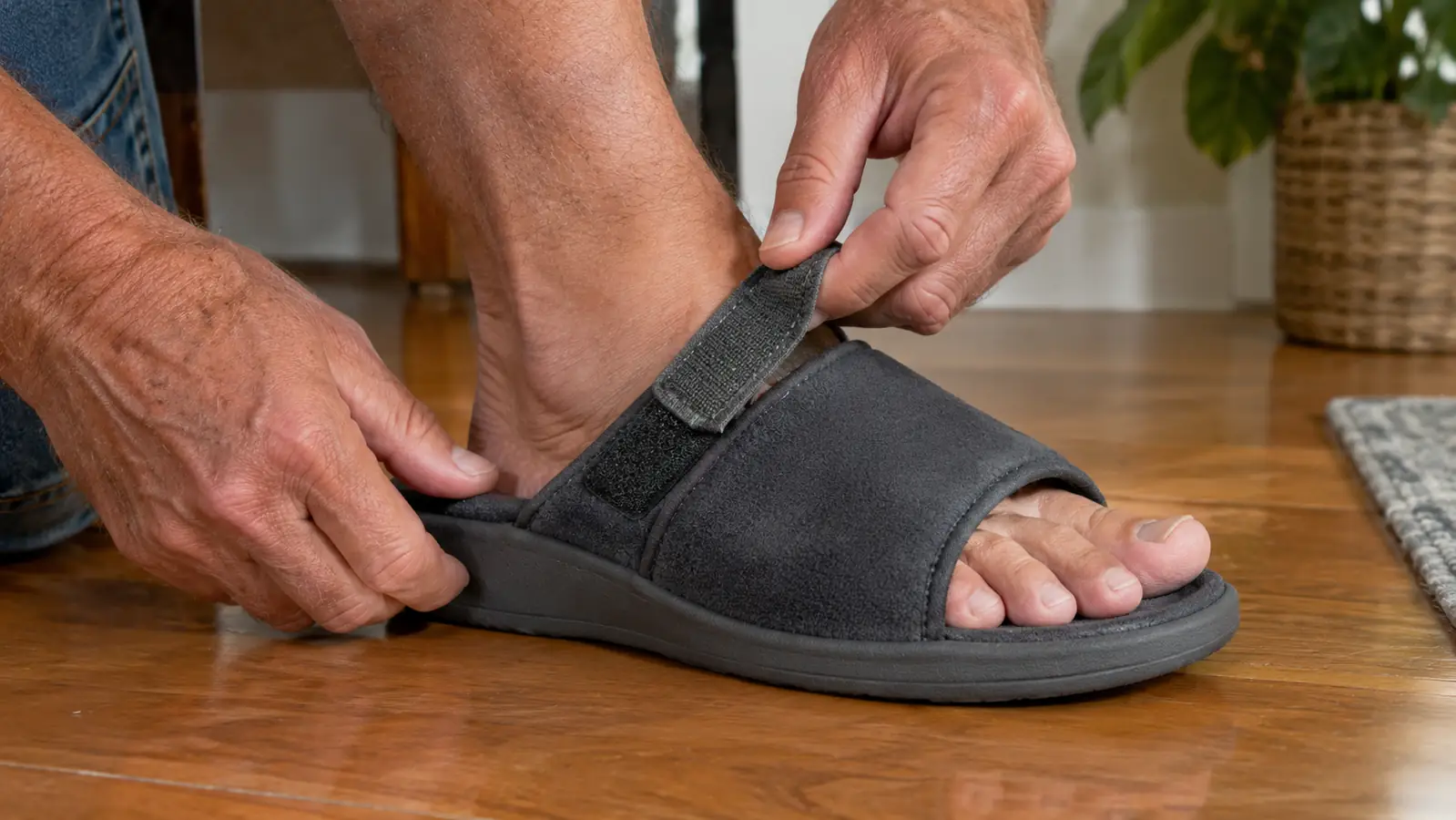
The slipper has a strap across the top that you adjust with a hook and loop closure. That matters to me because my feet swell a little by evening, and a fixed opening either feels tight at night or flops off in the morning. With the LongBay, I loosen the strap in the evening and tighten it in the morning. It takes about two seconds. On a typical Tuesday in late October, I noticed my left foot was more swollen than usual after a long day of errands, and I was glad I could loosen that side without undoing the whole slipper.
I also checked my feet every evening with my hand mirror, the same routine my podiatrist asked me to keep. I looked for red marks, blisters, or any change in feeling. I did not find sores or rubbing marks from these slippers, which is the main thing I was worried about. I still do the check every night, and I still see my podiatrist every three months. My last appointment was in early November, and she asked what I had been wearing around the house. When I told her about the LongBay pair, she said the wide toe box and the soft upper were sensible choices for someone with numbness, as long as I kept up the daily check.
What Makes the LongBay Different From My Old Slippers
The first difference is the width. My old drugstore slippers were cut narrow, and my feet would slide forward until my toes pressed against the seam. The LongBay has a wide toe box, and the upper is soft and forgiving. My toes have room to spread, which matters when you cannot always feel exactly where your foot is inside the shoe. I measured the toe box against my old pair one afternoon, and the LongBay is noticeably wider across the ball of the foot, about half an inch on each side.
The second difference is the adjustable strap. This is the feature I did not know I needed. Because I have numbness in my toes and the balls of my feet, I cannot always tell if a shoe is too loose until it slips. The strap holds the slipper on my foot without squeezing. I have never had one come off while I was walking, and I have never had to stop and push it back on with my toe. That happened with my old slippers at least once a week, usually when I was carrying a full mug of coffee.
The third difference is the sole. The outsole has some tread, and it grips the hardwood in my kitchen and hallway. I have not slipped once in three months, and I am clumsy in the morning before coffee. The sole is also thick enough that I do not feel every seam in the floor, which matters when the bottoms of my feet are numb and I cannot tell if I am stepping on something small. One morning I stepped on a stray piece of dry cat food that had fallen from the pantry shelf, and I felt it through the sole just enough to stop and brush it away, but it did not dig into my foot the way it would have in my old thin-soled pair.
How the Memory Foam Feels After a Full Day
The insole is a thick memory foam pad. In the morning it feels soft and springy. By evening, after I have been on my feet cooking and cleaning, it still has some give, though it is not as plush as it was at 7 a.m. That is normal for memory foam, and it is not a complaint. The foam has not flattened out or developed a permanent dent where my heel sits, which is what I expected after three months of daily wear. I checked by pressing my thumb into the heel pad one evening, and it bounced back within a few seconds.
One thing I will say honestly: the memory foam is soft, but it is not a medical orthotic. It does not correct my gait, and it does not take away the burning at night. What it does is cushion the parts of my feet that still have feeling, and it protects the parts that do not. For me, that is the right job for a house slipper. I have a pair of rigid orthotic inserts that my podiatrist recommended for my walking shoes, and I would not put those in a slipper. The LongBay is meant to be soft, and that is exactly what I want indoors.
Dale tried the men's version of the LongBay slipper, and he had the same reaction I did. He wears a men's size 12 wide, and he said the toe box felt roomy without feeling sloppy. He also liked the strap, because his feet swell in the afternoon and he could loosen it without taking the slipper off. He has worn his pair every evening since they arrived. One night in mid-December he wore them out to the garage to bring in a box of Christmas decorations, and he said the outsole handled the concrete step fine.
The Evening Test: Burning and Tingling
My neuropathy is worst at night. The burning and tingling start around 8 p.m. and can keep me awake. I cannot tell you that these slippers stopped the burning, because they did not, and I would not expect any shoe to do that. What I can tell you is that the slipper does not make it worse, and the soft cushion gives my feet something gentle to rest against while I wait for the feeling to pass. On the worst nights, I sit in my recliner with my feet up, and the slipper stays on without pressing anywhere.
I also learned something important during the evening test: I have to be careful with heat. My feet are numb enough that I cannot always feel a burn until it is serious. So I do not use any heating pad or warm foot soak without asking my doctor first, and I would give the same advice to anyone with neuropathy. A slipper that traps too much heat would be a problem for me. The LongBay is a normal house slipper, not a heated one, and it breathes well enough that my feet do not get sweaty or overheated in the evening. I wore them through a warm spell in September when the house stayed near 78 degrees, and my feet did not feel clammy.
The strap is the feature I did not know I needed. It holds the slipper on my foot without squeezing, and I have not had to stop and push it back on with my toe in three months.
How It Held Up Over Three Months
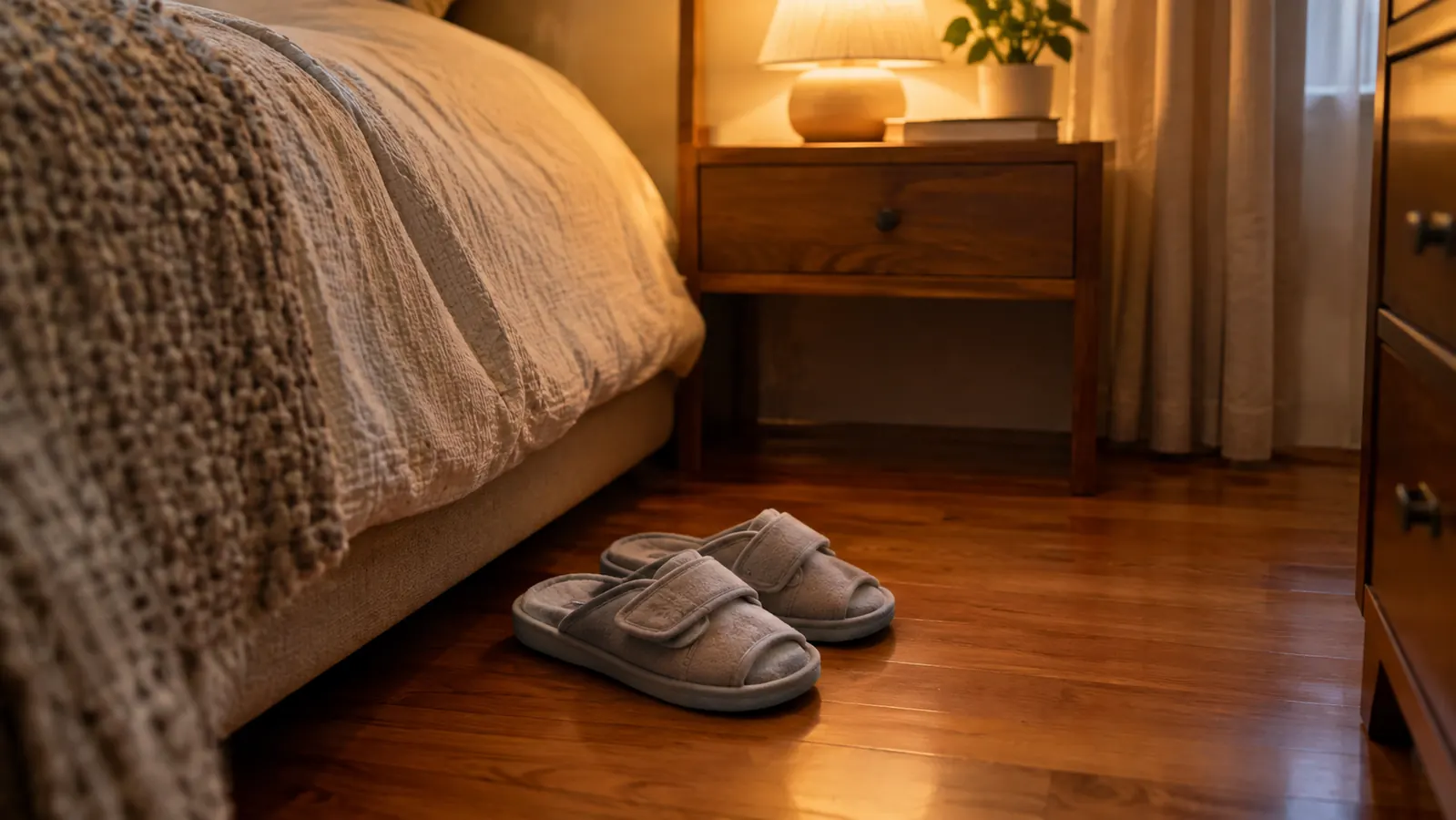
I wore these slippers every day for about three months, which is the real test. The upper still looks good. The strap still holds firmly, and the hook and loop closure has not worn out. The memory foam has not collapsed. The outsole has a little wear on the heel, but nothing that affects the grip. I would say these slippers have another season in them, maybe two. I checked the stitching around the strap attachment point at the end of November, and there are no loose threads or pulled loops.
The one thing I would change is the cleaning. The upper is a soft fabric, and it picks up dust from the floor. I have brushed mine off with a damp cloth, and they look fine, but they are not the kind of slipper you can just toss in the washing machine. If you are looking for a washable house shoe, this is not it. I tried wiping a small spot on the toe with a mild soapy cloth, and it came off without leaving a mark, but I would not soak the whole slipper.
I also want to be honest about the sizing. I normally wear a women's size 9, and the size chart put me in a medium. The fit is right, but if you are between sizes, or if your feet swell a lot, I would size up. The strap gives you some room to adjust, but it cannot fix a slipper that is too short. Dale ordered the men's extra wide in a 12, and he said the length was true to size, with about a thumb's width of room past his longest toe.
What I Liked
- Wide toe box gives numb toes room to spread without pressing against a seam
- Adjustable strap keeps the slipper on my foot all day, even when my feet swell by evening
- Treaded outsole grips hardwood floors, and I have not slipped once in three months
- Memory foam insole has held its shape through a full season of daily wear
- Soft upper with no rough seams, so I have not found red marks in my evening foot check
Where It Falls Short
- Not washable; the fabric upper needs to be wiped clean by hand
- Memory foam is cushion, not a medical orthotic, and it will not correct gait or relieve neuropathy symptoms
- Sizing runs a little small, so people between sizes should size up
- The strap can feel snug if you have very high arches and need to loosen it often
Who This Is For
The LongBay adjustable slippers are for anyone with sensitive feet who spends a lot of time on hard floors. If you have neuropathy, if your feet swell by the end of the day, or if you simply want a wide, soft house shoe that stays on your foot, these are worth a look. They are especially good for people who cannot always feel when a slipper is slipping, because the strap does the job of holding it in place.
They are also a good choice for anyone who wants a slipper they can wear outdoors for a quick trip to the mailbox. The outsole is sturdy enough for a short walk on the driveway, though I would not wear them on a long hike. For indoor use, which is what I bought them for, they are excellent. I have worn mine out to the porch to bring in the newspaper most mornings, and the sole has held up fine on the concrete.
Who Should Skip It
Skip the LongBay if you need a slipper you can throw in the washing machine, because the fabric upper is not machine washable. Skip it if you need a rigid medical orthotic or a shoe with arch support, because the memory foam is soft cushioning, not structure. And skip it if you have open sores, ulcers, or any active wound on your foot, because you should be talking to your doctor or podiatrist about what to wear, not reading a slipper review.
If your feet are between sizes, or if you have significant swelling that changes through the day, I would size up and use the strap to adjust. And if you have neuropathy, please keep doing your daily foot check and see your podiatrist regularly. A good slipper is part of a routine, not a replacement for one. That is the honest bottom line after a season of wearing the LongBay around the house.
A Season of Daily Wear, and I Still Reach for Them First
After three months on hardwood floors, the LongBay adjustable slippers are the pair I put on every morning. See today's price on Amazon and decide if they belong in your routine.
Amazon Check Today's Price on Amazon →