The first thing people get wrong about neuropathy is that it is all pain. For some of us, the bigger problem is the opposite: parts of the foot go quiet. I have lived with peripheral neuropathy in both feet for about eight years, so when my husband Dale started saying his toes felt numb, I knew exactly what to watch for. Dale is 66, a retired machinist, and not the kind of man who complains. When he does complain about his feet, I listen. He has type 2 diabetes, same as me, and early neuropathy in both feet. He spent four decades on his feet in a machine shop, and his feet remember every one of those years. He had been saying his feet ached by supper, and a man who cannot feel a hot spot needs support that spreads pressure instead of letting it sit on one place. That is how Dr. Scholl's Heavy Duty Support Insoles ended up in his work boots, and why I am writing this months later.
Let me be clear about what this review can and cannot do. I am not a doctor, and no insole treats, cures, or reverses neuropathy. Dr. Scholl's Heavy Duty Support Insoles are a comfort and protection aid, the same way a good pair of socks is. What I can tell you is what Dale and I have seen over five months of near-daily wear: how they felt fresh out of the box, how they have held up under a man who carries well over 200 pounds, and what I look for when I check his feet every evening.
The Quick Verdict
Firm, supportive insoles that are still holding their shape after five months in a big man's work boots. Not plush, and not a treatment for neuropathy, but they do what the label promises: keep the arch up and spread the load across the whole foot.
Amazon Check Today's Price →The insole that outlasted every soft pair Dale tried.
Dr. Scholl's Heavy Duty Support Insoles are built for men over 200 pounds with wide feet. Firm arch support, heel shock absorption, and a trim-to-fit design that worked in Dale's size 12 wide boots. Check today's price on Amazon and read the fit notes before you order.
Amazon Check Today's Price on Amazon →How I've Used It
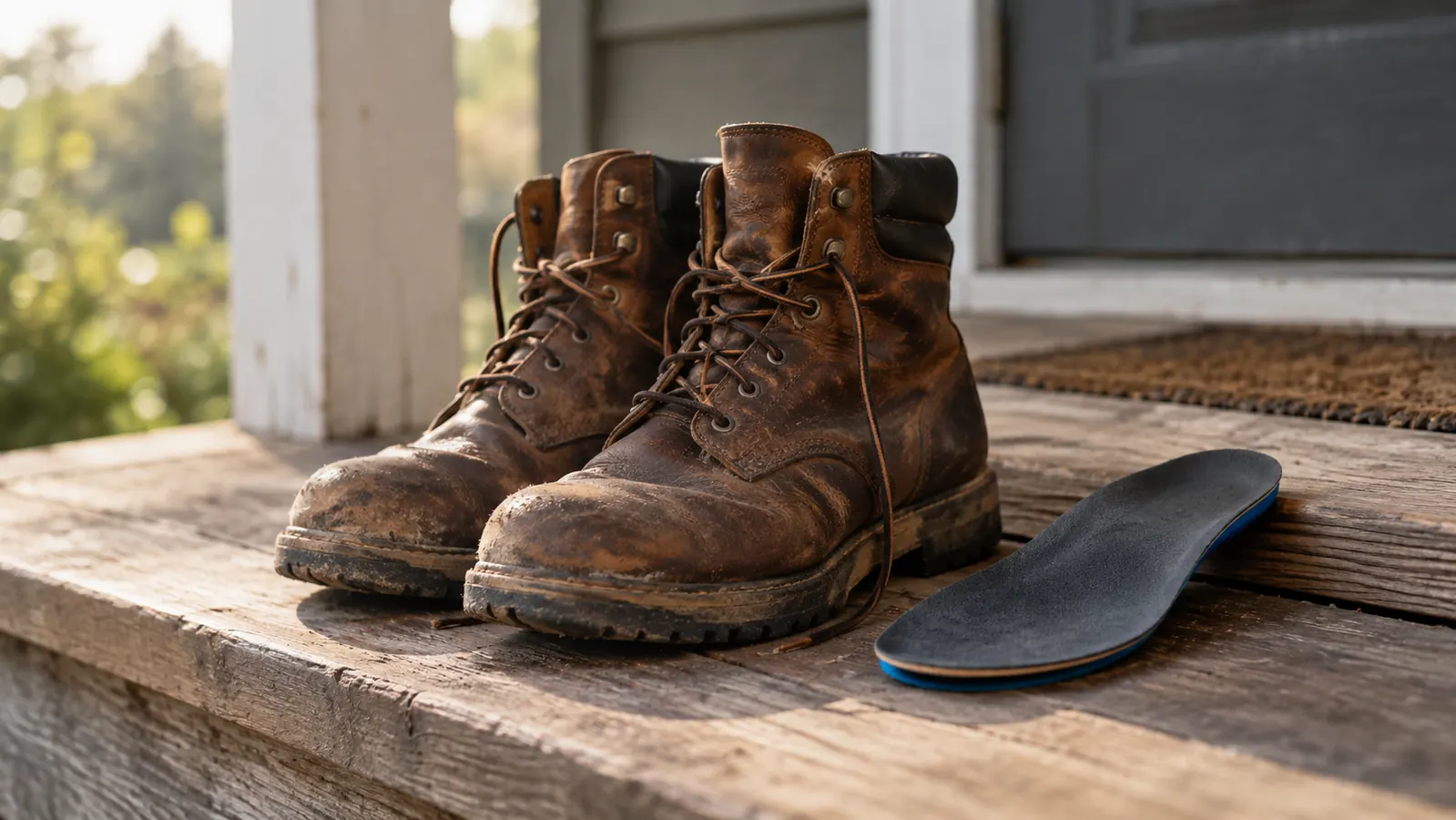
Dale got his pair in early spring, about five months ago. He is a retired machinist who still spends his mornings in the garage and his afternoons on his feet in the yard, and he will not give up his old work boots. The insoles that came in those boots had gone flat long before he retired. We tried a soft memory foam pair from the drugstore first. They felt wonderful for about a week, then squashed down until they were as flat as the originals. That is when I started reading about the Heavy Duty Support line, which Dr. Scholl's makes specifically for men over 200 pounds.
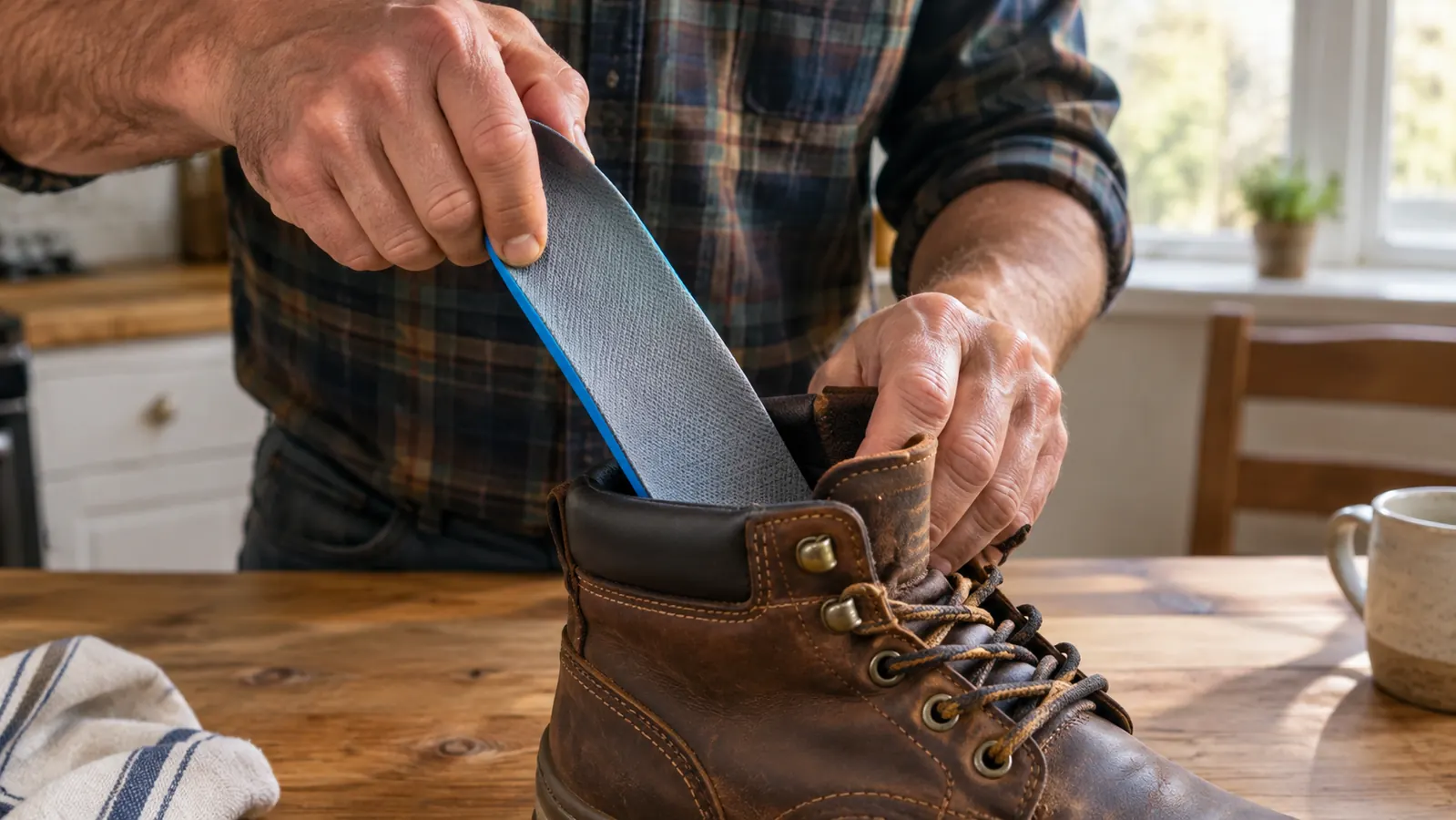
The insoles are marked for men's sizes 8 to 14 and trim to fit. Dale wears a 12 wide, and he trimmed the toe of each one with scissors, following the printed line on the bottom. It took about two minutes per insole. He put them in his work boots and in a sturdy pair of walking shoes, and he wears them most days. Every evening, as part of our routine, I check both of his feet with a hand mirror, the same way I check my own. I look for red spots, blisters, or any change in the skin, because with neuropathy a sore can start without him feeling a thing. After five months, I have not seen a single pressure mark I would blame on these insoles.
One honest note on the first week. Dale said the insoles felt stiff, and they did. There is a firm arch under the foot, and if you are used to soft, squishy insoles, that takes some getting used to. He also had to loosen the laces on his boots a little, because the insoles added a bit of height. After that first week, he stopped mentioning them entirely. When a man stops thinking about his feet, I take that as a good sign.
Why Dale Needed More Than a Stock Insole
The insoles that come inside most work boots are thin. They are fine for a weekend, but they are not built for a man over 200 pounds standing on concrete for hours. Dale's had worn down to almost nothing, which left his arch unsupported and put all his weight on the heel and the ball of the foot. With wide feet, the problem gets worse, because the foot spreads and the edge of the shoe presses into the side of the foot.
For someone with neuropathy, this matters more than it does for other people. If a shoe presses hard on one spot for hours, that spot can break down, and if you cannot feel it, you might not notice until it has become a problem. The job of a heavy duty insole is to spread the load across the whole foot so no single spot has to take the brunt. That is protection, not treatment, and it is exactly why Dale wears them.
The Arch Support and Shock Absorption, in Plain Words
The two features Dr. Scholl's leads with on this pair are shock absorption and arch support, and after five months I understand why. The arch is firm. When Dale first stepped into his boots, he said he could feel the arch sitting up under his foot in a way the old flat insole never did. That support keeps the foot from rolling inward and takes tension off the bottom of the foot. That firmness under the arch is the first thing I would tell anyone to expect, because it is the difference between this pair and the soft ones that failed Dale.
The heel is where the shock absorption lives. Dale stands on concrete in the garage and on our hardwood floors in the kitchen and hallway, and neither surface gives. The heel of the insole compresses when he steps down and bounces back when he lifts his foot, which softens every step. The whole thing is shaped to hold the foot instead of letting it slide around, and the trim-to-fit design meant he could match it to his wide size 12 boots without losing the support at the arch.
Five Months In: What I Noticed and What Dale Said
The real test of an insole is not the first week, it is the fifth month. Dale's previous pair, the memory foam ones, felt great on day one and were flat by week three. These are different. Five months in, the arch is still firm, the heel still has its bounce, and neither insole has developed the permanent dent that the soft pair did. When Dale takes them out of his boots at night, they hold their shape on the floor. I took a photo the day he trimmed them and another at month five, same angle, same light. The difference is barely visible, which is the whole point.
Dale's report is simple. He says his feet feel less tired by supper, and he has stopped complaining about the ache in his heel. I will not tell you his knees or his back changed, because they did not, and I think you should be suspicious of any insole review that claims that much. What I can tell you is what I can see: no new calluses, no red spots, no blisters, and a man who used to talk about his feet every evening who now does not mention them at all.
We also do one small thing that I think has helped them last. Dale takes the insoles out of his boots at night to air, and once a month he wipes them down with a damp cloth and a little mild soap. After five months, they have not flaked, they have not picked up a smell, and the top surface still looks close to new. That is not complicated, it is just care, and it costs nothing.
The Tradeoffs Nobody Mentions
The biggest tradeoff is the firmness. These are not cushy insoles. If you want to sink into something soft, this is the wrong pair, and I would say that to a friend. The firm arch is the whole point, but it takes a week to get used to, and if you have a very high arch or a very flat foot, you should probably ask a podiatrist before committing.
They also add a little height. In Dale's work boots that was fine, he just loosened the laces. In a shoe with a low ankle or a tight toe box, that extra height could make things feel cramped, so measure twice and trim carefully. They are made for men's sizes 8 to 14, so they will not work for everyone, and they are not a substitute for custom orthotics. And one more time, because it matters: no insole fixes neuropathy. These are a comfort aid, and they belong in a routine that includes a daily foot check and regular visits to your podiatrist. If you notice a new sore, a blister, or any change in feeling, that is a phone call to your doctor, not a shopping decision.
How They Compare to the Memory Foam Pair We Tried
There is a fuller side-by-side comparison of these two insoles if you want every detail, but the short version is this. The memory foam pair felt amazing for exactly seven days. Then the foam packed down under Dale's weight and turned into a thinner, harder version of what it had been. The Dr. Scholl's Heavy Duty pair never felt as soft, but five months in, it still does the job. I will not pretend the soft pair did not have its appeal. We bought it twice in six months. This pair has been in his boots for five months and shows no sign of wearing out. Given the choice between a great first week and a good fifth month, I will take the good fifth month every time.
What I Liked
- Firm arch support that held its shape for five months under a man over 200 pounds
- Spreads pressure across the whole foot, which matters when you cannot feel a hot spot
- Heel shock absorption that softens concrete and hardwood floors
- Trim-to-fit design worked easily in Dale's size 12 wide boots
- Stayed put inside the boot, with no sliding or bunching
Where It Falls Short
- Firm feel takes about a week to get used to
- Adds enough height that boots felt snug until the laces were loosened
- Not plush, so it will not satisfy anyone who wants a soft step
- Men's sizes 8 to 14 only
- Not a treatment for neuropathy and not a replacement for custom orthotics
Five months in, the arch is still there. The soft pair from the drugstore was flat by week three.
Who This Is For
Buy these if you are a man over 200 pounds with wide feet who spends long days on hard floors, especially in work boots. Buy them if your insoles keep going flat and you are tired of replacing them every few months. Buy them if you have early neuropathy and your doctor or podiatrist agrees that spreading pressure across the foot is a good idea, because that is exactly what this pair does. If you are a big guy whose feet hurt by the end of the day and you have already flattened a soft pair, these are worth trying before you move on to anything fancier. And if you are still deciding whether cushioned insoles are worth trying at all, there is a separate piece on the reasons they help tired feet that covers the basics.
Who Should Skip It
Skip these if you want a soft, plush step, because this pair is firm on purpose. Skip them if you mostly wear dress shoes or thin-soled shoes, because the added height will crowd your toes. Skip them if you have an active sore, a foot ulcer, or a significant change in feeling, and call your doctor or podiatrist first. That is the one conversation no insole should replace. And if you are shopping for someone with smaller feet, these come in men's sizes 8 to 14, so look at the women's or unisex line instead. One more group: if you are buying these for someone who has never mentioned foot pain, do not expect them to change the person's life. They are insoles, not a lifestyle change.
Support that is still working in month five, not just week one.
Dale still wears these every day, and the arch is still holding. If you are shopping for a heavy duty insole, check today's price on Amazon, and remember to trim them to fit before the first wear.
Amazon Check Today's Price on Amazon →