

Nobody tells you that the hardest part of foot care with neuropathy is not the numbness. It is the worry. Every crack, every dry patch, every tiny change in color makes you stop and wonder whether this is the thing that turns into a clinic visit. I have lived with peripheral neuropathy in both feet for about eight years, and I have spent nearly 3,000 evenings sitting on the edge of my bed with a hand mirror, going over every inch of skin. So when I have opinions about foot cream, they come from nights spent looking at my own feet, not from reading a label.
This review is about Gold Bond Diabetics' Dry Skin Relief Foot Cream, the 3.4 ounce tube, sold as a pack of two. I bought my first pack in October of 2024, used it every night through the worst of a Tulsa winter, and I am now on my third pack. I am 63 years old, I have had type 2 diabetes for 15 years, and I have had peripheral neuropathy in both feet for about 8 years. Most of the feeling in my toes and the balls of my feet is gone, and I get burning and tingling at night. I am not a doctor, and this is not medical advice. I am a retired school bus driver who checks her feet every evening with a hand mirror and sees a podiatrist every three months. This is what I have learned, plain and simple.
The Quick Verdict
A thick, no-nonsense cream that softens dry, crack-prone skin and soothes the discomfort that comes with it. It will not restore feeling or stop burning, and no cream can. What it does is make the skin on your feet healthier and easier to inspect, which for someone with neuropathy is the whole point.
Amazon Check Today's Price →The cream I reach for every night before my foot check
Gold Bond Diabetics' Dry Skin Relief Foot Cream is the tube I keep on the nightstand, and the pack of two means one for the bathroom and one for the road. See today's price on Amazon.
Amazon Check Today's Price on Amazon →How I've Used It
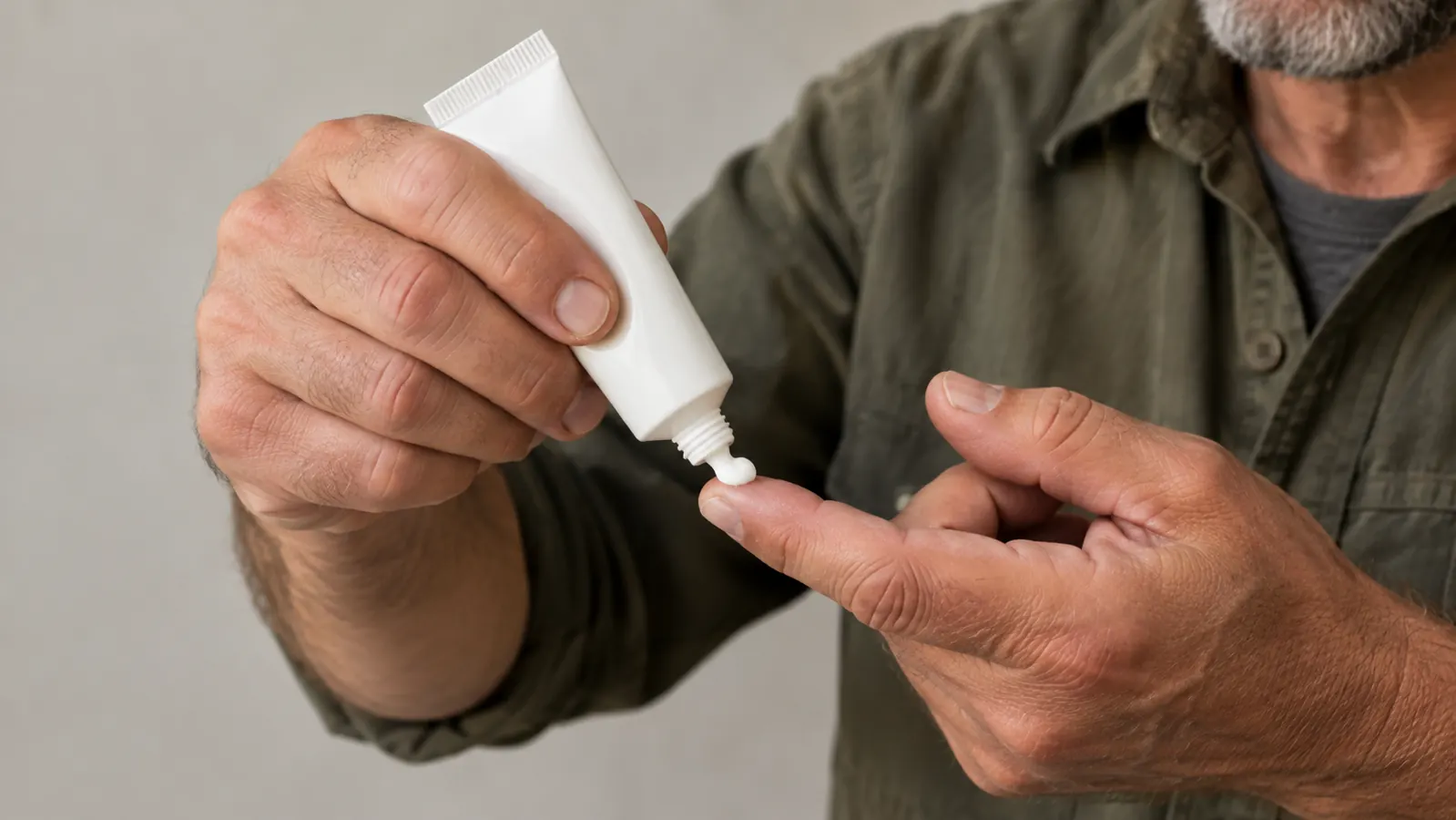
My routine is the same every evening. I sit on the edge of the bed around nine o'clock, put on my reading glasses, and go over both feet with a hand mirror, top and bottom, between the toes, around the nails. That check comes first, always, because the cream can hide a problem as easily as it can prevent one. Then I take a pea-sized amount for each foot, warm it between my fingers, and work it into the heel, the ball, the sides, and the tops. I pay extra attention to my heels, which used to develop deep cracks every winter.
The first thing you notice is the texture. It is thick, closer to a balm than a lotion, and it does not disappear into the skin the way a hand lotion does. You have to rub it in, and it leaves a light film behind. That film is exactly what I want at night. It is still there in the morning, and my heels feel softer when I get up than they did before I started using it. In the first week I made the mistake of using too much, a blob the size of a quarter on each foot. I learned my lesson after two nights of greasy socks. The cream spreads further than you expect, and a pea-sized amount is plenty.
The second thing you notice is the smell. It is mild and clean, with a faint medicinal note that fades within a minute or two. My husband Dale, who is 66 and also has type 2 diabetes with early neuropathy, is picky about smells and has never complained. That matters more than it sounds. A foot cream you dread applying is a foot cream you stop applying, and consistency is the whole game with this routine.
I also take the second tube when we travel. We drive to see family a few times a year, and the tube rides in my toiletry bag without leaking. Keeping the routine on the road matters more than people think, because a week without the foot check is a week of not knowing what is happening on the bottom of your feet. The pack of two makes that easy, which is a small thing that turned out to matter.
What the Label Says, and What It Doesn't
The label says this cream is for dry skin relief and that it soothes skin discomfort. It lists aloe, vitamins A, D, and E, and a blend of moisturizers, and Gold Bond makes it for people with diabetes. The tube is small, 3.4 ounces, which surprised me at first, but a little goes a long way. What the label does not say, and what I want to be plain about, is that it does not treat neuropathy. It will not bring feeling back to numb toes. It will not stop the burning and tingling at night. I have seen enough online reviews to know some people expect that, and I do not want you to spend your money expecting it.
What it does do is keep the skin on your feet in good shape, and for someone with neuropathy, that is not a small thing. Skin that is dry and cracked is skin that can hide a sore or let one start. Skin that is soft and intact is skin you can actually inspect. The cream is part of my foot care routine, not a replacement for it. I still check my feet every night, I still see my podiatrist every three months, and I still call the clinic the moment something looks wrong. When I mentioned the Gold Bond cream to my podiatrist at my January visit, she nodded and said the important thing was that I was looking at my feet every day. The cream, she said, was a reasonable way to keep the skin healthy, and that is the standard I hold it to.
I also want to be honest about what I cannot tell you. I cannot tell you this cream will work the same for you, because feet are different and diabetes affects everyone differently. I can tell you what it did for me over six months, and I can tell you what to watch for. If you try it and your skin feels drier, or anything looks red or raw, stop and call your doctor. No cream is worth hiding a problem.
The cream will not bring feeling back to numb toes. What it does is keep the skin healthy enough that you can actually see a problem before it becomes a crisis.
What Nobody Tells You About This Cream
Here is the honest part, the part that does not fit on a label. The first thing nobody tells you is that a little goes a long way. I use a pea-sized amount per foot, and a 3.4 ounce tube lasts me about six weeks. The pack of two lasts me through the winter, which is when I need it most. If you are used to slathering on lotion, you will use too much the first week. I did. Give it a few days and you will find the right amount, and the tube will last far longer than you expect.
The second thing nobody tells you is that the cream is greasy for the first few minutes. I put it on right before bed, so it does not bother me, but if you plan to put on socks and walk around, give it time to soak in first. I have learned to do my foot check, apply the cream, and then read for twenty minutes before I turn out the light. One night in November I put it on and then walked to the kitchen in my bare feet to get a glass of water. The hallway has hardwood floors, and I nearly slid right into the doorframe. The cream is slick until it soaks in. Now I stay put for twenty minutes.
The third thing is the one I almost never see in reviews. This cream is not a treatment for the burning and tingling. I have nights where my feet burn no matter what I put on them. The cream does not stop that. What it does is give me one less thing to worry about. I know the skin on my feet is in good shape, so when I do feel something, I can pay attention to it instead of wondering whether it is just dry skin. That peace of mind is worth more to me than any ingredient on the label.
The fourth thing nobody tells you is that the word 'diabetic' on the label is as much about what the cream does not contain as what it does. It is fragrance-light, it does not sting on skin that is already irritated, and it is gentle enough for daily use. But it is not a medicine. It is a moisturizer with a sensible label. I have used creams that cost more and promised more, and this one simply does the job without drama.

How It Performed Over the Winter
I started using this cream in October of 2024, and the real test came in January and February, when the air in Tulsa gets dry and my heels used to crack. Last winter, for the first time in years, I did not get a single deep crack. My heels were rough in places, but they stayed intact, and my nightly foot check found nothing but a little dry skin that the cream took care of within a few days. I remember one morning in late February, standing on the hardwood floor in the kitchen in my bare feet, and realizing I had not thought about my heels in weeks. That was the first winter I can say that.
I also noticed that the skin on the tops of my feet, which used to get flaky and itchy in the winter, stayed smooth. I cannot say the cream stopped the itching completely, because I also changed my socks and started paying more attention to staying hydrated. But the flakiness was gone, and that made a real difference in how my feet felt inside my shoes on my morning walks. I walk about twenty minutes most mornings around my neighborhood, and last winter I did not have a single day where I had to stop and adjust my socks because my feet felt raw.
The one rough patch came in early March, when I let my routine slip for about ten days. Nothing dramatic happened. We just had a stretch of busy days, and I fell into bed most nights without the foot check and without the cream. By the end of that stretch, the skin on my heels was rough again, and one small crack had started on my right heel. It was not deep, and it healed within a week of getting back to the routine, but it was a reminder. The cream does not build up a shield that lasts. It works one night at a time, the same way the foot check works one night at a time.
Dale has been using the Gold Bond too, on his heels and the bottoms of his feet. He wears a men's size 12 wide and is a big guy, and his feet take a beating. He says the cream does not feel greasy once it soaks in, and his heels are not as rough as they used to be. He is not a man who notices much about skincare, so the fact that he mentioned it twice without me asking tells me it is working for him.
What I Liked
- Thick, balm-like texture that stays on the skin overnight instead of vanishing in five minutes
- A pea-sized amount is enough, so a 3.4 ounce tube lasts about six weeks of nightly use
- Mild, clean scent that fades quickly, even for someone as picky about smells as my husband
- Does not sting on skin that is already dry or irritated, and it is gentle enough for daily use
- Pack of two means one tube on the nightstand and one for travel or the bathroom
Where It Falls Short
- Leaves a greasy film for the first few minutes, so you have to wait before putting on socks or walking on hardwood floors
- Does nothing for numbness, burning, or tingling, and it is easy to expect more than a cream can deliver
- The tube is small at 3.4 ounces, so you will reorder more often than you would with a larger jar
Who This Is For
This cream is for anyone with diabetes who has dry, cracked-prone skin on their feet and wants a thick, dependable moisturizer that does not smell like a pharmacy. It is for people who understand that foot cream is part of a routine, not a cure. It is for people who check their feet every night and want the skin to be in the best possible shape when they do. It is also for the spouse or the grown child who is helping someone else keep the routine going. Dale uses it because it is already there and because it does not fight him. A cream that sits in the cabinet unused does nobody any good.
Who Should Skip It
Skip it if you are looking for something that will restore feeling to numb feet or stop neuropathy pain. No cream can do that, and anyone who tells you otherwise is selling something. Skip it if you hate the feeling of any residue on your skin, because this cream leaves a light film for a few minutes. And if you have an open sore, a crack that is bleeding, or any change in the color of your skin, do not reach for a cream at all. Call your doctor or podiatrist. That is the honest advice I would give anyone, including my own family.
A small tube, a nightly habit, and feet you can actually inspect
Gold Bond Diabetics' Dry Skin Relief Foot Cream is the tube I keep on the nightstand, and the pack of two means one for the bathroom and one for the road. See today's price on Amazon.
Amazon Check Today's Price on Amazon →