

I have had type 2 diabetes for 15 years and peripheral neuropathy in both feet for about 8. Most days I can feel my toes about as well as I can feel a pair of socks through a winter boot. The burning and tingling show up at night, and the dry skin on my heels has cracked deep enough to bleed twice in the past year. My podiatrist, Dr. Patel, told me the same thing at my last three-month checkup: keep the skin soft, check every inch of both feet every single day, and never let a crack go unnoticed. That is why I built a daily moisturizing routine around Gold Bond Diabetics' Dry Skin Relief Foot Cream, and why I want to walk you through it step by step.
This is not medical advice. I am not a doctor, and nothing I describe here treats, cures, or reverses neuropathy. What a daily moisturizing routine can do is keep your skin supple, protect it from cracking, and give you a built-in reason to look at your feet closely every day. If you have a sore, a change in feeling, or a crack that will not heal, call your doctor or podiatrist. That check is the most important step in this whole routine.
Start with the foot cream I use every night
Gold Bond Diabetics' Dry Skin Relief Foot Cream is the product I reach for after every evening foot check. It is thick, it stays where I put it, and it does not leave my hardwood floors slick.
Amazon Check Today's Price on Amazon →Step 1: Do your evening foot check first, every single time
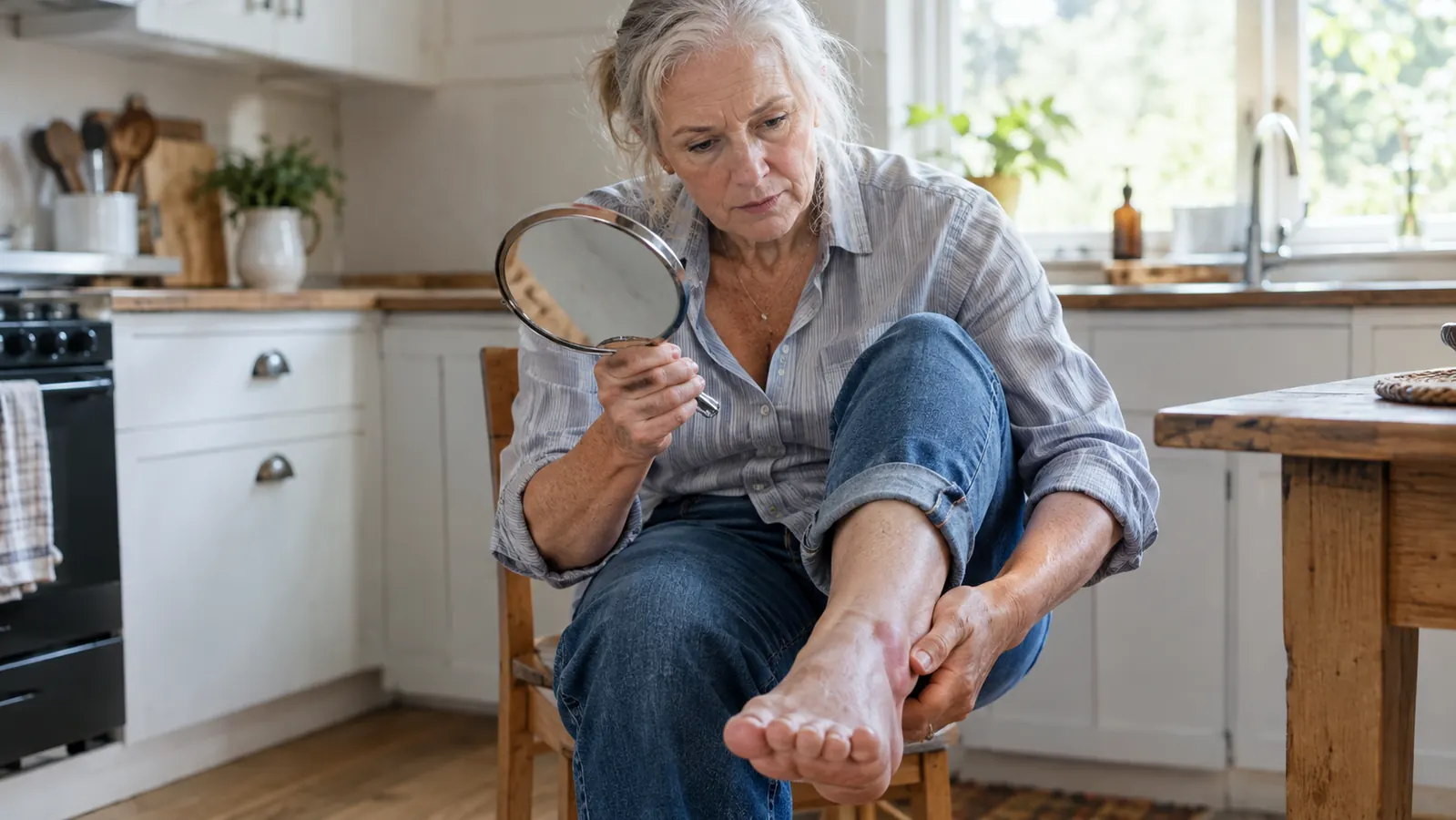
Before any cream touches my feet, I sit on the edge of the bed with a hand mirror and look at every part of both feet. I check the tops, the soles, between each toe, and around each toenail. I am looking for cracks, blisters, red spots, swelling, or any place that feels warmer than the skin around it. Because I cannot feel a lot of my toes, a small cut can sit there for days without me noticing. The mirror is not optional for me. It is the whole reason the routine works.
I do this at the same time every evening, usually around 8:30 after I have washed the dinner dishes. My husband Dale, who is 66 and also has type 2 diabetes, used to skip this step until he got a blister on his heel that he did not feel for three days. Now he does his check right after I do mine. If you are not sure what to look for, ask your podiatrist to show you at your next appointment. Mine spent five minutes walking me through it, and that five minutes has saved me from more problems than any cream ever could.
One thing I have learned the hard way: do the check before you moisturize, not after. Cream makes the skin slippery and can hide a small crack or a piece of grit. Dry skin shows problems more clearly. If I find anything new, even something the size of a pencil point, I put a clean bandage on it and call the podiatrist's office in the morning. Most of the time it is nothing. The one time it was not nothing, I caught a small ulcer early because I was looking.
Step 2: Wash and dry your feet with care
I wash my feet in the shower with warm water, never hot, and I use a mild soap. Hot water feels good on numb feet, but that is exactly the problem: if I cannot feel temperature well, I can scald myself without knowing it. I keep the water temperature where it is comfortable on my forearm, then let it run over my feet. I do not soak my feet unless my podiatrist has told me to, because soaking can strip the natural oils and make dry skin worse.
After the shower, I dry my feet by patting, not rubbing. Rubbing can irritate thin, fragile skin, and it can catch on a rough patch of heel and pull it open. I pat each foot dry, then I pay special attention to the spaces between my toes. Moisture left between toes is how fungus gets a foothold, and fungus loves the warm, dark space inside a shoe. I use a clean towel every time, and I never share that towel with anyone else in the house.
Dale and I learned this the slow way. He used to dry his feet by scrubbing them with the towel the way he dried his arms, and his heels were cracked and flaky all winter. When he switched to patting and started moisturizing every night, the difference showed up in about three weeks. His skin did not turn soft overnight, but the rough patches smoothed out and the deep cracks on his heels stopped reopening.
Step 3: Apply Gold Bond Diabetics' Dry Skin Relief Foot Cream while your skin is still slightly damp
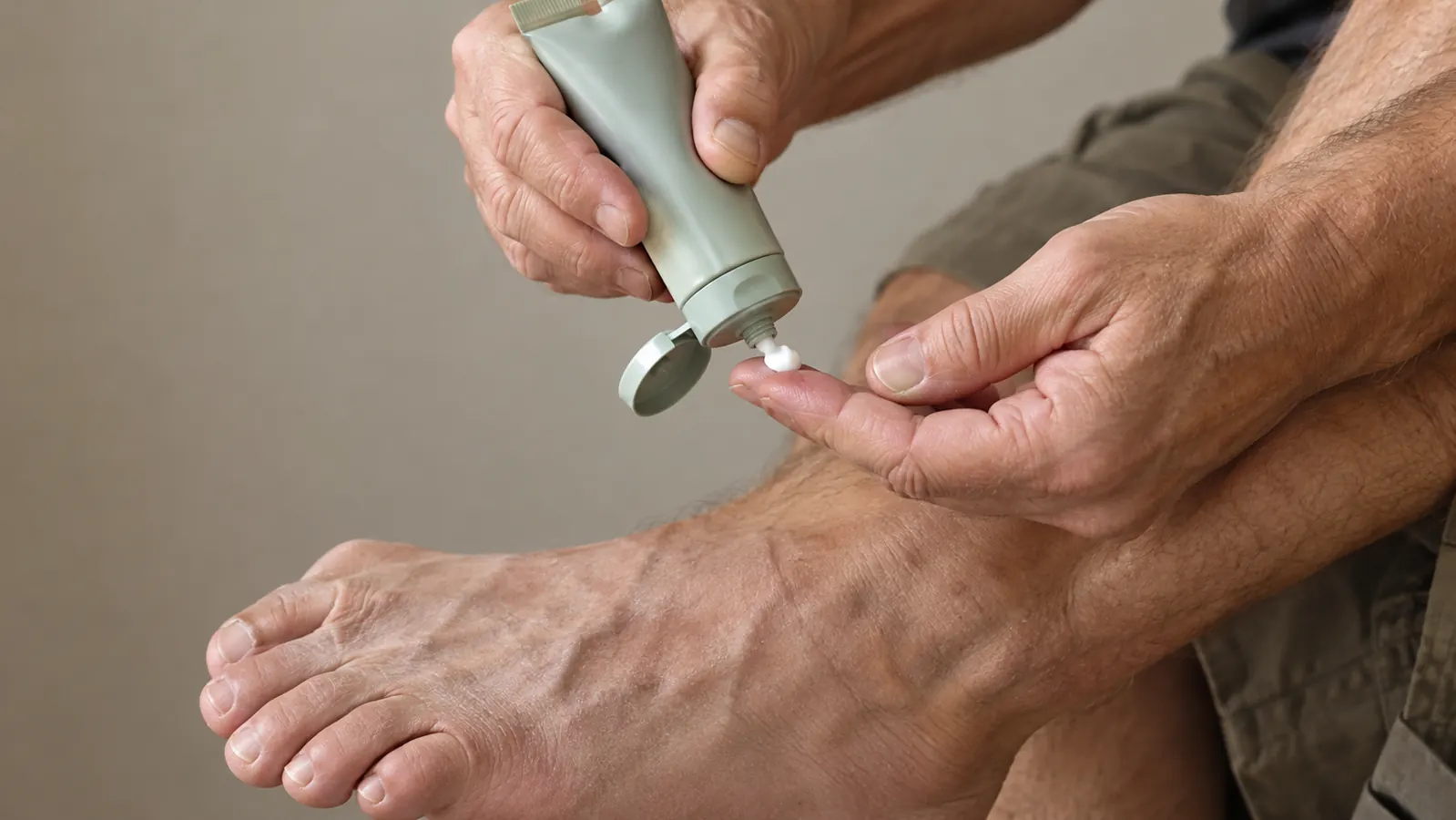
The single biggest mistake I made for years was waiting until my feet were completely dry before putting on lotion. Lotion on bone-dry skin mostly sits on the surface. Lotion on slightly damp skin gets pulled in and holds the moisture there. So now I moisturize within a few minutes of drying off, while my skin still feels cool and a little bit damp. I squeeze about a nickel-sized amount of Gold Bond Diabetics' Dry Skin Relief Foot Cream into one palm, rub my palms together, and press it into my feet rather than rubbing it in hard.
I start at the ankle and work down toward the toes, because that follows the direction the skin naturally lies. I cover the heel, the ball of the foot, the arch, and the top of the foot. I do not put cream between my toes unless my podiatrist has told me to, because extra moisture trapped there can cause problems. I use a little extra on my heels, which are the driest part of my feet. The cream is thick, so a little goes a long way. One tube lasts me about three weeks, and the pack of two lasts me through most of a season.
Gold Bond makes this cream specifically for diabetic skin, and the label says it soothes skin discomfort. I can tell you what that feels like from my side: on nights when the burning and tingling are bad, the cream does not stop the nerve signals, but the act of massaging it in and the cool, smooth feel on my skin makes the discomfort easier to sit with. It does not cure anything. It makes the daily reality more bearable, and that matters when you live with neuropathy every day.
Step 4: Let the cream absorb before you put on socks
I give the cream a full two to three minutes to soak in before I put on socks. If I rush this step, the cream transfers onto the socks, the socks get stiff, and my feet do not get the full benefit. I use the waiting time to do something useful: I trim a hangnail, I file one rough heel with a fine emery board, or I just sit and let my feet breathe. On nights when I am tired, I set a timer on my phone so I do not forget and walk barefoot to the kitchen with slippery feet.
Walking barefoot on our hardwood floors is something I try to avoid even when my feet are dry. With neuropathy, I cannot always feel a small piece of grit or a splinter, and a tiny cut can turn into a bigger problem before I notice it. So after the cream absorbs, I put on clean cotton socks. In the winter I wear a slightly thicker sock, and in the summer I wear the same cotton socks but I change them halfway through the day if my feet sweat.
Dale wears men's size 12 wide, and he has a hard time finding socks that do not leave a tight band around his ankles. We buy the men's cut with a loose top, and he turns them inside out to check the seams before he puts them on. A seam that presses into the skin all day can leave a mark, and a mark on numb skin is something you want to find at night, not after it has been there for a week.
Step 5: Make it a habit by pairing it with something you already do
The hardest part of any daily routine is remembering to do it. I tried for years to moisturize my feet whenever I thought about it, and I thought about it maybe twice a week. What finally worked was pairing the routine with something I already did every single night: brushing my teeth. I keep the tube of Gold Bond Diabetics' Dry Skin Relief Foot Cream on the bathroom counter next to my toothbrush. After I brush my teeth, I do my foot check, then I moisturize. The toothbrush is the trigger. The foot cream is the reward.
It took about three weeks for the routine to feel automatic. Now, if I sit down on the bed and realize I have not done my foot check, I get back up and do it, even if I am already half asleep. I have missed exactly two nights in the past six months, and both times I did the check the next morning. Missing one night is not a disaster. Missing a week is how problems start.
I also keep a second tube in the living room, because some nights I do my check while I watch television with Dale. The tube in the bathroom is the one I use most, but the second tube means I never have an excuse. If you live with someone else, tell them what you are doing and why. Dale reminds me on nights when I look tired, and I remind him. A routine you do with someone else is a routine you actually keep.
What Else Helps
Moisturizing is the center of my routine, but it is not the whole routine. I check the inside of my shoes every morning before I put them on, running my fingers along the lining to feel for a rough seam or a piece of gravel. I wear shoes that fit well and do not pinch, and I buy them in the afternoon when my feet are slightly swollen from the day. I trim my toenails straight across with a nail clipper made for thick nails, and I file the edges instead of cutting them. I never use a heating pad on my feet, because I cannot feel a burn the way I should. And I see my podiatrist every three months, even when nothing hurts. That appointment is the one I never skip.
I also pay attention to the rest of my skin. The same dry air that cracks my heels in the winter dries out my hands and arms, so I use a plain moisturizer on my body after my morning shower. I drink water through the day, not because it is a cure for neuropathy, but because my skin is visibly less dry when I am hydrated. And I walk about 20 minutes most mornings around my neighborhood. The walking keeps my circulation moving and gives me a reason to look at my feet when I get home.
The mirror is not optional for me. It is the whole reason the routine works.
Give your feet the same nightly routine I use
Gold Bond Diabetics' Dry Skin Relief Foot Cream is thick, gentle, and made for sensitive diabetic skin. Pair it with a daily foot check and you have a routine that protects your feet all year long.
Amazon Check Today's Price on Amazon →