If you have neuropathy in your feet, the question is not whether you need slippers. It is whether you need slippers made differently from the ones you have been wearing for years. I am Carol Brennan, I am 63, and I have had type 2 diabetes for fifteen years and peripheral neuropathy for about eight. Mine is mostly numbness in my toes and the balls of my feet, with burning and tingling at night. I have worn regular slippers my whole life, the kind you grab at a discount store in Tulsa without thinking much about it. Last winter that changed. One night during my evening foot check I found a bruise I could not explain, and it got me thinking about what my feet touch all day. That was the moment I started looking for a slipper built for feet that cannot always feel what is happening to them. I ordered a pair of LongBay diabetic slippers, and the difference was not subtle. This is a straight comparison between the two, based on daily use around my house and on what my husband Dale found when he tried them too. I will walk you through the differences that matter, the ones you cannot see in a product photo, and I will tell you where the regular pair still has the edge.
The short answer is this. Regular slippers are made for warmth and comfort on healthy feet. LongBay diabetic slippers are made for feet that have lost some feeling, swell during the day, and bruise at the slightest bump. They are not fancy. There is no styling trick and no hidden feature. They are simply designed around problems that regular slippers ignore, starting with a toe box that does not squeeze and a strap that lets the fit change as your feet change. If your feet are healthy, you may not notice the difference. If you live with numbness and swelling, you will notice it the first afternoon you wear them. Dale noticed it in the first five minutes, and he is harder to impress than I am.
| LongBay Diabetic Slippers | Regular Slippers | |
|---|---|---|
| Toe box | Wide and deep, with room for toes to spread and for afternoon swelling | Narrower, shaped to look neat rather than to fit a swollen foot |
| Adjustability | Hook-and-loop strap opens fully, so the fit can change through the day | Fixed opening, no way to loosen or tighten after you buy them |
| Interior seams | Soft lining with minimal seams where a numb foot could rub | Often has a seam across the toe or around the heel that can irritate |
| Sole grip | Textured sole that grips hardwood, tile, and a damp porch step | Some regular slippers have smooth soles that slide on hardwood |
| Warmth | Warm but breathable, comfortable indoors most of the year | Usually warmer and cozier, but can make feet sweat and then chill |
| Price | Costs more than a basic pair of house slippers | Costs less, and you likely already own a pair |
| Stepping outside | Fine for quick trips to the mailbox or the driveway | Indoor-only on many pairs, with soles that slip on wet steps |
| Best for | Sensitive feet, swelling, numbness, and nightly foot checks | Healthy feet that just want something soft and warm |
Where LongBay Wins
The first thing I noticed was the toe box. My old regular slippers had a shape that looked fine in the box but squeezed my toes together by mid-afternoon. The LongBay slippers are wide and deep. My toes sit flat instead of being stacked, and when my feet swell in the afternoon, there is still room. On the first full day I wore them, I did my usual 20 minute walk around the neighborhood in the morning, then ran errands, and by late afternoon my feet were swollen the way they always get. The LongBay slippers still went on without a fight. My old pair would have pinched by then. I did not need a measuring tape to see the difference. I could see it with the two pairs sitting side by side on the bedroom floor. For someone with numbness, that matters more than you might think. If you cannot feel pressure well, a tight shoe can rub a spot raw before you notice. That is exactly how I got the bruise last winter. I had been wearing a pair of fleece slippers I bought on sale, and the toe box was too narrow. During my evening foot check with the hand mirror I found a purple mark on the side of my left little toe. I had no idea when it happened. I had walked to the mailbox, carried groceries, gone about my day, and felt nothing. The podiatrist told me to watch anything like that closely, and it healed fine, but it scared me straight. A wide toe box is not a luxury. It is a safety feature.
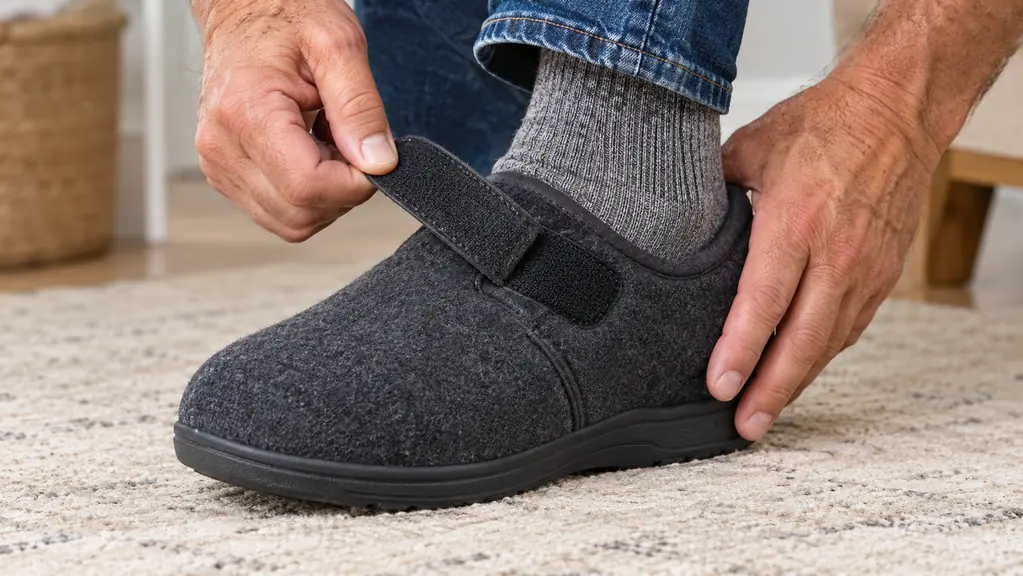
The adjustable strap is the other big difference, and it is the one I did not expect to care about. My feet are not the same size at 8 in the morning and 6 at night, and they are not the same size day to day. With regular slippers, I had to choose between too loose and too tight, and I usually chose wrong. With the LongBay pair, I loosen the strap in the afternoon and tighten it in the morning. It takes two seconds. The first time I loosened it on a swollen afternoon, I actually laughed out loud. All those years of wedging my feet into a fixed opening, and the fix was a strip of hook-and-loop tape. My husband Dale, who wears a men's size 12 wide and has early neuropathy himself, tried them on one evening and said the same thing: the strap means the slipper fits the foot instead of the foot fitting the slipper. He wears his looser than I do because his feet swell more after a day on them. That is the whole point. A regular slipper is a fixed shape. A LongBay slipper is a shape you can adjust, which matters when your feet are not a fixed shape either.
The other details are smaller but worth mentioning. The lining is soft and there are no thick seams pressing against my toes. My old slippers had a seam right across the top of the toe box that I could feel even through socks on some days. The sole on the LongBay pair is textured, and I have walked out to the driveway in the rain to bring the trash can back without sliding. My old pair was slick on the hardwood in our hallway, and I had to shuffle. At my age, and with feet that cannot feel the ground as well as they used to, a slip is a real risk. I would rather have a sole that grips than a sole that looks nice.
Where Regular Slippers Win
I am not going to pretend regular slippers are useless. They win on price, plain and simple. You can pick up a basic pair for a fraction of what the LongBay slippers cost, and if you already own a pair, the cost of trying them is zero. My old fleece pair cost me next to nothing at a discount store and lasted three winters before the soles wore flat. Regular slippers are also everywhere. You can try them on in a store, feel the lining, walk a few steps, and carry them home the same afternoon. The LongBay pair came in the mail, and I had to wait a few days and hope the size was right. When my old pair wore out, I just bought another one at the same store. With the LongBay pair, I have to order online and wait for delivery. If your feet are healthy, if you have no numbness, no swelling, no sores that need watching, a regular slipper is probably fine. It will keep your feet warm and feel soft, and that may be all you need. I am not here to talk anyone out of that.
Regular slippers also tend to be warmer. The LongBay pair is warm enough for indoor wear, but it is not a thick, fuzzy winter boot. On the coldest mornings, and Tulsa had a stretch last January where the temperature never got above freezing for a week, I wore the LongBay pair with thick wool socks and I was comfortable. One morning the thermometer on the back porch read 9 degrees, and my feet stayed warm on my 20 minute walk. But I will be honest: my old fleece slippers were cozier. They wrapped my feet in a way the LongBay pair does not. If your main goal is maximum warmth and you do not have foot problems, a regular fleece slipper will beat the LongBay on coziness. I still keep my old pair by the bed for the coldest nights, even though the soles are worn smooth. That is a fair trade, not a flaw. Different feet need different things, and I would rather have a slipper that fits safely than one that is slightly warmer.
A slipper that fits at 8 AM and at 6 PM
The adjustable strap and wide toe box are the two features that make LongBay diabetic slippers different from the regular pair in your closet. If your feet swell during the day, that difference is worth a look.
Amazon Check Today's Price on Amazon →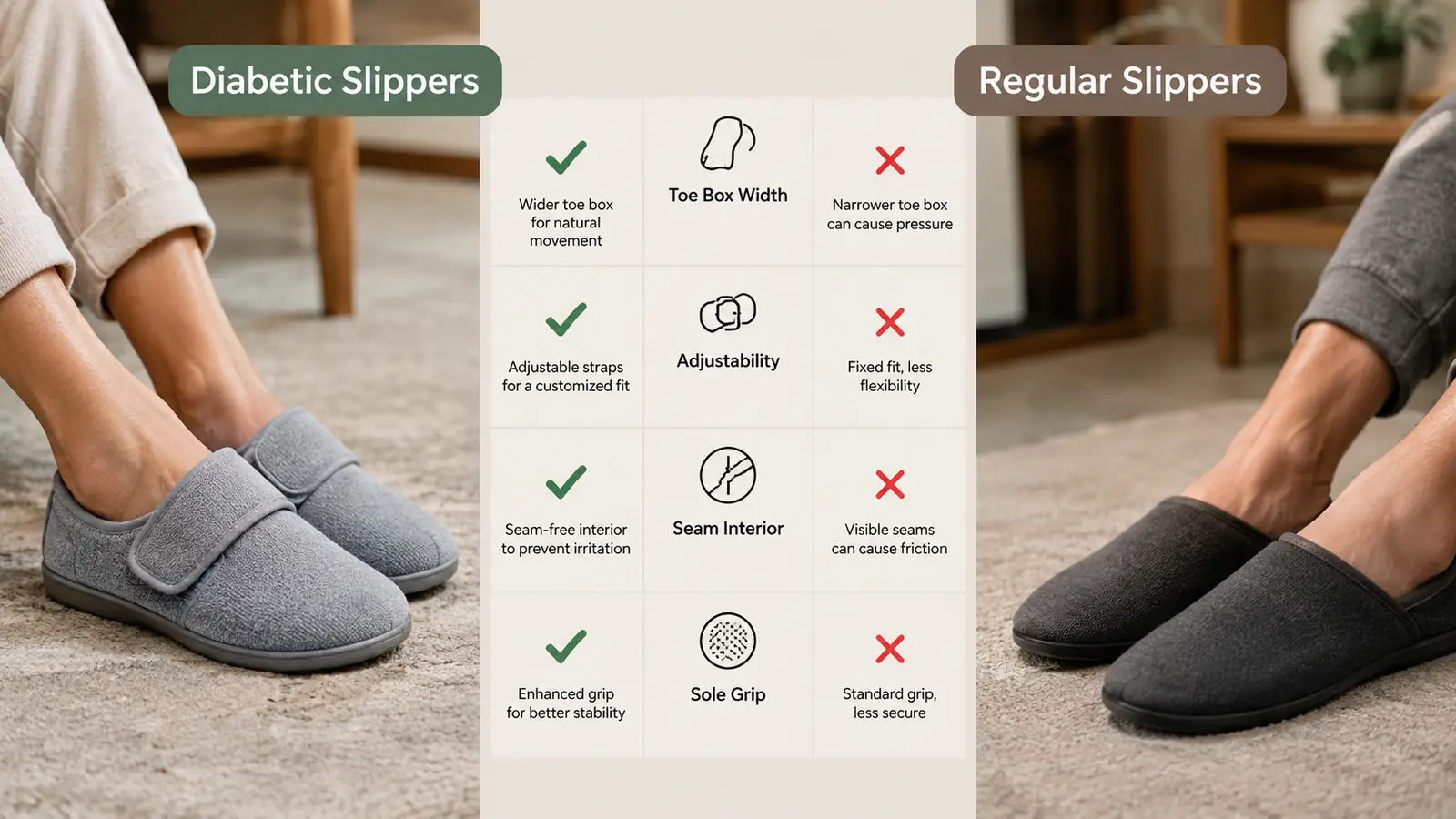
Who Should Buy Which
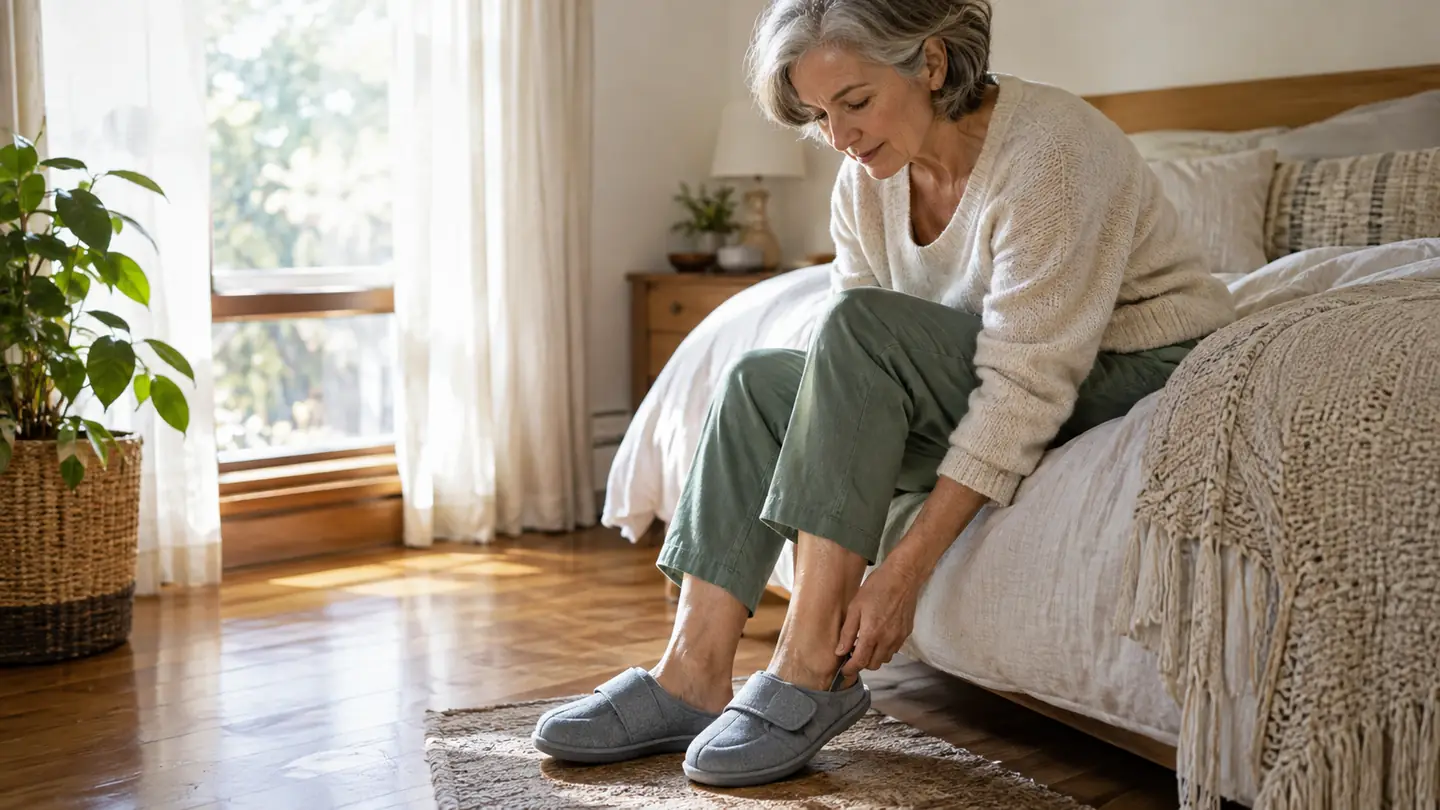
Buy the LongBay diabetic slippers if you have neuropathy, if your feet swell during the day, if you have had a sore or a blister that you did not notice until later, or if you check your feet every night like I do. Every evening I sit on the edge of the bed with my hand mirror and go over each foot. I check the toes, the soles, the heels, and between the toes. I look for red spots, cracks, blisters, anything that was not there the night before. My podiatrist taught me to do that, and it is the single most useful habit I have. The wide toe box and the adjustable strap are not gimmicks. They are answers to problems that regular slippers do not address. Buy them if you want a slipper you can wear indoors and step outside to get the mail without sliding on the porch, because the sole grips better than most regular house slippers. When friends ask me about them, I say the same thing I am saying here: try the wide toe box and the strap, and if your feet are healthy, save your money. And if you have wide feet but no neuropathy, the strap solves the same squeeze problem, so the LongBay pair is still worth considering.
Stick with regular slippers if your feet are healthy, if you have no numbness or swelling, and if you just want something soft and warm for the winter. There is no reason to pay more for features you do not need. Dale is a good example. He has early neuropathy and size 12 wide feet, and he reaches for the LongBay pair most days now because the strap fits his wide foot without squeezing. But he still wears his old regular slippers around the house on weekends, and they are fine for him. If you are not sure which category you fall into, ask your doctor or podiatrist at your next visit. That is what I did. I told mine about the bruise I could not feel, and my podiatrist is the one who suggested I look for a wide, adjustable slipper and check my feet every night. That conversation is the reason I tried the LongBay pair in the first place. If you have diabetes, a yearly foot exam is worth scheduling, and a daily look at your own feet takes two minutes.
See the fit difference for yourself
LongBay diabetic slippers are sized for swollen, sensitive feet, with an adjustable strap and a wide toe box. If that sounds like your feet, check the current price and sizing details on Amazon.
Amazon Check Today's Price on Amazon →