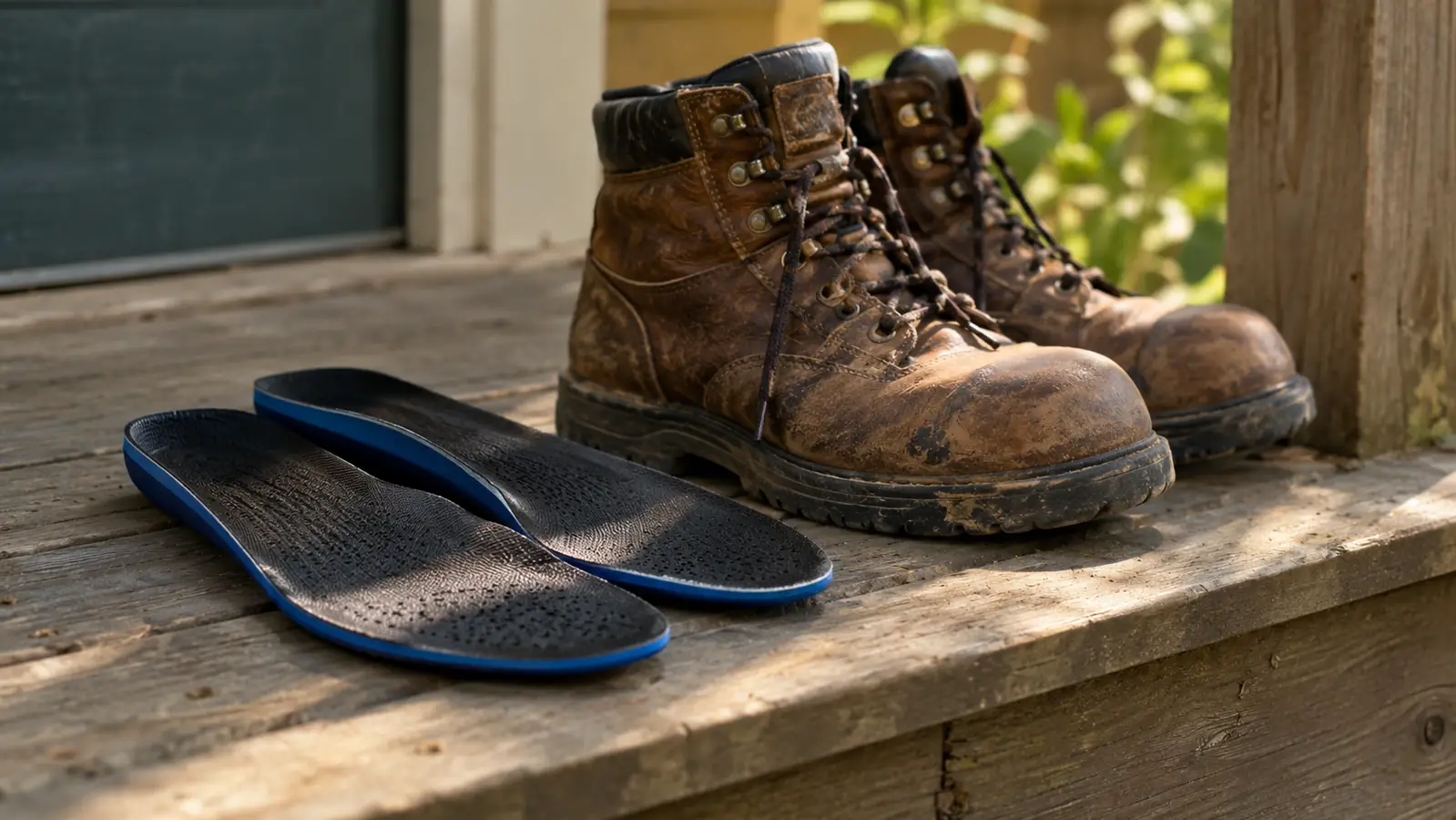
The first thing nobody tells you about the Dr. Scholl's Heavy Duty Support Insoles is that they are not soft. I know, because I ordered a pair for my husband Dale before I understood that, and I stood in the kitchen watching him wince his way through the first three days. Dale is 66, retired after thirty years in a machine shop, wears a size 12 wide, and his feet have been doing the complaining for both of us lately. I have lived with peripheral neuropathy for about eight years, so I know what it means to be careful with your feet. I also know what it feels like to hope a product will fix something it cannot fix. These insoles do not fix anything. What they do, once you get through the break-in, is make a long day on your feet noticeably easier to bear. That is worth saying plainly, because the box does not say it.
This review is the one I wish I had found before I bought anything. It comes from ten weeks of daily use, mostly in work boots and yard shoes, on a man who weighs north of 250 pounds and has the wide, tired feet to show for it. I am going to tell you what I like, what I do not like, what surprised me, and exactly who should skip these insoles. If diabetes or neuropathy is part of your household, read the last section before you order anything.
The Quick Verdict
Firm, supportive insoles that earn their keep after a real break-in. Excellent for big, wide feet in work boots. Not a cushion, and not a treatment for neuropathy.
Amazon Check Today's Price →Ten weeks in, Dale stopped mentioning his feet at dinner.
That silence is the review that matters. If your boots have removable insoles and your arches like a firm ride, these are worth a closer look.
Amazon Check Today's Price on Amazon →How I've Used Them
Dale spent thirty years standing on concrete in a machine shop, and his feet remember every one of those years. He is a big man, and the balls of his feet and his heels take a real pounding whenever he is on them all day. These days his longest days happen on our hardwood floors, in the yard, and on the concrete aisles of the hardware store. For this test, he wore the Dr. Scholl's Heavy Duty Support Insoles in his work boots and in a pair of well-worn sneakers, five or six days a week, for ten straight weeks.
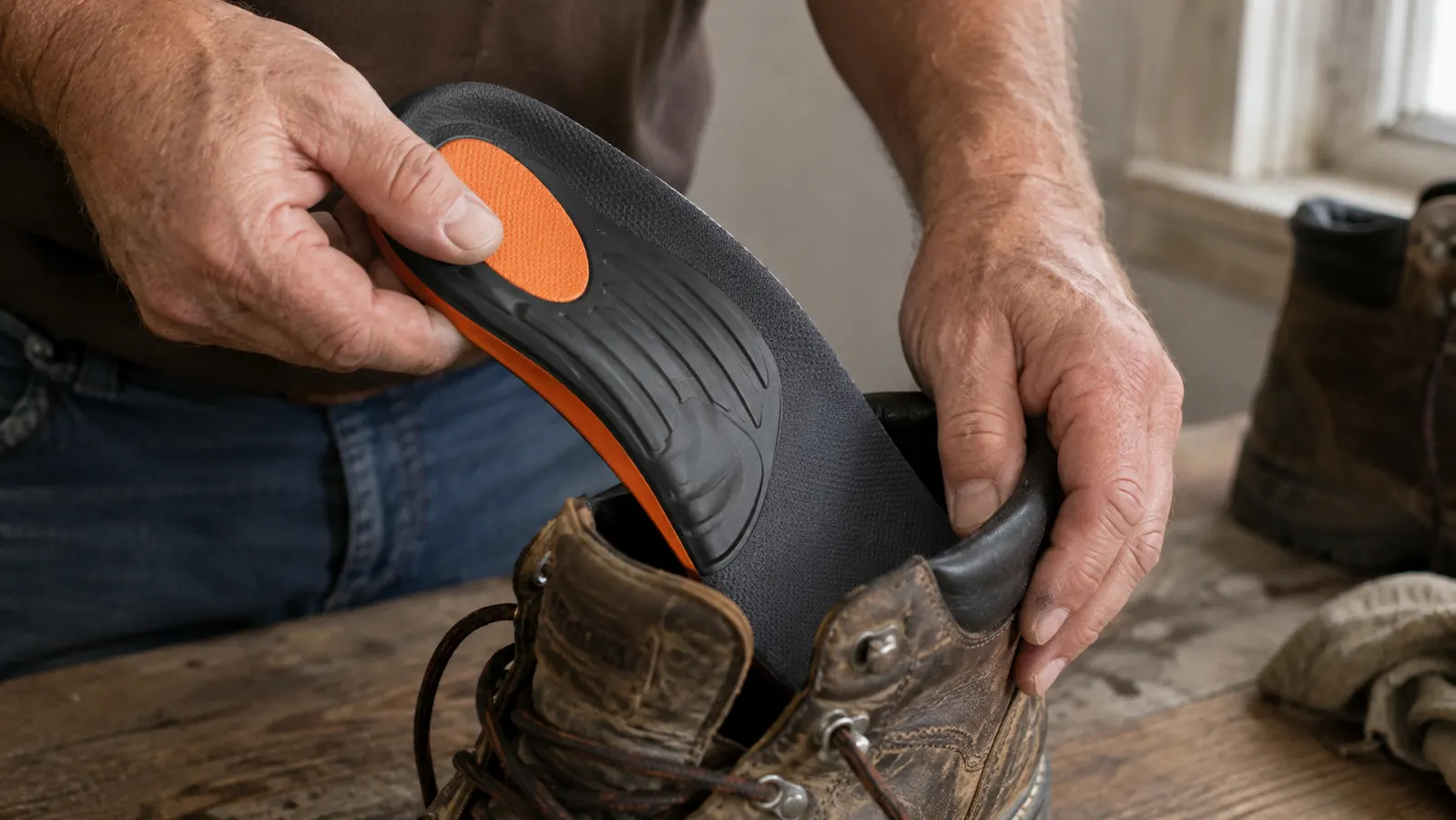
I trimmed them to fit his size 12 wide boots using the guide printed on the underside, and they dropped in over the original insoles. The box says these are for men 200 pounds and up, and Dale is comfortably past that, so the heavy duty claim got a fair test. A note on the brand: Dr. Scholl's has been making foot care products for a long time, and the sizing and support levels are more clearly labeled than most.
I also checked his feet every evening, the same way I check my own. With diabetes in the house, an insole is not the whole answer. It is part of a routine that includes a hand mirror, a careful look between the toes, and a call to the podiatrist when anything looks off. Nothing looked off during these ten weeks, and to me that is the quiet kind of result that matters most.
He wore them in his steel-toed boots on the days he worked on the car, and in his walking sneakers on the mornings we did our neighborhood loop. The insoles moved between shoes without trouble, which surprised me. Most insoles pick one home and stay there.
What Nobody Tells You: They Are Firm, Not Plush
The biggest surprise, and the source of most of the disappointed reviews, is the firmness. People order these expecting a pillow, and they are not a pillow. The heavy duty support comes from a stiff arch and a dense base that does not squish under a heavy man's weight. Press on one with your thumb and it barely gives. That is the point, but it is also the thing most people do not expect.
For Dale, that firmness turned out to be exactly right. His arches have flattened from decades of heavy work, and a soft insole just collapses under him, which is how he ended up with sore heels in the first place. The firm base spreads his weight out and takes the sting out of a concrete floor. I can see, though, how someone with lighter feet or a taste for cushioned walking shoes would hate these. The reviews are full of people who hated them, and you should read those reviews before you buy.
Firm also means the support is doing the work rather than your foot muscles. There is a real difference between an insole that holds you up and one that just hugs you. These hold. If you have ever worn a good pair of work boots with a real shank in the sole, you know the feeling: your foot stops working so hard. That is what a heavy duty insole does for Dale.
The product page for these Dr. Scholl's insoles shows a 4.4 star rating from tens of thousands of reviews, and that number hides the real story. Read the one star reviews and you will see people who wanted a soft cushion and got a firm support. Read the five star reviews and you will see heavy men who spend their days on concrete and finally found relief. Both camps are telling the truth. The rating is just an average of two very different experiences.
What Nobody Tells You: The Break-In Is Real
The first three days, Dale winced. The arch felt like a rock under his foot, and his calves ached by evening. I came very close to returning them, and I am glad I did not. By day five he had stopped complaining. By week three he had stopped mentioning his feet altogether. That silence is the review that matters, and it is the one the product photos cannot show you.
If you buy these, do not judge them on day one. Wear them for an hour around the house, then a short walk, then a half day. Let your arches adjust gradually. Going from a squishy insole to a firm orthotic support is a jolt to the system, and your feet will tell you about it. A gradual break-in is the difference between a pair that works and a pair that ends up in a drawer.
I will be honest with you: not everyone gets through the break-in, and that is okay. If your feet hurt more after a week of gradual use, these are not the insoles for you. There are softer options that will suit you better, and there is no shame in that. The firm ride is a feature for some feet and a flaw for others, and only your feet can tell you which one you have.
By week three, Dale stopped mentioning his feet at dinner. For a man who had talked about them every night for a month, that silence was the review that mattered.
What Nobody Tells You: The Fit Is More Complicated Than 'Trim to Fit'
These insoles run thick, and that is the second most common complaint after firmness. They add real volume inside the shoe, and if your boots fit snugly to begin with, they will feel tight afterward. Dale's work boots had removable insoles, so we took the originals out and the fit was fine. His sneakers needed the same treatment. If your shoes do not have removable insoles, these may simply not fit.
The trim to fit line works, but measure twice and cut once. I trimmed the first pair conservatively and then had to go back for a second pass once I saw how they sat in the boot. A sloppy trim leaves a rough edge that can rub through a sock, and here is the part that matters for anyone with numbness: you might not feel that rub until it has turned into a sore. That is exactly the kind of thing nobody tells you, and it is why the daily foot check is non-negotiable in our house.
These are a men's product, sized 8 to 14, built for wide feet and heavy weight. If you have a narrow foot, or you are shopping for a woman's foot, these are probably too much insole. Dr. Scholl's makes lighter support levels for lighter loads, and the heavy duty version is specifically for big men on hard surfaces. That is not a flaw, but it is a limit, and it is worth knowing before you order.

What Nobody Tells You: Arch Support Is Not One Size Fits All
The arch support is built into the insole at a set height, and it is firm. If your arches match that height, you will feel held and supported. If they do not, you will feel a hard pressure right in the middle of your foot, and no amount of break-in will fix a true mismatch. This is the single biggest reason a support insole works for one person and fails for the next.
Dale has low, tired arches from decades of heavy work, and the support sat under them well enough that he stopped noticing it within the first week. I tried a pair in my own shoes for one afternoon, purely out of curiosity, and my higher arches did not agree with them at all. My feet need cushion and room, not a firm post, especially with the neuropathy. That experiment was a useful reminder that the best insole is the one that matches your particular foot, not the one with the best rating.
If you are not sure what your arch height is, there is a quick way to find out at home. Wet your foot and step on a piece of paper or a dark towel. If you see most of your foot, you have low arches. If you see a narrow band connecting heel to toe, you have high arches. The heavy duty Dr. Scholl's insoles sit in the middle, and they favor the low to normal arch that most heavy men develop over the years.
What Nobody Tells You: Insoles Are Not a Treatment
This is the section I most want you to read before you order anything. Nothing in this box treats, cures, or reverses neuropathy. These insoles are comfort and protection aids, nothing more and nothing less. They can absorb impact, support an arch, and take pressure off the balls of the feet. They cannot restore feeling, stop the burning, or heal damaged nerves. If you have diabetes, the most important foot care you can do is free: check your feet every day, look between the toes with a mirror, and call your doctor or podiatrist about any sore, blister, or change in feeling.
What these insoles did for Dale was reduce the general ache of long days on hard floors. His evening complaints dropped off, and his knees seemed happier too, which he noticed before I did. For me, the difference between a good day and a bad day with neuropathy is rarely about the insole. But a supportive base means less overall fatigue, and less fatigue means fewer chances to overdo it and pay for it at night. That is a modest, honest benefit, and it is worth having.
And one more warning, because it matters for anyone with numbness. A new insole changes where pressure lands on your foot. That is usually a good thing, but it is also a change, and changes deserve attention. During the break-in I checked Dale's feet every single night, and I want you to do the same if you buy these. A sore you cannot feel is the one that turns into a bigger problem. No insole is worth that risk.
What I Liked
- Firm support that does not flatten under a 250+ pound man
- Noticeably less heel and foot ache on hard floors
- Trim to fit design is easy with scissors and a steady hand
- Held their shape through ten weeks of daily use
- Drop straight into boots with removable insoles
Where It Falls Short
- Stiff and uncomfortable during the first week of break-in
- Thick build makes snug shoes feel tight
- Firm arch does not suit every foot shape
- Not a cushion: people wanting plush will be disappointed
- Men's sizing only, so most women will not fit them
Who This Is For
These insoles are for big men with tired feet who spend their days on hard surfaces and wear boots or shoes with removable insoles. If you are over 200 pounds, if your arches have flattened from years of heavy work, and if you are willing to get through a real break-in, these are worth trying. They are also for anyone who understands that an insole is part of a foot care routine, not a replacement for one. Buy them for the support, and keep doing the foot checks either way.
Before you buy, ask yourself which camp you are in. Do you want a plush walking shoe feel? Then this is the wrong insole, no matter how many stars it has. Do you need a firm platform under a heavy frame, and are you willing to earn it through a break-in? Then the low reviews from the cushion crowd should not scare you off. Knowing which camp you belong to is worth more than any average rating.
Who Should Skip It
Skip these if you want a soft, plush cushion underfoot, because you will not get one. Skip them if your shoes are already snug, if you have high arches that need a different support shape, or if you are shopping for a woman's foot. And if you have diabetes or neuropathy, do not buy any insole, these included, without committing to daily foot checks and keeping your podiatrist in the loop. No insole is worth a sore you cannot feel, and no insole can replace the people who help you stay healthy.
And one more group should think twice: anyone who is between sizes or who likes their shoes roomy. These insoles take up real space, and a shoe that fit loosely before will fit differently after. If you cannot afford to give up half a size, or if your go-to boots are already broken in just right, these may create a problem instead of solving one.
Firm support that earns its place in your boots
Ten weeks in, Dale's feet are quieter and these insoles still hold their shape. If you are ready for the break-in, check today's price on Amazon.
Amazon Check Today's Price on Amazon →