
If you have neuropathy in your feet, you already know the problem with most socks. The tight band at the top digs into your ankle. The seam rubs across your toes. The fabric bunches up inside your shoe, and by the end of the day you have red marks you cannot even feel. I have lived with peripheral neuropathy for about eight years, and I have thrown away more pairs of socks than I can count. What I have learned is that the right sock is not a luxury. It is part of the daily routine that keeps your feet safe.
This guide is for anyone with numb, burning, or overly sensitive feet who wants a simple way to choose better socks and take care of them. I am not a doctor, and nothing here treats or cures neuropathy. But I have spent years testing socks in real life, and I have found a few rules that make a real difference. The pair I keep coming back to is the Dr. Scholl's Men's Diabetic & Circulatory Non-Binding Cushioned Socks, and I will explain exactly why, step by step.
Start with a sock that does not squeeze your ankle
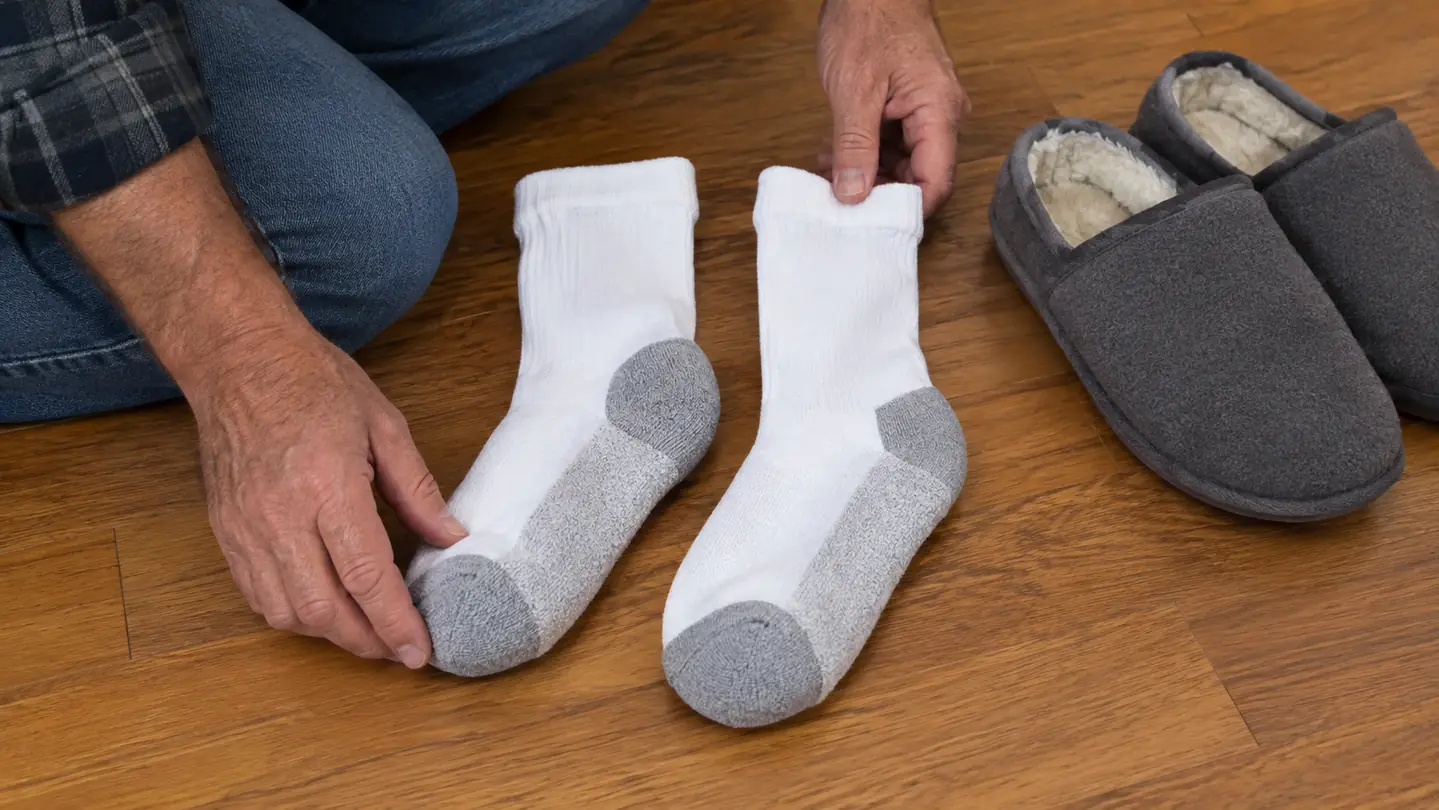
The Dr. Scholl's Men's Diabetic & Circulatory Non-Binding Cushioned Socks have a loose, non-binding top that leaves no mark on your leg. That is the single most important feature for neuropathy feet.
Amazon Check Today's Price on Amazon →Step 1: Look for a non-binding top, not a tight band
The first thing I check on any sock is the top. Most regular socks have a tight elastic band that holds the sock up. For most people, that is fine. For someone with neuropathy, it can be a problem. If your feet are numb, you may not notice how much that band is squeezing your leg until you take the sock off and see a deep red groove. That happened to me a few years ago with a pair of cotton crew socks I had worn for one afternoon of errands. The groove was still visible that evening during my foot check, and my podiatrist pointed out that a mark like that on a foot with reduced feeling is a warning sign. It means the sock is pressing on skin and blood vessels all day, even when you cannot feel it. The fix is not to wear the sock looser. The fix is to buy a sock that does not squeeze in the first place.
A non-binding top is cut wider and uses a gentler knit, so it stays up without digging in. The Dr. Scholl's socks have this kind of top. My husband Dale wears them in a men's size 12 wide, and he says he forgets he has socks on at all. That is exactly what you want. The top should feel like a loose cuff, not a tourniquet.
To test this at home, pull the top of the sock away from your leg. You should be able to fit two fingers flat between the sock and your skin. If you cannot, the sock is too tight, no matter how comfortable the rest of it feels. I use my index and middle fingers together. If they slide in without forcing, the cuff is loose enough. I also check the ankle area, because some socks that look loose at the very top still have a tighter band lower down. The Dr. Scholl's socks are loose from the cuff all the way to the heel, which is why Dale can wear them for a full day without a mark.
Step 2: Choose a seamless toe, or at least a smooth one
The second thing I check is the toe seam. A thick, lumpy seam across the top of your toes can rub against the shoe all day. With neuropathy, you might not feel the rubbing at first, but you will see the damage later. A red spot or a blister on a numb foot is a serious thing, because you may not notice it until it becomes a sore. Last winter I wore an older pair of socks with a raised seam on a long walk to the pharmacy. I did not feel anything at the time, but that evening I found a red line across the top of my second toe. It faded overnight, but it reminded me why I stopped wearing those socks. A blister on a numb foot can go from small to infected before you know it, and the treatment is a lot more involved than switching socks.
The Dr. Scholl's socks have a smooth, low-profile toe seam that sits flat against the foot. I have worn them on long days of walking and I do not feel the seam at all. If you cannot find a truly seamless sock, look for one where the seam is flat and soft, and turn the sock inside out before you buy to check how the seam is finished. When I turn these inside out, I can run my thumb along the seam and it feels almost flat, not like a rope. That is the test I use now for every pair I consider.
This matters more than you might think. My podiatrist told me that a lot of the foot problems he sees in people with diabetes start with a sock that rubbed in one spot all day. A smooth toe is not a small detail. It is a safety feature. He also told me to check between my toes when I do my evening foot check, because that is where a seam or a piece of loose thread can do damage without being noticed. I have made that part of my routine since.
Step 3: Pick a cushion that protects without bunching
Cushioning is the part people usually think about first, and it does matter. A padded sole softens every step and protects the bottom of your foot, which is often the most numb part. But too much cushioning can be a problem. If the sock is too thick, it bunches up inside your shoe, and bunched fabric is exactly what causes pressure points. I learned this the hard way with a pair of thick wool hiking socks I tried two winters ago. They felt wonderful in the store, but inside my regular shoes they folded under my arch within half an hour. By the end of the day I had a raw spot on the side of my foot that I had not felt forming. I gave those socks to Dale for cold garage days and went back to a thinner, more consistent cushion.
The Dr. Scholl's socks have a moderate cushion along the sole that is thick enough to feel soft but thin enough to stay put. I walk about 20 minutes most mornings around my neighborhood, and these socks stay smooth inside my walking shoes the whole time. Dale wears them for a full day on his feet in the garage and says they do not slide around or wrinkle. Dale's work shoes are a wide fit, and the sock still does not shift even when he is bending and carrying things. On a cool morning in March I wore a pair on a 40 minute walk, longer than my usual loop, and the cushion stayed under my foot instead of creeping up toward my heel.
A good test is to put the sock on, then put your shoe on, and walk across the room. If you feel the sock moving or bunching under your foot, it is too loose or too thick for that shoe. Try a different shoe or a different sock, but do not just live with the bunching. I do this test with every new pair, and I do it in the shoes I actually wear, not in my slippers. A sock that feels fine in slippers can feel completely different in a walking shoe.
Step 4: Check the fabric and the fit for your foot shape
Fabric matters more than most people realize. Cotton socks hold moisture against your skin, and damp skin is weaker skin. For neuropathy feet, you want a sock that wicks moisture away and dries quickly. The Dr. Scholl's socks are made with a soft, breathable blend that keeps my feet drier than the cotton socks I used to wear. I noticed the difference on a warm afternoon in July when I ran errands for a couple of hours. With my old cotton socks, my feet felt damp and clammy when I got home. With these, they felt dry, and my shoes did not have that stale smell they used to get by the end of summer.
Fit matters too. A sock that is too small will squeeze your toes together. A sock that is too big will slide around and bunch. The Dr. Scholl's socks come in a range of sizes, and Dale wears the men's 12 wide without any problem. If you are between sizes, go up, not down. A slightly roomier sock is safer for a numb foot than a snug one. When I first ordered for Dale, I guessed at the size because I was not sure how the brand's sizing ran. The first pair was too short in the heel, and it pulled on his toes by midday. I exchanged them for the size up, and the difference was immediate. That experience taught me to check the package sizing chart and measure his foot from heel to longest toe before ordering.
One more thing about fit: check the heel. The heel of the sock should sit right at the curve of your heel, not up on your Achilles tendon or down under your foot. A sock that is too long will pull at your toes all day. A sock that is too short will slide off. Getting the size right is half the battle. I check this by feeling for the heel pocket with my thumb while the sock is on. If the pocket sits where my heel sits, the size is right. It sounds fussy, but it takes five seconds and it prevents a whole day of discomfort.
Step 5: Care for the socks so they keep their shape
Even the best sock will fail you if you wash it wrong. I ruined a good pair of socks by drying them on high heat, and the tops stretched out so much they would not stay up. Now I wash all my neuropathy socks in cold water and let them air dry. It takes a little longer, but the socks keep their shape and their cushion.
The Dr. Scholl's socks have held up well to regular washing. I have had my current pairs for about six months, and they still have the same soft cushion and the same loose, non-binding top. I wash them in a mesh bag so they do not get stretched out by the agitator, and I never use fabric softener, which can break down the fibers and flatten the cushion.
Check your socks the same way you check your feet. Before you put them on, run your hand inside and feel for any rough spot, any loose thread, or any pebble that might have gotten in. After you take them off, look at your feet. If you see any red mark, any blister, or any sore, tell your doctor or podiatrist. That daily check is the most important habit you can build.
What Else Helps
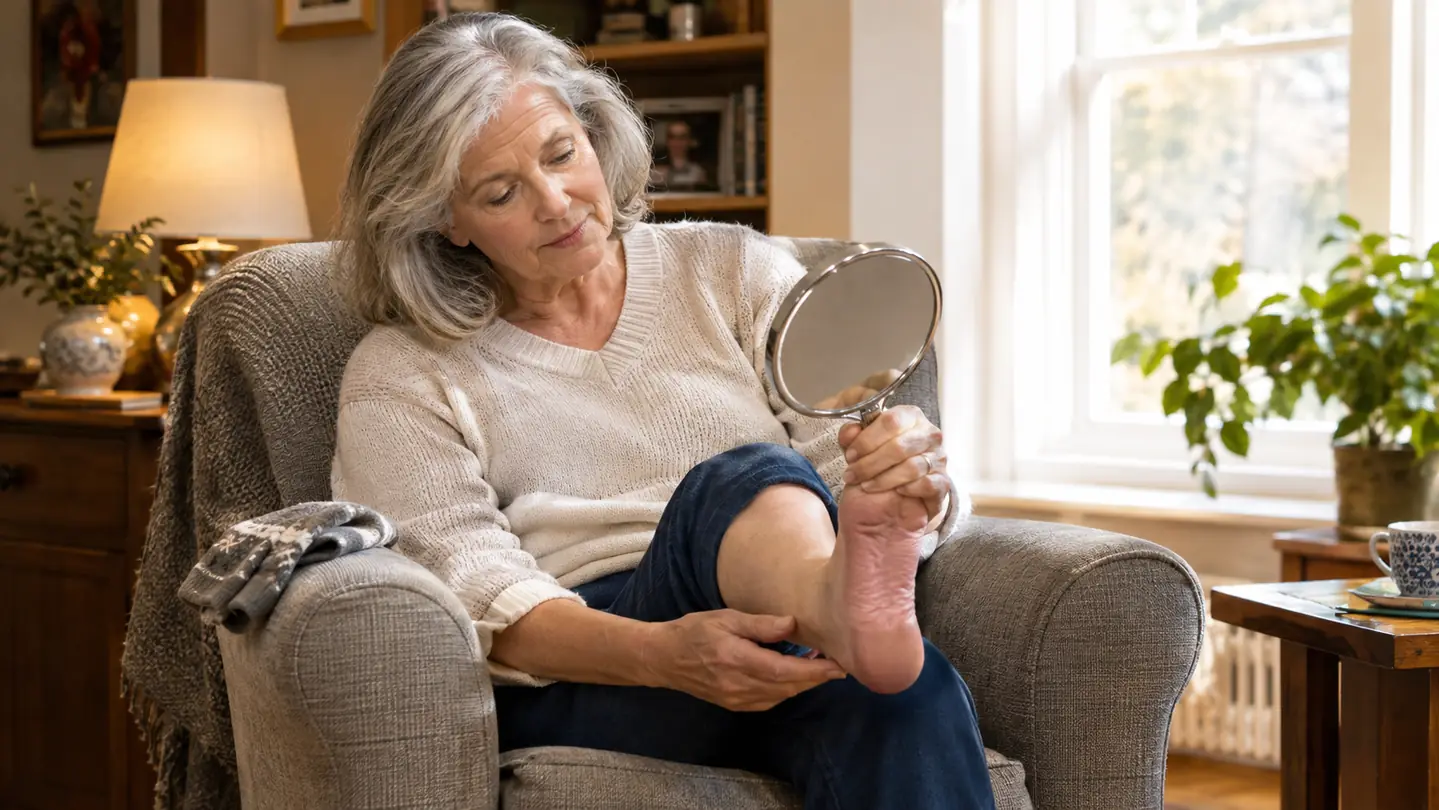
Socks are only one part of a good foot care routine. I check both feet every evening with a hand mirror, and I see my podiatrist every three months. I also keep my feet moisturized, but never between the toes, and I trim my toenails straight across. If you have neuropathy, talk to your doctor about what else you should be doing. A good sock protects your feet, but it does not replace a daily foot check or a doctor's visit.
If you want to read more, there are guides on this site about how the Dr. Scholl's socks hold up over a year of daily wear, how they compare to bamboo diabetic socks, and why non-binding socks help sensitive feet in the first place. The short version is this: start with a non-binding top, add a smooth toe and a moderate cushion, and take care of them properly. Your feet will thank you.
The top should feel like a loose cuff, not a tourniquet. If you cannot fit two fingers between the sock and your leg, it is too tight.
Give your feet a sock that leaves no mark
The Dr. Scholl's Men's Diabetic & Circulatory Non-Binding Cushioned Socks are the pair I reach for every day. Soft cushion, smooth toe, and a top that does not squeeze.
Amazon Check Today's Price on Amazon →