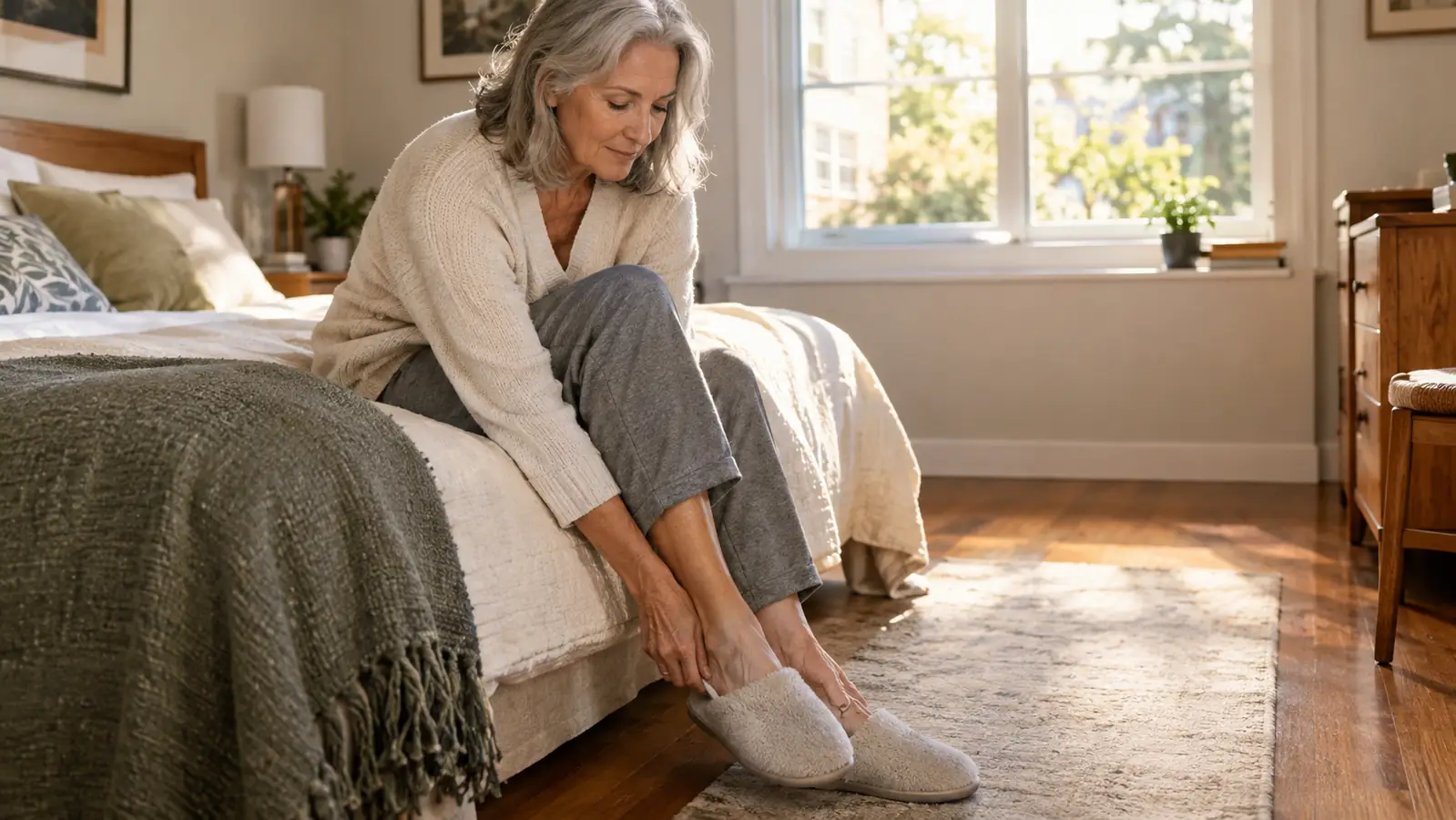
If you have neuropathy in your feet, you already know the problem with most house slippers. They look warm and cozy in the store, and then you get them home and the toe box squeezes, the sole is so thin you feel every seam in the floor, and the back slips off when you walk. For feet that cannot feel a pebble or a wrinkle, that is not a small annoyance. It is how you end up with a sore you did not know was there. I have had peripheral neuropathy in both feet for about eight years, and I have been through more pairs of slippers than I can count. This guide is the system I wish someone had handed me at the start.
The good news is that safe slippers for neuropathy are not a special medical product. They are just slippers that do four things: they fit wide enough to never squeeze, they have a sole thick enough to block the floor, they stay on your foot without a tight strap, and they let you check your feet easily. The LongBay Womens Adjustable Slippers check all four boxes for me, and they are the pair I reach for every morning. But before I tell you why, let me walk you through how to pick your own, because the right pair for you depends on your feet, your floors, and your routine.
The Slippers I Reach For Every Morning
LongBay adjustable slippers with a wide toe box, a thick sole, and a strap that fits without squeezing. They are the pair I have worn daily for months.
Amazon Check Today's Price on Amazon →Step 1: Measure Your Foot While You Are Standing
Your feet change as you get older, and they change more if you have diabetes or neuropathy. The size you wore at forty is not the size you wear now. I wore a size 8 for most of my adult life, and about four years ago I ordered a pair of fleece house shoes in my usual 8 wide. A week later I found two red marks on my little toes during my evening check, and I had not felt a thing. The marks took ten days to fade, and my podiatrist told me that is exactly how diabetic foot sores start. Now I measure both feet while I am standing, at the end of the day, because that is when feet are at their widest and longest.
You do not need a fancy device. Stand on a piece of paper against a wall, trace around each foot, and measure the length and the width at the widest point. Do both feet, because they are often different sizes. Then add a little extra room. For neuropathy, you want about a half inch of space beyond your longest toe, and you want the widest part of the slipper to match the widest part of your foot, not pinch it. Dale measures a half size bigger in the evening than he does in the morning, which is why he buys wide now instead of trusting the size on the box.
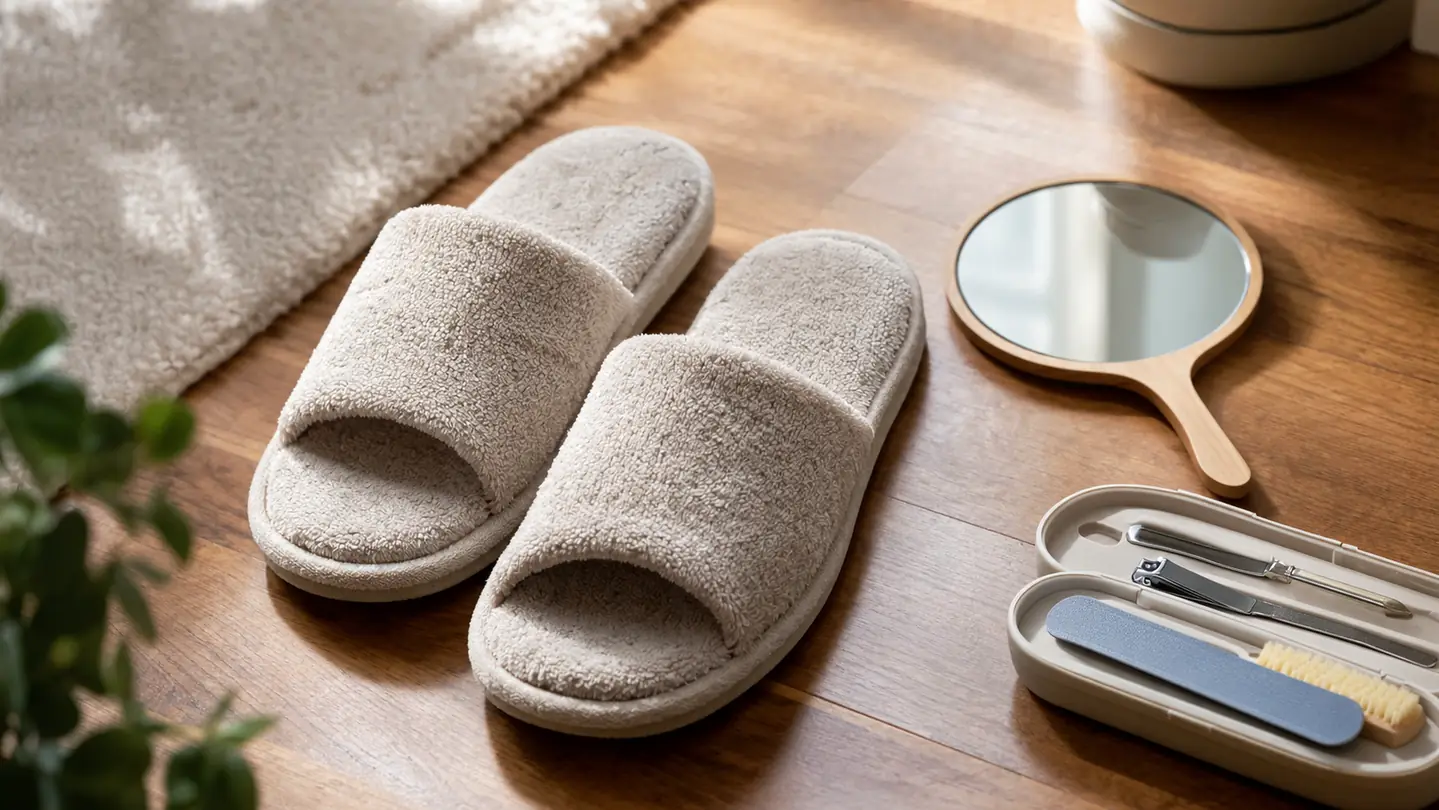
This is also the moment to look at your feet. I check mine every evening with a hand mirror, and I encourage you to do the same. If you see any redness, a blister, a callus, or a sore, talk to your doctor or podiatrist before you buy anything. New slippers will not fix an existing problem, and you want to start with healthy skin.
Step 2: Look for a Wide Toe Box, Not Just a Wide Size
A slipper can say wide on the box and still taper at the toe. What matters is the shape of the toe box. Your toes need room to spread out naturally, especially the toes that have lost feeling. When you cannot feel pressure, a tapered toe box can rub for hours without you noticing, and that is exactly how a sore starts.
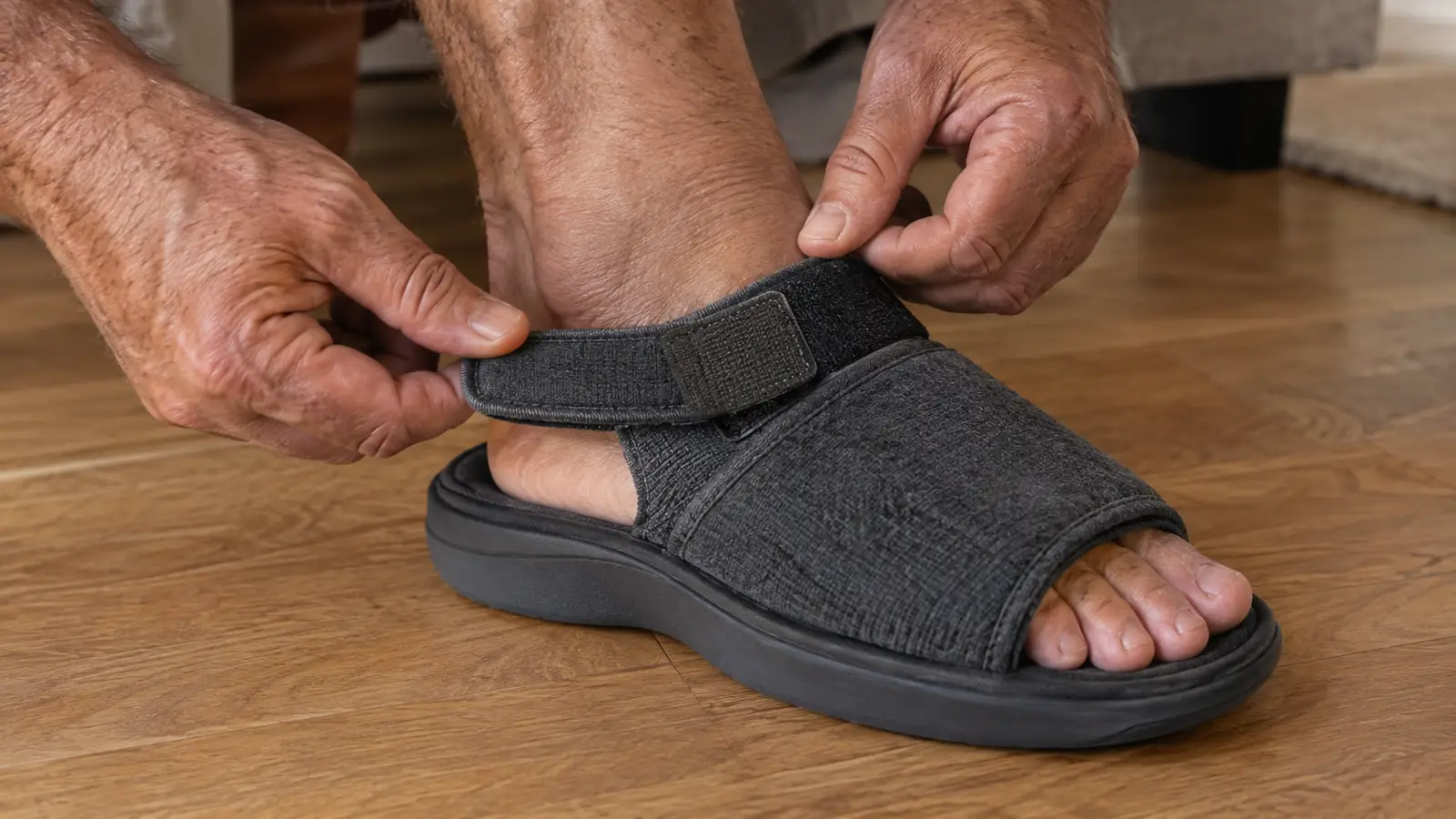
The LongBay slippers have a wide, rounded toe box that gives my toes room to lie flat. My husband Dale wears a men's size 12 wide, and he has early neuropathy in his feet too. Last spring he bought a popular pair of moccasin slippers in his usual size, and within two days the seam across the top of his foot left a crease that stayed for hours. He tried my LongBay pair out of curiosity one evening and said the toe room felt like the first slipper that did not fight his foot. That is the test I use now: if the slipper does not fight your foot, it is probably the right shape.
A good way to check the shape without wearing the slipper is to press your thumb into the toe area. There should be visible room above and around your toes, not just length. If the material presses down on your toes, keep looking.
Step 3: Choose a Sole Thick Enough to Block the Floor
With neuropathy, your feet cannot tell you what is under them. A thin slipper sole lets every seam, every pebble, every stray crumb or dropped paper clip press into the bottom of your foot, and you will not feel it until it has caused a problem. The sole needs to be thick enough to create a barrier between your foot and the floor.
I have hardwood floors in my kitchen and hallway, and I can feel the difference between a thin-soled slipper and a thick one immediately. One morning last January I walked from the bedroom to the kitchen in an old pair of thin-soled slippers and felt every floor seam through the sole. I stopped mid-step and checked the bottom of the slipper, expecting to find a stone, and there was nothing there. The floor was simply uneven. That was the day I stopped wearing anything with a thinner sole. The LongBay slippers have a sole that is substantial enough that I do not feel the floor seams when I walk the same route now.
You also want a sole with some grip. Smooth leather or fabric bottoms can slide on hardwood, and a fall is the last thing anyone with neuropathy needs. My old pair had smooth leather soles, and I caught myself grabbing the countertop more than once on the way to the kitchen. I test every pair on my own floors before I trust them for a full day. Look for a sole with tread or texture, and if it slides on your kitchen floor, send it back.
Step 4: Make Sure the Slipper Stays On Without Squeezing
A slipper that flops off when you walk is dangerous, because you will be tempted to walk without it. A slipper that is too tight to stay on is just as bad, because it squeezes your foot. The answer is a slipper that holds your foot gently, without a tight band across the top or a rigid back that digs in.
This is where adjustable slippers earn their keep. My old pair had a band of elastic across the top, and by two in the afternoon it had left a crease across the top of my right foot. I would kick them off at my desk and then forget to put them back on when I stood up, which is how I stepped on a dropped bobby pin one evening. The bruise took three weeks to fade. The LongBay slippers have an adjustable strap that lets me set the fit once and then forget it. I can make it snug enough that the slipper stays on when I walk to the kitchen, but loose enough that there is no pressure across the top of my foot. For people with swelling, which often goes along with neuropathy, that adjustability is the difference between a slipper you can wear all day and one you have to kick off by noon.
Dale has a wider foot than I do, and he found that the adjustable strap was the only part of a slipper he did not have to fight with. One Saturday he wore my pair for an hour while his own slippers dried out, and he walked the length of the house twice to test them. He wears his with the strap set to the loosest setting, and they stay on his feet even when he is carrying a load of laundry from the bedroom to the washing machine. That is the real test: the slipper should stay on during normal walking, not just when you are standing still.
Step 5: Pick a Style That Lets You Check Your Feet
If you have neuropathy, a daily foot check is not optional. I do mine every evening with a hand mirror, looking for redness, blisters, cracks, or any change in feeling. Your slippers should make that check easy, not hard. That means a style you can slip on and off quickly, without bending over to fight with laces or buckles.
Open-back slippers are the easiest for this, but they have to stay on your foot, which brings us back to the fit problem. The LongBay slippers are a good middle ground: they slip on easily, the adjustable strap does the work of keeping them on, and I can take them off in two seconds when I sit down for my evening check. One evening last month I found a small red spot on the side of my right heel that I could not feel at all. I called my podiatrist's office the next morning, and they had me come in that week. It turned out to be a friction spot from a pair of new socks, and it cleared up in a few days, but I would not have caught it without the check. If I had been wearing slippers with laces or buckles, I might have put the whole thing off.
And one more thing about the evening check: if you notice a new sore, a change in color, or a spot that feels different, call your doctor or podiatrist. Slippers are comfort and protection, not treatment. They cannot heal neuropathy, and they should never replace medical care. What they can do is keep your feet safe while you go about your day.
What Else Helps
The right slippers are the foundation, but a few other habits have made my feet happier. I keep a small hand mirror in the bathroom for my daily foot check, and I do it at the same time every evening so I do not forget. I also wear seamless socks, because seams are another thing numb feet cannot feel. And I have a simple rule about floors: I never walk barefoot, even for a few steps to the bathroom at night. A dropped bobby pin or a splinter is invisible to me, and the slippers are my protection.
I walk about twenty minutes most mornings around my neighborhood, and I change into walking shoes for that. But for the trip to the mailbox or the garage, the LongBay pair has enough sole that I do not have to stop and change. That matters, because the moment I tell myself I will just run out barefoot is the moment I step on something. If you have diabetes, keep your blood sugar in the range your doctor recommends, because that is the thing that most affects how your feet feel over time. And if you have not seen a podiatrist in a while, make the appointment. I go every three months, and it is the best foot care decision I have made. Your slippers are part of the routine, but they are not the whole routine.
The right slipper does not cure neuropathy. It keeps a numb foot safe while you live your life, and that is worth more than any fancy feature.
The Pair That Passed Every Test
LongBay adjustable slippers give you a wide toe box, a thick sole, and a fit you control. They are the pair I trust on my hardwood floors every day.
Amazon Check Today's Price on Amazon →