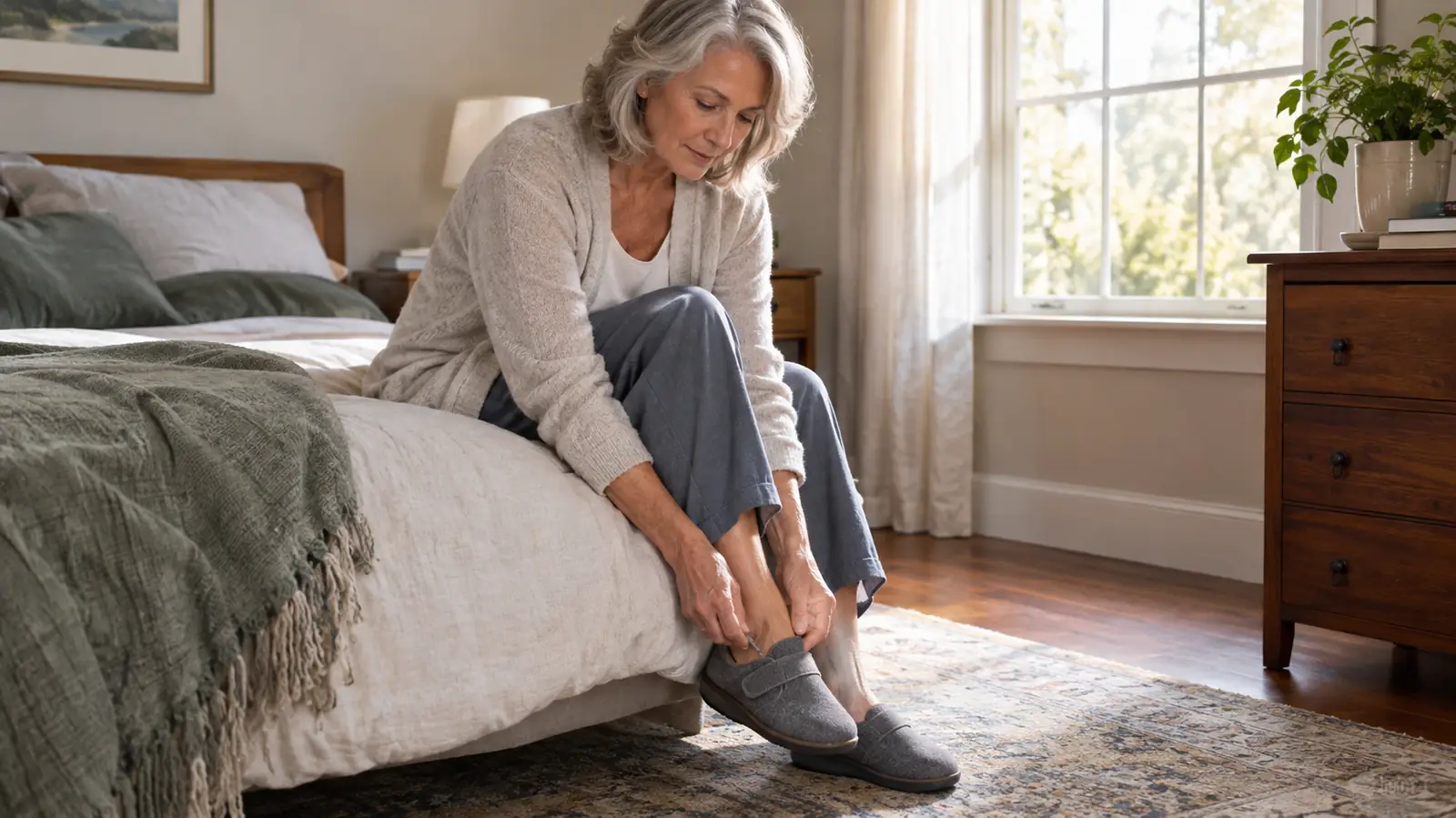
I have had peripheral neuropathy in both feet for about eight years now. Most of the feeling in my toes and the balls of my feet is gone, and at night I get burning and tingling that makes me want to kick the covers off. So when I say I have strong opinions about house shoes, I mean I have earned them. I ordered the LongBay Women's Adjustable Diabetic Slippers because I needed something I could get on and off without bending much, something that would not squeeze my feet, and something I could wear on the hardwood floors in our kitchen and hallway without sliding. I wore them every day for a month before I wrote this, and I want to tell you the things I wish somebody had told me before I bought them.
The honest version is this: these slippers are not fancy, they are not going to fix your feet, and they will not make your neuropathy go away. Nothing will, and anybody who tells you otherwise is selling something. What they did do, for me, is make the walk from the bedroom to the kitchen safer and more comfortable than it has been in a long time. That matters more than it sounds like it should. When you cannot feel the bottom of your foot the way you used to, every step on a hard floor is a small act of trust. These slippers made that trust easier.
The Quick Verdict
A genuinely useful, adjustable house shoe for swollen or numb feet, with a few honest tradeoffs. Not a medical device, but a solid everyday comfort and protection aid.
Amazon Check Today's Price →Need a house shoe that fits a swollen foot at 5pm?
The LongBay adjustable slippers are the pair I kept reaching for during my month of testing. See today's price and current reviews on Amazon.
Amazon Check Today's Price on Amazon →How I've Used Them
I wore the LongBay slippers every day for four weeks, starting on a Monday and ending on a Sunday. Most days that meant putting them on first thing in the morning, wearing them through breakfast, and keeping them on while I moved around the house. I kept a small notebook on the kitchen counter and jotted down the time I put them on and the time I took them off, plus anything I noticed about my feet. I also wore them on three short trips to the mailbox and one longer morning walk around the neighborhood, which is about twenty minutes on flat sidewalks. I did not wear them in the shower, and I did not wear them outside in wet weather, because the sole is not made for that and I did not want to test it. I also wore them on a longer errand on the second Saturday, when I drove to the pharmacy and walked across the parking lot. They stayed put and the soles felt fine on the pavement.
My routine with any new shoe is the same. I put them on for an hour the first day, then two hours, then a full morning. On day two, I wore them for the two-hour stretch and checked my feet right after. There was a faint pink line across the top of my left foot where the strap sat, but it faded within fifteen minutes and never turned into a sore. I check my feet every evening with a hand mirror, the way my podiatrist taught me, and I look for red spots, blisters, or any place where the shoe might be rubbing. I did that every single night during this test. I also took the slippers to my three-month podiatrist appointment and asked him to look at the wear pattern and the fit. He said the fit was reasonable for a house shoe, the sole was flexible enough for indoor use, and the open heel was actually a good thing for someone with swelling, because it does not trap the foot.
One thing I want to be clear about: I did not wear these to treat my neuropathy. I wore them to protect my feet and to make walking around the house more comfortable. That is the honest job of a slipper. If you are looking for something that claims to fix nerve damage, run the other way. What a good house shoe can do is give you a stable, cushioned, non-slip surface between your foot and the floor, and that is exactly what I needed.
What Nobody Tells You About the Fit
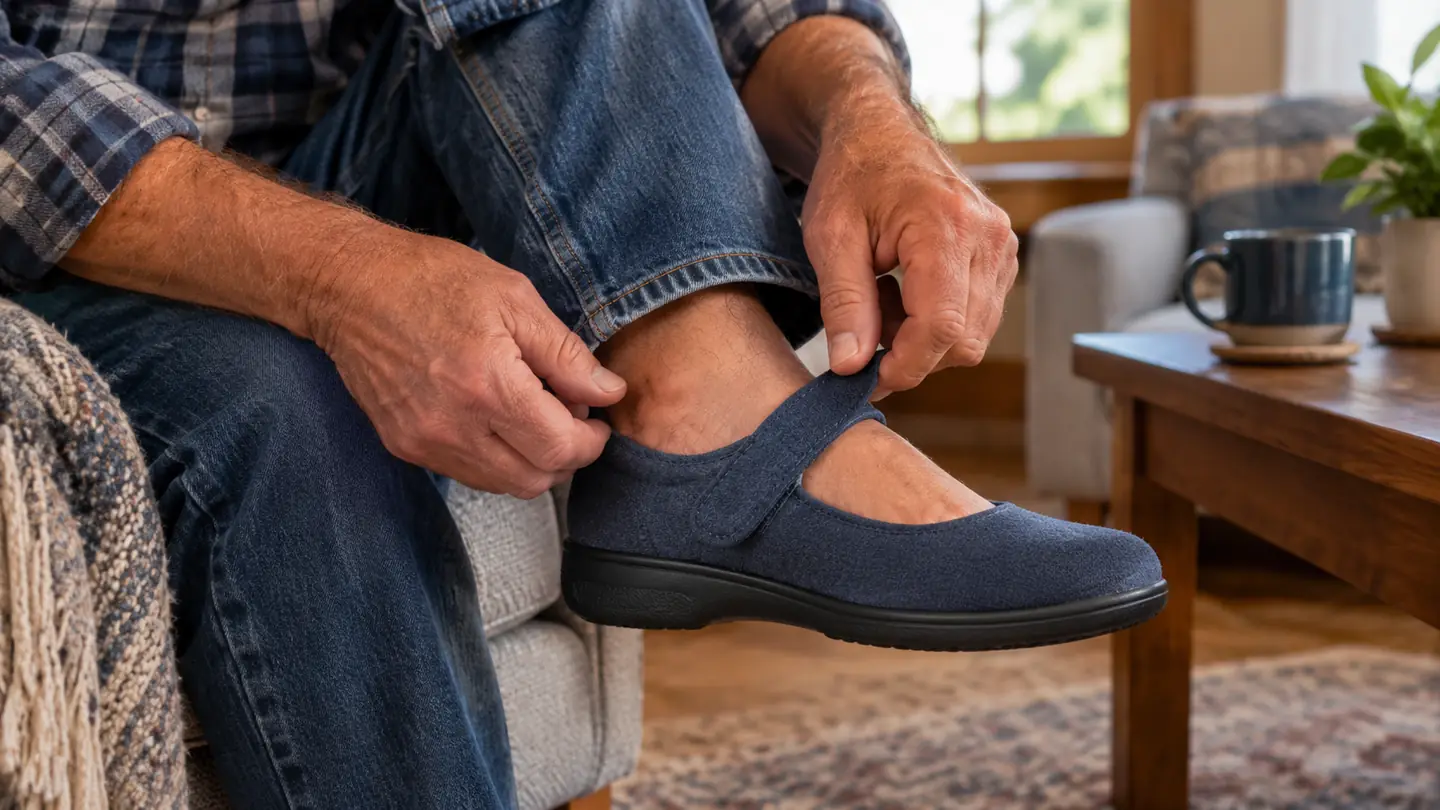
Here is the first thing I learned: the word 'adjustable' is doing a lot of work, and it is mostly good work. The LongBay slippers have a strap across the top of the foot that you can tighten or loosen. My feet swell about half a size by late afternoon, sometimes more in the summer heat. The strap has three adjustment positions, and I use the middle one in the morning and the loosest one by four o'clock. That matters more than I expected, because I have never had a house shoe that could do that. It is the main reason I kept reaching for these instead of the other pairs in my closet. I keep a pair of thin cotton socks by the back door for the days when my feet swell more, and with those the loosest setting still felt secure.
The second thing nobody tells you is that the open heel is a feature, not a flaw. I was skeptical at first. I thought a slipper without a back would slide off or feel unstable. It does not. The strap across the top holds your foot in place, and the open heel means there is nothing pressing on the back of your ankle. For someone with neuropathy, that is a real advantage, because the back of the heel is a common place for friction and sores. My podiatrist pointed that out before I even mentioned it. The first time I wore them, I kept reaching down to check whether they were still on, because I could not feel them the way I feel a closed-back slipper. That took some getting used to.
The third thing is the one I almost did not notice, and it is the most important. The sole is not completely flat. There is a slight rocker to it, which sounds like a small thing but makes a big difference when you are walking on hardwood. It helps your foot roll forward instead of slapping down. I noticed it on the third morning, when I walked from the bedroom to the coffee pot without thinking about my steps for the first time in weeks. I did not realize how much I was slapping until I wore a pair of flat-bottomed slippers for a day and felt the difference in my knees.
The Memory Foam Question
The LongBay slippers have a memory foam insole, and I want to be honest about what that does and does not mean. Memory foam molds to your foot, which sounds wonderful, and it is, for the first hour. But memory foam is not the same as orthotic support. It is soft, not firm. If you need arch support or heel cushioning for a specific foot condition, these slippers are not going to provide it. They are a comfort layer, not a correction device.
For me, that is fine. My neuropathy is mostly numbness, not arch pain, and what I need from a house shoe is cushioning and protection, not structure. But if you have plantar fasciitis or high arches, you should know that the memory foam will feel soft at first and then pack down over the course of a day. On the sixth day, I wore them for nine hours, from just after breakfast until bedtime, and by evening the foam under my heels felt noticeably firmer. The next morning it had puffed back up, but not quite to the day-one softness. It does not bounce back the way a firmer insole does. That is not a flaw in the LongBay, it is just the nature of memory foam, and I would rather tell you that now than have you discover it after you buy.
I also want to mention that the memory foam is not removable. I checked, because I like to wash my house shoes. I tried to pull the insole up with my fingers, and there is a thin fabric liner holding it in place. You can wipe these down with a damp cloth, and you can hand wash them, but you cannot pull the insole out and throw it in the washing machine. If that is a dealbreaker for you, you should know it before you order.
How They Held Up Over a Month
After four weeks of daily wear, the LongBay slippers look almost the same as the day they arrived. The memory foam has packed down a little in the heel, which I expected, but the strap still holds its adjustment and the sole shows almost no wear. I walked on hardwood, tile, and concrete, and the tread has not worn smooth. I checked the soles with a flashlight on the last day, and the tread pattern was still sharp across the heel and the ball of the foot. The only place I saw any smoothing was a small patch under my right heel, where I tend to drag just a little when I first stand up. The stitching around the strap is still tight, and the hook and loop closure still catches firmly when I press it together. That is better than I can say for most of the house shoes I have owned.
The one thing I noticed is that the memory foam does not bounce back overnight the way it did in the first week. In the morning the insole feels a little flatter than it did on day one. By the third week, the heel area felt about a quarter inch flatter when I pressed on it with my thumb. I still wore them, and they still felt good, but I stopped expecting the same cloud step I felt on day one. If you are someone who likes a very soft, cloud-like step, you will probably want to replace these after six months or so. That is normal for memory foam, and it is not a reason to avoid the LongBay, but it is a reason to set your expectations.
The strap across the top is the reason I kept these. My feet swell during the day, and for the first time I have a house shoe that swells with me.
The Honest Cons
I promised you an honest review, so here are the things I did not love. First, the memory foam is soft, which is good, but it is also warm. My feet run hot at night, and these slippers are not the coolest option I have tried. I wore them with thin cotton socks on the warm days and without socks on the cool ones. With socks, my feet stayed comfortable. Without socks, they felt a little clammy by mid-afternoon. On the warmest day of the test, which was an afternoon in the upper eighties, I took them off for about an hour and let my feet air out before putting them back on. If you are someone whose feet sweat, you will want to wear these with thin socks or take them off for a while in the afternoon.
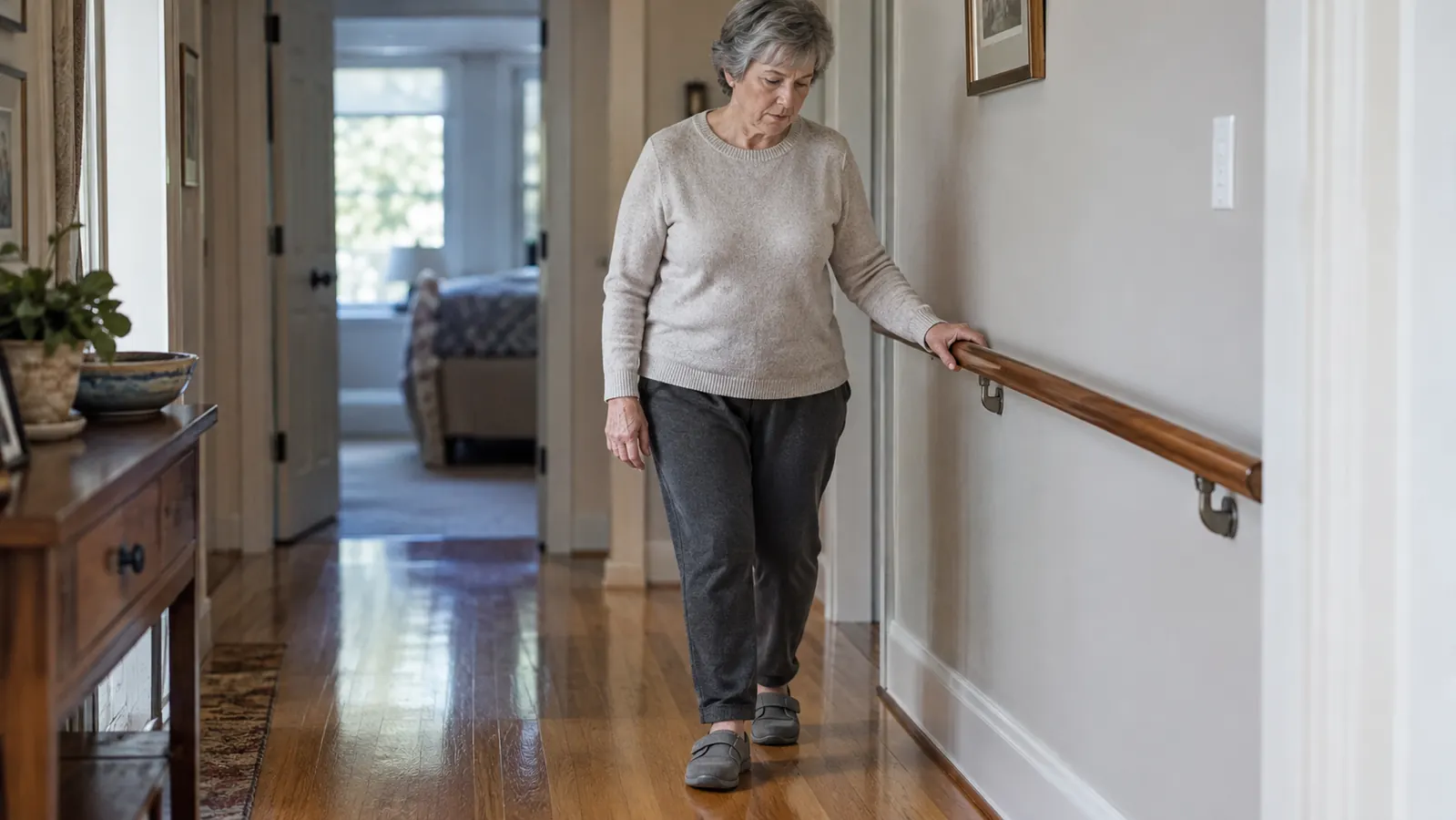
Second, the open heel means these are not slippers you can shuffle in. You have to pick your foot up a little when you walk, because there is no back to hold the shoe on if you drag your feet. On day two, I tried to shuffle from the couch to the kitchen without picking my feet up, and the right slipper slid forward on my foot. It did not come off, but it reminded me to walk properly. That is actually a good thing for safety, because it makes you walk more deliberately, but it took me a couple of days to get used to it.
Third, the sizing runs a little generous. I normally wear a women's 8.5 wide, and the medium fit me with room to spare. I measured my foot against the bottom of the slipper before I wore them, and the medium was about a half inch longer than my foot. That extra room is good for swelling, but if you are between sizes, I would size down. And if you are buying these for someone else, ask them about their swelling pattern first, because the strap only helps if the base size is right.
What I Liked
- Adjustable strap across the top makes them fit a foot that swells during the day
- Open heel means nothing presses on the back of the ankle, a common spot for friction
- Flexible sole with a slight rocker helps with a smoother step on hardwood
- Held up well through a month of daily wear, including short outdoor trips
Where It Falls Short
- Memory foam packs down over the course of a day and does not fully bounce back
- Insole is not removable, so you cannot machine wash them
- Runs a little generous, so sizing down may be needed if you are between sizes
- They run warm, which is not ideal if your feet sweat
Who This Is For
These LongBay slippers are for you if you have neuropathy, diabetes, or any condition that makes your feet sensitive, swollen, or prone to injury. They are for you if you walk on hardwood or tile and you worry about slipping. They are for you if you have trouble bending over to put on regular shoes, because the strap is easy to reach and the open heel means you can step in without using your hands much. And they are for you if you have ever bought a pair of slippers that fit in the morning and felt like a vise by dinner. The adjustable strap solves that problem in a way I have not seen in any other house shoe I have tried. If you are like me and you check your feet every evening, a shoe that slips on and off easily makes that check easier, because you are more likely to actually do it.
Who Should Skip It
You should skip these if you need firm arch support, because the memory foam is soft and will not hold your arch the way an orthotic will. You should skip them if you want a slipper you can wash in the machine, because the insole is not removable. And you should skip them if you need a closed-back shoe for stability, because the open heel is not for everyone. If you have ever had a fall or you feel unsteady on your feet, talk to your doctor or podiatrist about what kind of footwear is right for you before you buy anything. If you already own a pair of slippers that work for you, there is no urgent reason to switch, and nobody should buy a new pair just because a review says so.
The bottom line on the LongBay
A comfortable, adjustable house shoe that made my daily walks around the house safer and easier. Not a cure, not a medical device, just a genuinely useful pair of slippers. Check today's price and current reviews on Amazon.
Amazon Check Today's Price on Amazon →